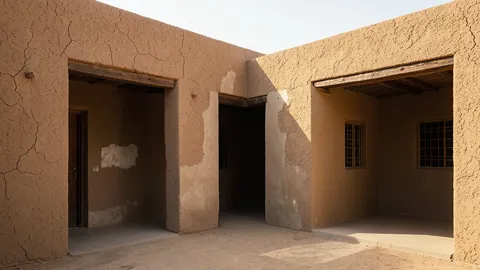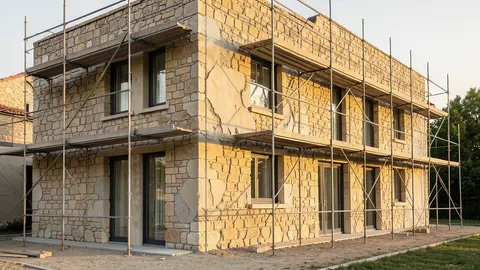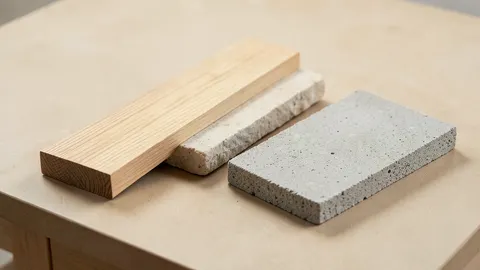
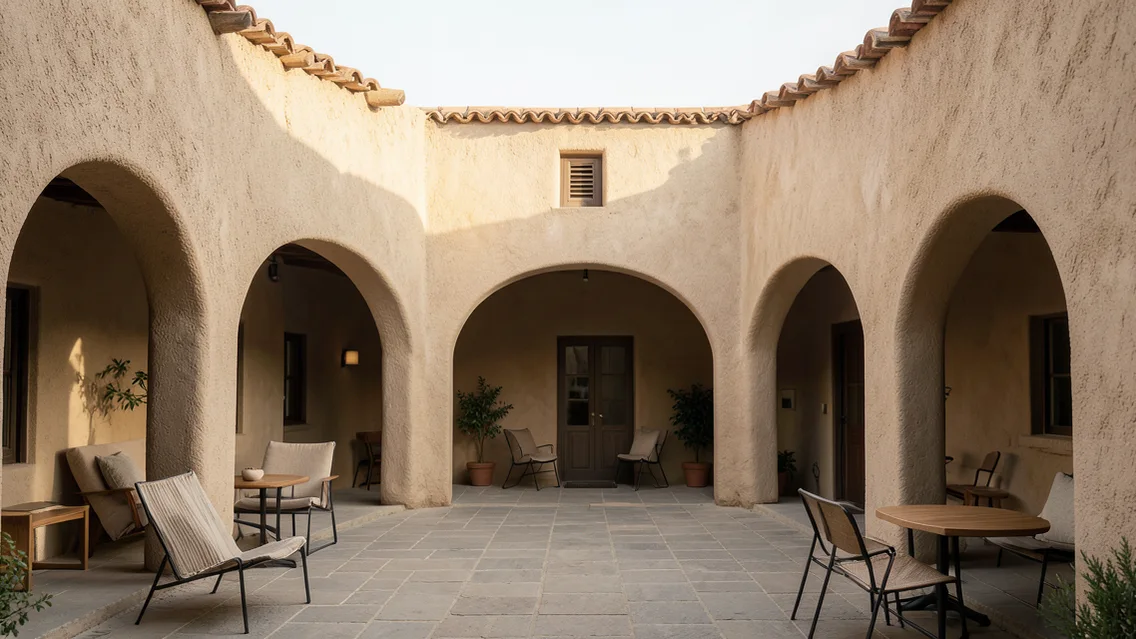
Heritage value before intervention
The source discusses rehabilitation and adaptive reuse through Cairo examples such as Wekalet al-Ghouri and Prince Amr Ibrahim’s Palace. Maintenance, restoration, rehabilitation and reconstruction differ in purpose and intervention level. Begin by identifying historical, architectural, material and social significance through records, surveys and photography. Economic improvement does not justify removing original features or reconstructing parts without evidence and approvals.
Condition diagnosis and material compatibility
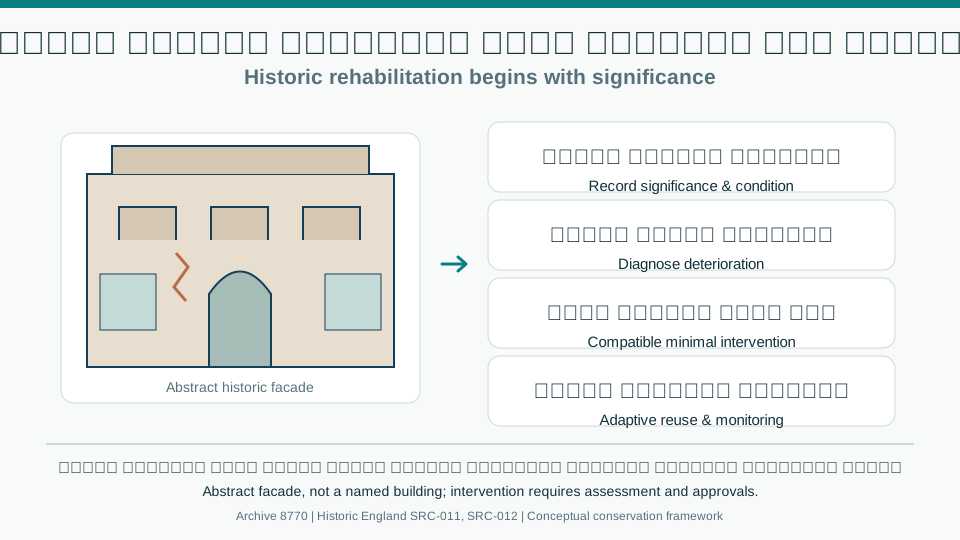
Review alteration history, crack movement, moisture, salts, weathering and biological damage. Select appropriate investigations with minimal harmful intervention, assessing soil, foundations, materials and structure as needed. Rigid or low-permeability repairs may harm historic fabric, so no universal repair recipe applies. Specialists choose compatible interventions and assess temporary stabilization or use restrictions until safety is established.
Adaptive reuse, handover and monitoring
Compare the proposed use with building capacity and sensitive fabric, addressing access, accessibility, fire, egress, loads, services and indoor environment with heritage authorities and specialists. Minimize intervention and favor reversibility where practical, documenting replacements and additions clearly. Monitor moisture, movement and maintenance after rehabilitation; success includes conservation, safe use and operational continuity, not visitor counts or revenue alone.
Comparison and verification table
| Factor | Evidence or action |
|---|---|
| Significance | Documentation, original fabric and context |
| Condition | Damage, causes and proportionate investigations |
| Intervention | Compatibility, minimal harm and approvals |
| Operation | Use fit, safety and maintenance |
A visual reading of the article topic
- 01Heritage value before intervention
- 02Condition diagnosis and material compatibility
- 03Adaptive reuse, handover and monitoring
- 04Comparison and verification table
Practical workflow
- 01 Document significance and condition
- 02 Diagnose deterioration
- 03 Compare compatible interventions and uses
- 04 Approve, deliver and monitor
Conceptual editorial diagram; not measured data.
Topics and source excerpts
| Topic | Excerpt from article |
|---|---|
| Heritage value before intervention | The source discusses rehabilitation and adaptive reuse through Cairo examples such as Wekalet al-Ghouri and Prince Amr Ibrahim’s Palace. |
| Condition diagnosis and material compatibility | Review alteration history, crack movement, moisture, salts, weathering and biological damage. |
| Adaptive reuse, handover and monitoring | Compare the proposed use with building capacity and sensitive fabric, addressing access, accessibility, fire, egress, loads, services and indoor environmen… |
| Practical workflow | 01 Document significance and condition |
| Sources and limitations | Editorial adaptation based on the original WordPress archive; original source retained separately. |
Source excerpts organized for comparison, not newly researched findings.
Sources and limitations
Editorial adaptation based on the original WordPress archive; original source retained separately. Building dates and examples in the 2021 source require heritage records and primary-source checks. This is not a safety report or authorization for intervention on a particular building.
- Historic England: Principles of Repair for Historic Buildings — Diagnosis, retaining significant fabric, compatibility and documentation; not authorization for an individual building.
- Historic England: Building Materials for Historic Buildings — Compatibility with existing fabric, physical properties, durability and maintenance.