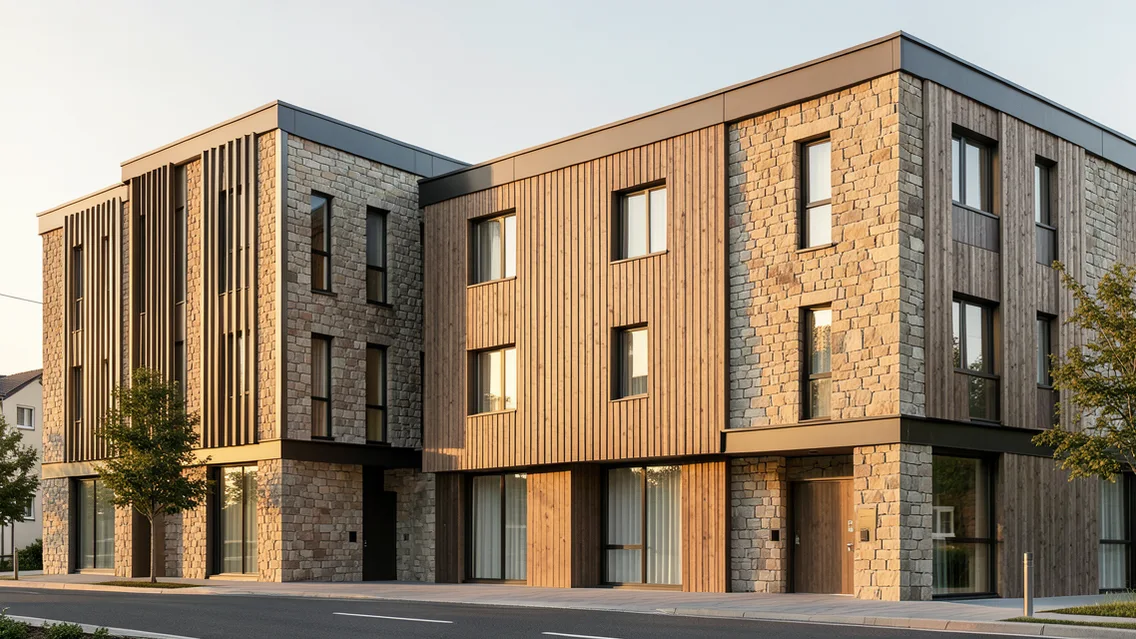
The façade as a performance system
The article reviews different exterior finishes. Façades separate interior and exterior, manage water, air, heat, light and safety, and convey architectural expression. Distinguish exterior cladding from the complete envelope, including support, insulation, joints and appropriate barriers. Finish type alone does not establish insulation efficiency or fire performance.
Comparing materials by application
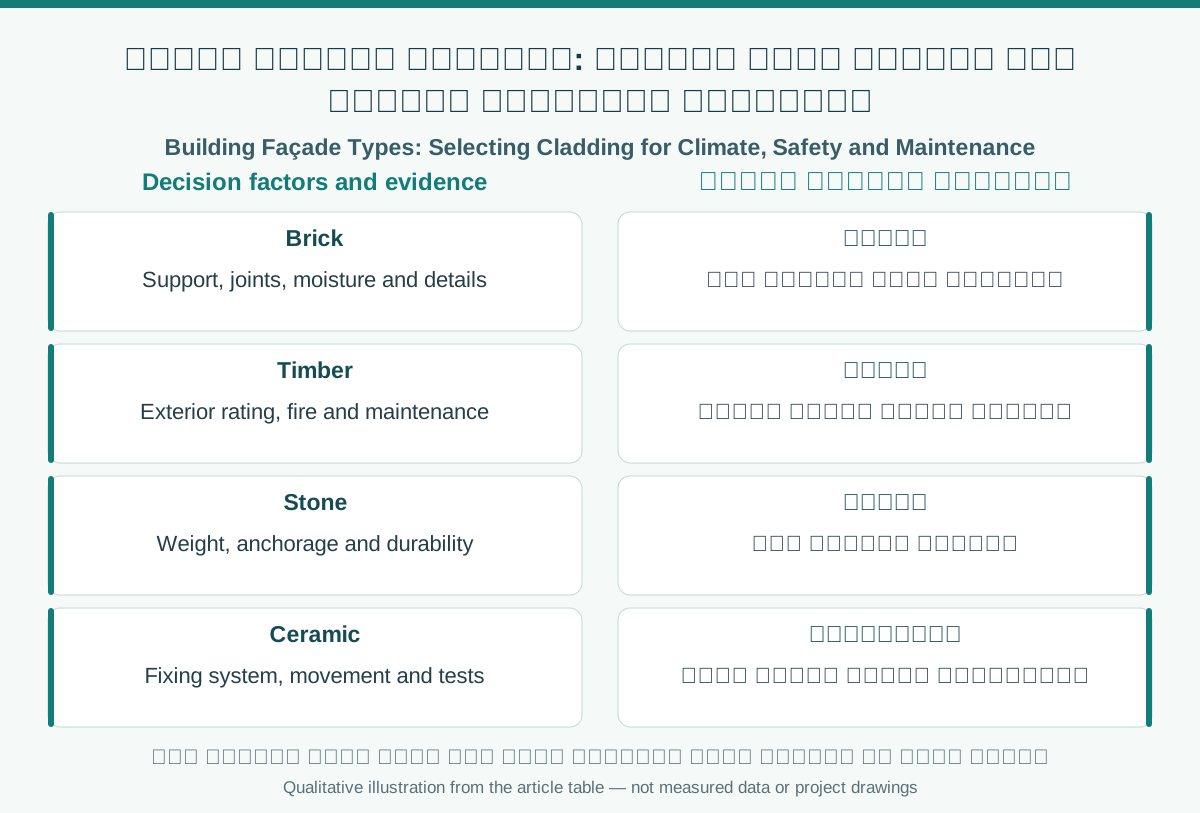
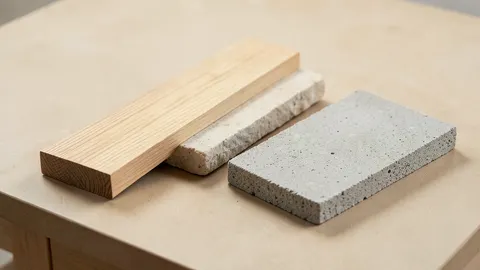
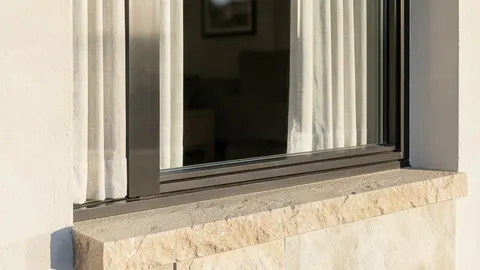
Brick can offer suitable appearance and durability when support, moisture and joint details are designed. Timber or engineered wood needs exterior exposure, moisture, UV and fire suitability; not every MDF or plywood panel is suitable outdoors. Stone and ceramics require verified strength, anchorage, loads, movement and environmental resistance. Do not select inferior or unapproved products simply because their location is external.
Life-cycle costs
Request product properties and full-system documentation; review samples and details with specialists, especially anchorage safety, fire performance and water penetration. Compare installation, maintenance access, cleaning and replacement costs with expected service life in site conditions. For heritage buildings, verify protection requirements before altering façades. Approve a mock-up and suitable tests before scaling.
Decision review table
| Factor | Evidence or action |
|---|---|
| Brick | Support, joints, moisture and details |
| Timber | Exterior rating, fire and maintenance |
| Stone | Weight, anchorage and durability |
| Ceramic | Fixing system, movement and tests |
A visual reading of the article topic
- 01The façade as a performance system
- 02Comparing materials by application
- 03Life-cycle costs
- 04Decision review table
Practical workflow
- 01 Define envelope requirements
- 02 Compare systems and materials
- 03 Approve details and mock-up
- 04 Verify installation and maintenance
Conceptual editorial diagram; not measured data.
Sources and limitations
Editorial adaptation based on the original WordPress archive; original source retained separately. Wood and stone categories, prices and durability claims from 2021 require product data and tests; this is not an anchorage specification or fire approval.
Topics and source excerpts
| Topic | Excerpt from article |
|---|---|
| The façade as a performance system | The article reviews different exterior finishes. |
| Comparing materials by application | Brick can offer suitable appearance and durability when support, moisture and joint details are designed. |
| Life-cycle costs | Request product properties and full-system documentation; review samples and details with specialists, especially anchorage safety, fire performance and wa… |
| Practical workflow | 01 Define envelope requirements |
| Sources and limitations | Editorial adaptation based on the original WordPress archive; original source retained separately. |
| References and limitations | Assess cladding within the integrated enclosure and verify drainage, insulation continuity, anchorage and fire requirements for the assembly rather than fi… |
Source excerpts organized for comparison, not newly researched findings.
References and limitations
Assess cladding within the integrated enclosure and verify drainage, insulation continuity, anchorage and fire requirements for the assembly rather than finish material alone.
The following references support selected topics in the article.
- WBDG – Building Enclosure Design Principles and Strategies
- WBDG – Moisture Management
- WBDG – HVAC Integration of the Building Envelope
- Saudi Code for Energy Conservation – Nonresidential Building (SBC 601), 2024 catalogue
- Saudi Fire Protection Code (SBC 801), 2024 catalogue