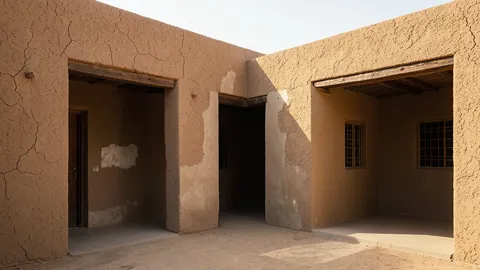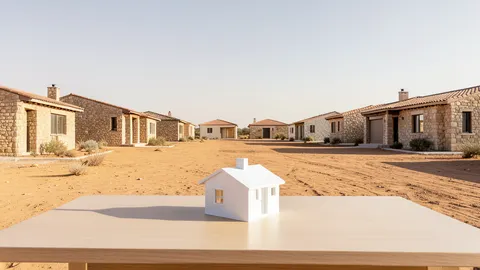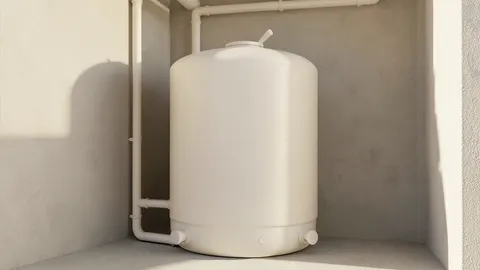
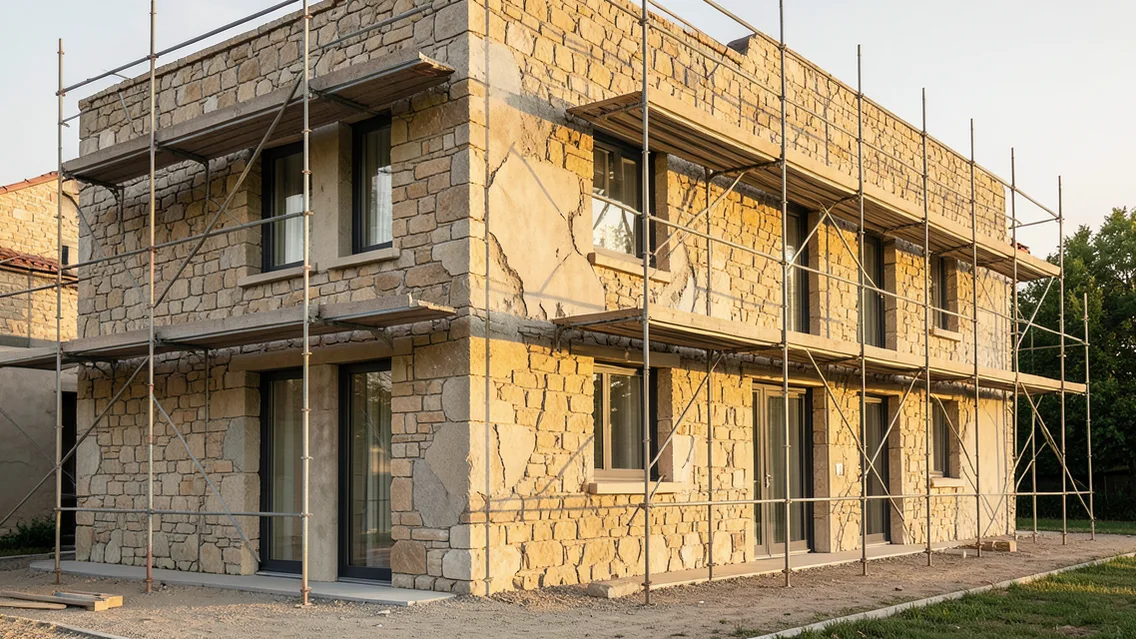
Intervention types and objectives
The source discusses finishes, cracks, corrosion, refurbishment and heritage conservation. Preventive maintenance reduces deterioration, repair addresses a defect, rehabilitation prepares a building for suitable use, and strengthening addresses engineered structural needs. Adding a story is not routine maintenance: it requires capacity and foundation assessment, permits and approved design. Set the objective first, separating functional need from aesthetic change.
Diagnosis before treating defects
Review building history and previous work, examining deterioration and potential causes such as water, movement, corrosion and exposure. A crack may affect finishes or indicate structural issues; depth or appearance alone cannot select repair. If deflection, falling material or progressive movement appears, restrict access to affected areas and seek urgent assessment. Qualified teams define investigation, temporary intervention and repair; do not conceal defects before diagnosing causes.
Heritage conservation and follow-up
For historic buildings, document significance, original fabric and setting before intervention, addressing approvals, material compatibility and minimal harm. Do not reconstruct missing elements through conjecture or choose modern materials solely for strength without compatibility checks. For all buildings, define repair specifications, responsibilities, acceptance tests and closure evidence, then plan periodic maintenance and monitoring. Success is stable performance, safe use and conservation of value, not visual disappearance of damage alone.
Comparison and verification table
| Factor | Evidence or action |
|---|---|
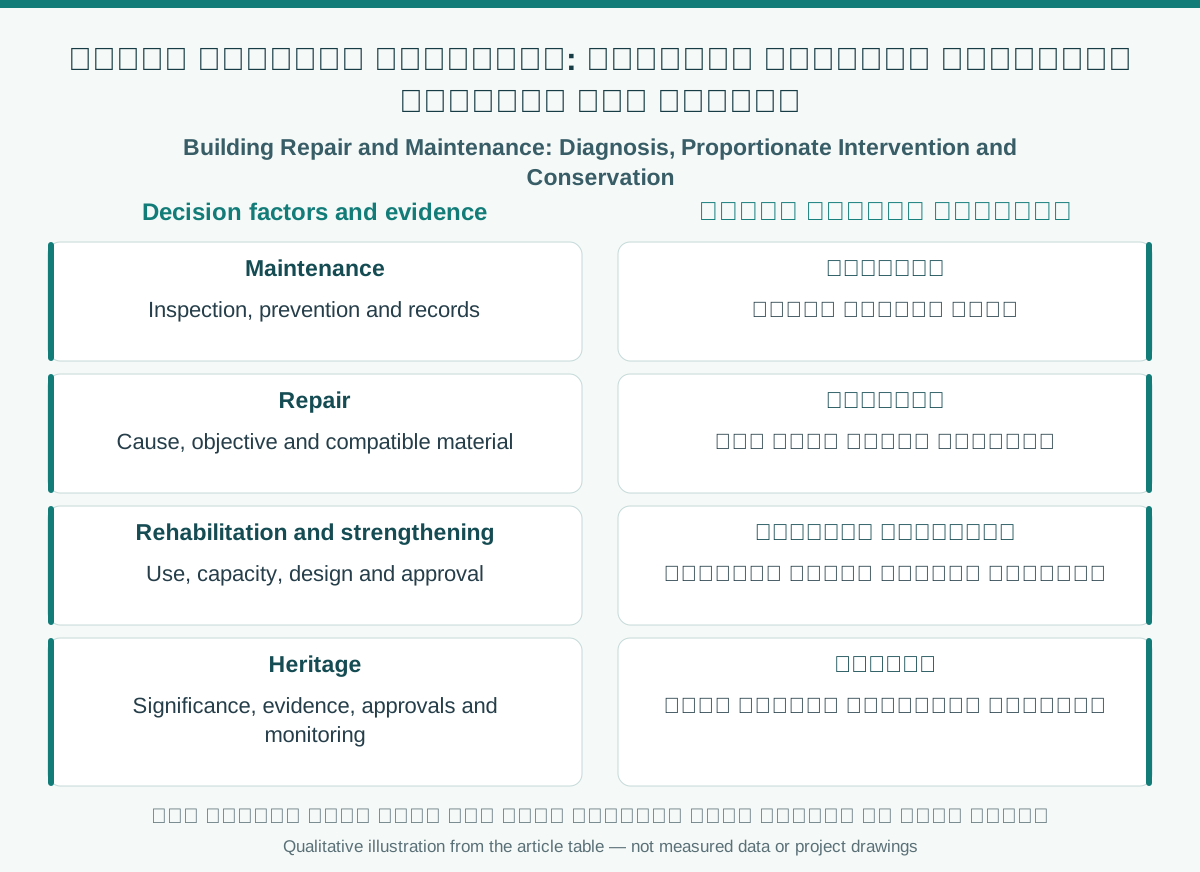
| Maintenance | Inspection, prevention and records |
| Repair | Cause, objective and compatible material |
| Rehabilitation and strengthening | Use, capacity, design and approval |
| Heritage | Significance, evidence, approvals and monitoring |
A visual reading of the article topic
- 01Intervention types and objectives
- 02Diagnosis before treating defects
- 03Heritage conservation and follow-up
- 04Comparison and verification table
Practical workflow
- 01 Define objective and significance
- 02 Diagnose defects and risks
- 03 Approve proportionate intervention
- 04 Verify and monitor performance
Conceptual editorial diagram; not measured data.
Sources and limitations
Editorial adaptation based on the original WordPress archive; original source retained separately. Historical classifications and guidance require project-specific heritage and structural verification. This is not a safety report, approval for additional stories or a repair plan.
Topics and source excerpts
| Topic | Excerpt from article |
|---|---|
| Intervention types and objectives | The source discusses finishes, cracks, corrosion, refurbishment and heritage conservation. |
| Diagnosis before treating defects | Review building history and previous work, examining deterioration and potential causes such as water, movement, corrosion and exposure. |
| Heritage conservation and follow-up | For historic buildings, document significance, original fabric and setting before intervention, addressing approvals, material compatibility and minimal ha… |
| Practical workflow | 01 Define objective and significance |
| Sources and limitations | Editorial adaptation based on the original WordPress archive; original source retained separately. |
| References and limitations | ACI repair guidance starts with condition and cause assessment; ACI 562 addresses assessment, repair and rehabilitation of existing concrete. |
Source excerpts organized for comparison, not newly researched findings.
References and limitations
ACI repair guidance starts with condition and cause assessment; ACI 562 addresses assessment, repair and rehabilitation of existing concrete. Distinguish ordinary maintenance from changes affecting structural capacity.
The following references support selected topics in the article.
- ACI FAQ – What steps are taken in the repair of concrete structures?
- ACI FAQ – Do we always need to repair cracked concrete?
- ACI CODE-562-25 – Assessment, Repair, and Rehabilitation of Existing Concrete Structures