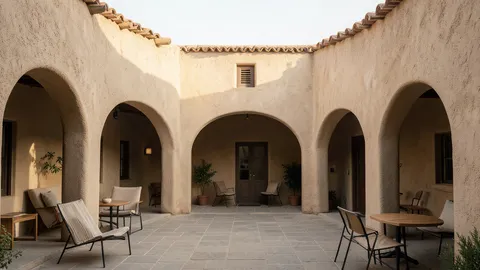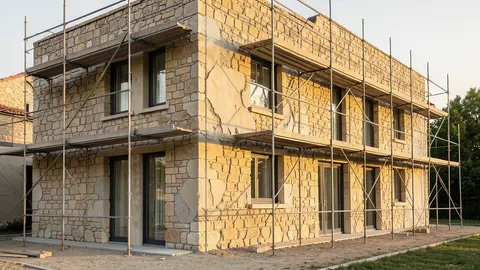
Understand significance first
Historic buildings may derive value from original fabric, form, events and social, religious or economic practices. Heritage includes houses, markets, neighborhoods and craft elements, not only monumental landmarks. Document history, materials, significant elements and previous alterations and identify what should be conserved. Review designation, rights, permissions and relevant heritage requirements before work.
Diagnose fabric and structure
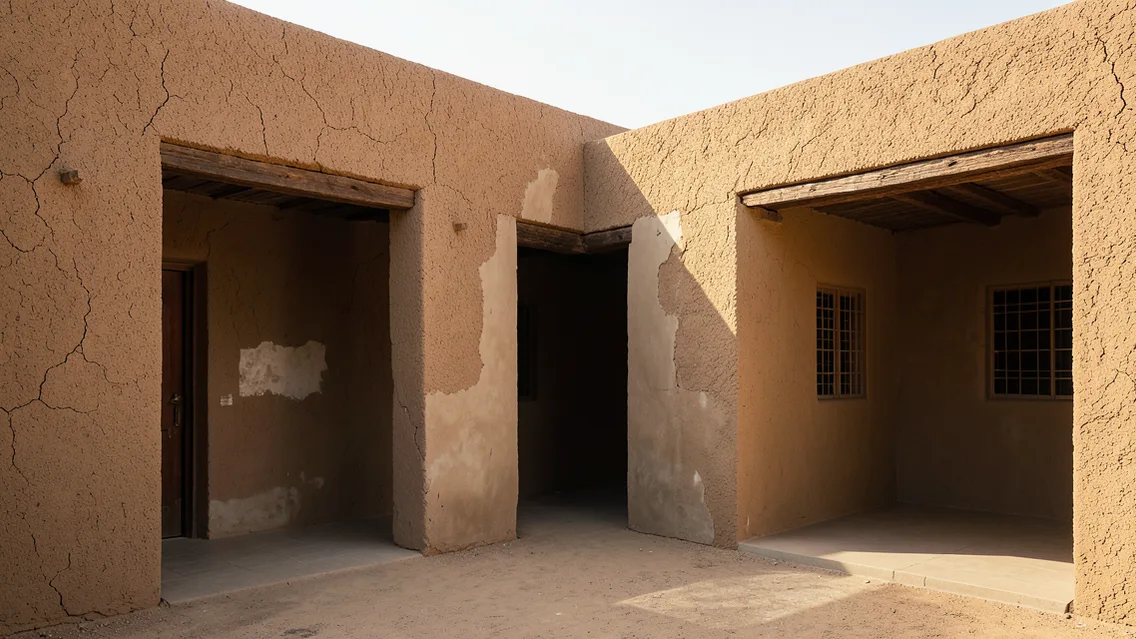
Traditional Saudi buildings may use earth, stone, brick and timber in regionally varied assemblies. Identify moisture, salts, weathering, pests, structural movement and incompatible interventions. Document cracks and deformation, investigate appropriately and assess instability before work. Preserve original fabric and use the least sufficient compatible intervention where feasible; stronger mortar or reinforcement is not automatically beneficial and can cause damage.
Rehabilitation and sustainable reuse
A heritage, structural and materials team defines urgent measures, repair options, water management and compatibility of new use with significance. Coordinate safety, fire, access and services without unjustified concealment or loss of valuable elements. Record interventions, samples, replacements and decision rationale and establish maintenance and monitoring. Restoration does not mean making a building look new or replacing all components.
Comparison and verification table
| Factor | Evidence or action |
|---|---|
| Heritage significance | Documentation and important fabric |
| Condition | Moisture, movement and materials |
| Intervention | Minimum sufficient and compatible work |
| Sustainability | Use, maintenance and monitoring |
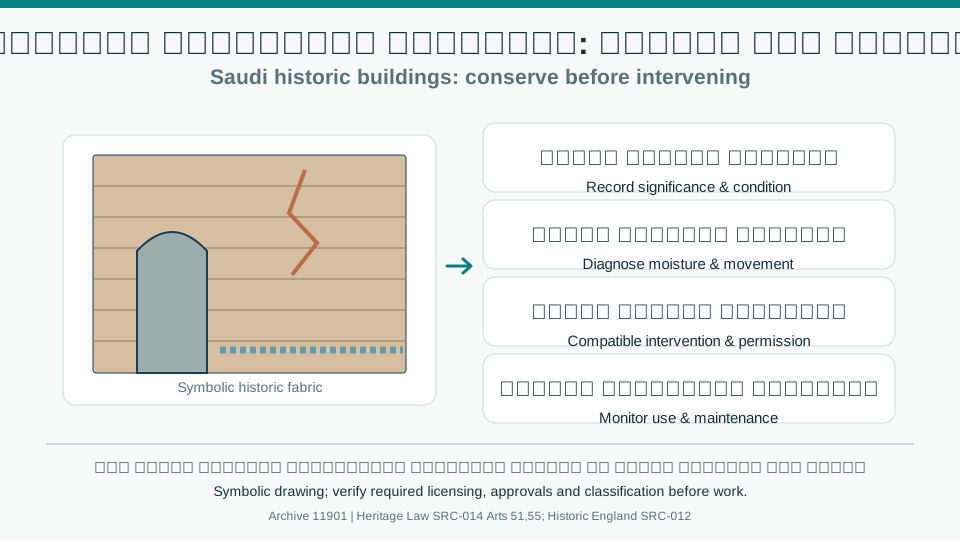
A visual reading of the article topic
- 01Understand significance first
- 02Diagnose fabric and structure
- 03Rehabilitation and sustainable reuse
- 04Comparison and verification table
Practical workflow
- 01 Document significance and condition
- 02 Diagnose deterioration
- 03 Approve compatible intervention
- 04 Monitor after rehabilitation
Conceptual editorial diagram; not measured data.
Heritage work licensing and professional practice
Construction and restoration of classified urban heritage require licensing, and maintenance and subdivision require approval under Article 51. Heritage restoration and maintenance practice requires approval and classification under Article 55, subject to the competent authority's current procedures. Verify the building's designated status and project-specific permission before intervening.
Topics and source excerpts
| Topic | Excerpt from article |
|---|---|
| Understand significance first | Historic buildings may derive value from original fabric, form, events and social, religious or economic practices. |
| Diagnose fabric and structure | Traditional Saudi buildings may use earth, stone, brick and timber in regionally varied assemblies. |
| Rehabilitation and sustainable reuse | A heritage, structural and materials team defines urgent measures, repair options, water management and compatibility of new use with significance. |
| Practical workflow | 01 Document significance and condition |
| Heritage work licensing and professional practice | Construction and restoration of classified urban heritage require licensing, and maintenance and subdivision require approval under Article 51. |
| Sources and limitations | Editorial adaptation based on the original WordPress archive; original source retained separately. |
Source excerpts organized for comparison, not newly researched findings.
Sources and limitations
Editorial adaptation based on the original WordPress archive; original source retained separately. Historical initiatives, projects and attributions require official-source verification; this article neither grants permission nor prescribes strengthening.
- Law of Antiquities, Museums and Urban Heritage: Articles 51 and 55 — Licensing of construction and restoration of classified heritage, approval of maintenance and subdivision, and practitioner classification; confirm competent authority procedures.
- Historic England: Principles of Repair for Historic Buildings — Diagnosis, retaining significant fabric, compatible materials and documentation; technical guidance, not a Saudi authorization.