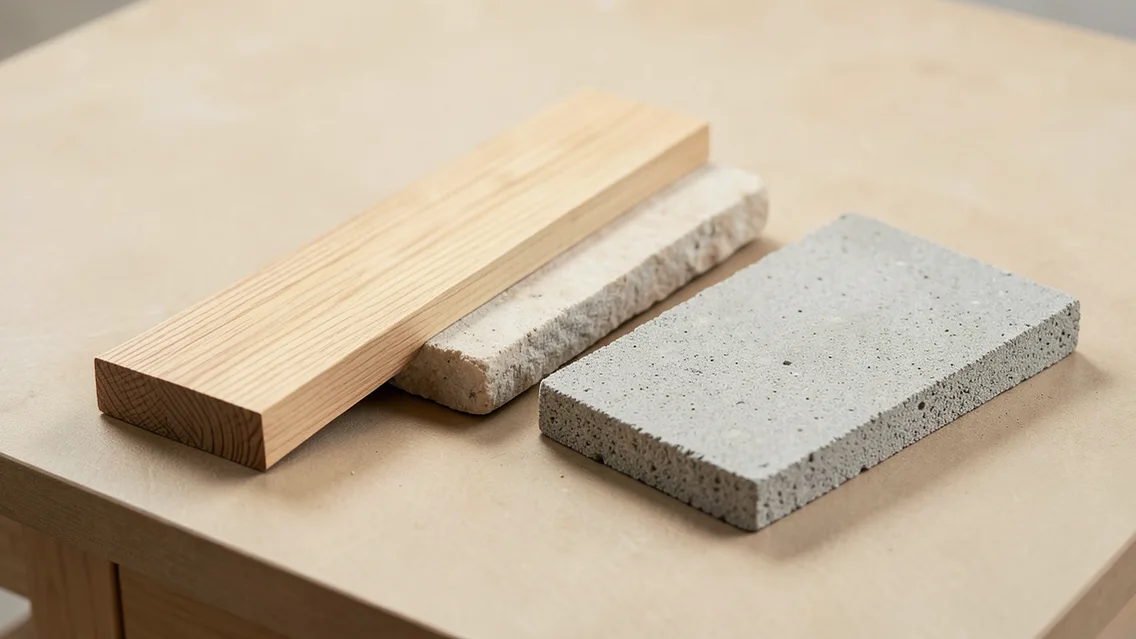
Sustainability is not a product label
The source presents insulation, glazing, timber and emissions innovations. Distinguish indoor emissions, embodied carbon, operational energy, durability and repair. Low-VOC materials may support indoor air quality but are not necessarily suitable for every sensitive occupant. Review test reports, installation and ventilation rather than marketing labels.
Three technologies, different conditions
Switchable glazing can control light and solar heat gain according to technology and controls; not every smart window is self-powered. Compare heat transfer, solar gain, light transmittance and glare. Cross-laminated timber uses perpendicular layers and needs moisture, fire, connection and sourcing checks. Structural insulated panels, including graphite polystyrene products, can provide efficient envelopes, but performance also depends on joints, thermal bridges, fire and installation.
Specification and life cycle
Compare functionally equivalent products by climate, expected service life, replacement, maintenance and energy. Environmental product declarations can help when study boundaries and functional units align, alongside performance data and trials. In hot climates, assess solar loads, cooling and dust. Define acceptance, procurement and installation after checking compliance and feasibility; no single material automatically delivers sustainability.
Comparison and verification table
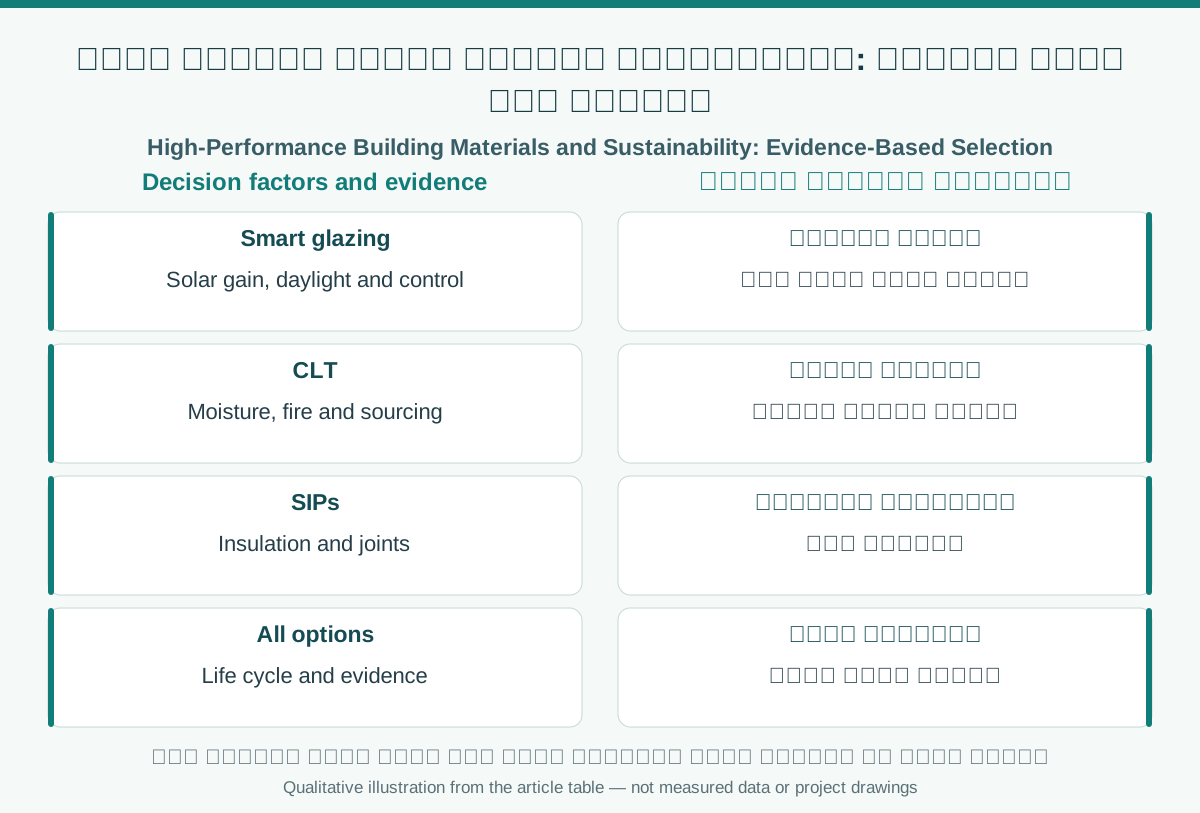
| Factor | Evidence or action |
|---|---|
| Smart glazing | Solar gain, daylight and control |
| CLT | Moisture, fire and sourcing |
| SIPs | Insulation and joints |
| All options | Life cycle and evidence |
A visual reading of the article topic
- 01Sustainability is not a product label
- 02Three technologies, different conditions
- 03Specification and life cycle
- 04Comparison and verification table
Practical workflow
- 01 Define performance goals
- 02 Compare equivalent options
- 03 Review evidence
- 04 Verify installation
Conceptual editorial diagram; not measured data.
Sources and limitations
Editorial adaptation based on the original WordPress archive; original source retained separately. Historical claims about self-powered windows, material superiority and suitability for sensitivities need product-specific verification; no unsupported savings are adopted.
Topics and source excerpts
| Topic | Excerpt from article |
|---|---|
| Sustainability is not a product label | The source presents insulation, glazing, timber and emissions innovations. |
| Three technologies, different conditions | Switchable glazing can control light and solar heat gain according to technology and controls; not every smart window is self-powered. |
| Specification and life cycle | Compare functionally equivalent products by climate, expected service life, replacement, maintenance and energy. |
| Practical workflow | 01 Define performance goals |
| Sources and limitations | Editorial adaptation based on the original WordPress archive; original source retained separately. |
| References and limitations | Compare materials by equivalent function, lifecycle and verified evidence; distinguish dynamic glazing research from certified products. |
Source excerpts organized for comparison, not newly researched findings.
References and limitations
Compare materials by equivalent function, lifecycle and verified evidence; distinguish dynamic glazing research from certified products. A material or technology label alone does not establish environmental superiority.
The following references support selected topics in the article.
- EPA Sustainable Materials Management Basics
- DOE Windows Projects
- UNEP Global Status Report for Buildings and Construction 2025–2026, abstract (May 2026)