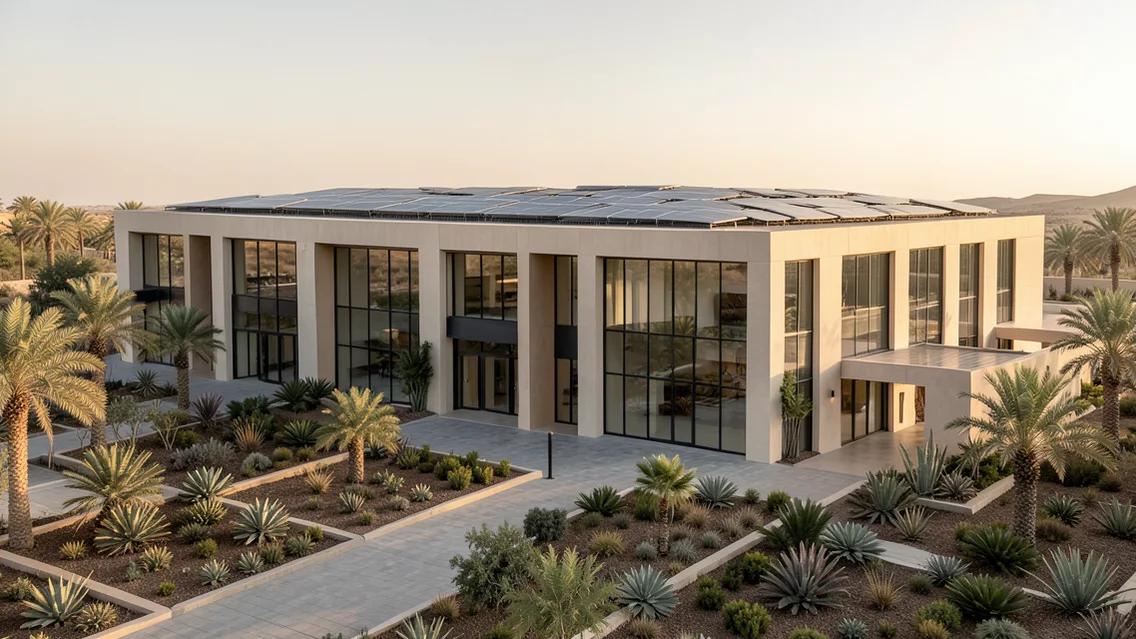
Concept and limits of claims
The article considers sustainability in national development and resource conservation. Environmental sustainability addresses pollution, pressure on resources and ecosystem protection while considering present and future needs. Natural materials or renewable technologies are not impact-free, and project labels or declared commitments do not establish results. Define assessment boundaries, responsibilities and metrics before comparison.
Design decisions across the lifecycle
Architects can reduce cooling and lighting demand through climate, orientation, shading and envelope studies, and water demand through suitable fixtures and irrigation coordination. Review material durability, repairability, emissions and impacts of manufacturing, transport and replacement. Consumption reductions must not compromise indoor air, comfort, accessibility or safety. Verify designs with suitable calculations, models and checks.
Comparable monitoring metrics
Define annual energy use per square metre, water use by occupant or area as suitable, waste by destination, and emissions within stated boundaries. Hypothetically, a 1,000 m² building using 120,000 kWh annually has energy-use intensity of 120 kWh/m²/year; interpretation still requires function, climate and occupancy. Connect design with operation, metering and maintenance, verifying targets rather than relying solely on certifications.
Comparison and verification table
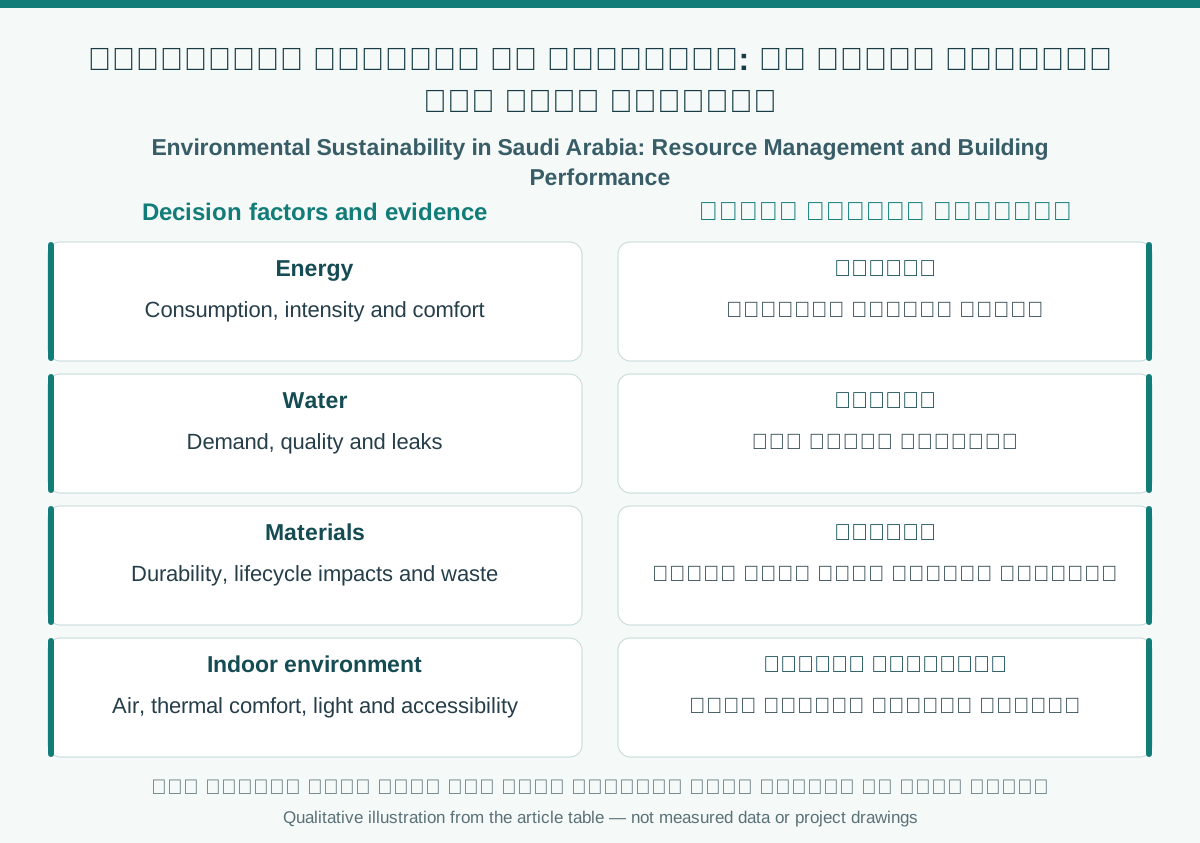
| Factor | Evidence or action |
|---|---|
| Energy | Consumption, intensity and comfort |
| Water | Demand, quality and leaks |
| Materials | Durability, lifecycle impacts and waste |
| Indoor environment | Air, thermal comfort, light and accessibility |
A visual reading of the article topic
- 01Concept and limits of claims
- 02Design decisions across the lifecycle
- 03Comparable monitoring metrics
- 04Comparison and verification table
Practical workflow
- 01 Set goals and baseline
- 02 Compare lifecycle alternatives
- 03 Verify delivery and operation
- 04 Measure performance and improve decisions
Conceptual editorial diagram; not measured data.
Sources and limitations
Editorial adaptation based on the original WordPress archive; original source retained separately. National programs, centers, obligations and project stages from 2021 require dated official verification. The example is hypothetical, not an acceptance threshold or national statistic.
Topics and source excerpts
| Topic | Excerpt from article |
|---|---|
| Concept and limits of claims | The article considers sustainability in national development and resource conservation. |
| Design decisions across the lifecycle | Architects can reduce cooling and lighting demand through climate, orientation, shading and envelope studies, and water demand through suitable fixtures an… |
| Comparable monitoring metrics | Define annual energy use per square metre, water use by occupant or area as suitable, waste by destination, and emissions within stated boundaries. |
| Practical workflow | 01 Set goals and baseline |
| Sources and limitations | Editorial adaptation based on the original WordPress archive; original source retained separately. |
| References and limitations | Energy use intensity divides annual consumption by defined gross area; the example is 120 kWh/m²/year. |
Source excerpts organized for comparison, not newly researched findings.
References and limitations
Energy use intensity divides annual consumption by defined gross area; the example is 120 kWh/m²/year. Distinguish site/source energy from emissions assessment boundaries.
The following references support selected topics in the article.
- UNEP Global Status Report for Buildings and Construction 2025–2026, abstract (May 2026)
- EPA Sustainable Materials Management Basics
- ENERGY STAR What is Energy Use Intensity?
- Saudi National Platform Sustainable Development