Multiple dam functions
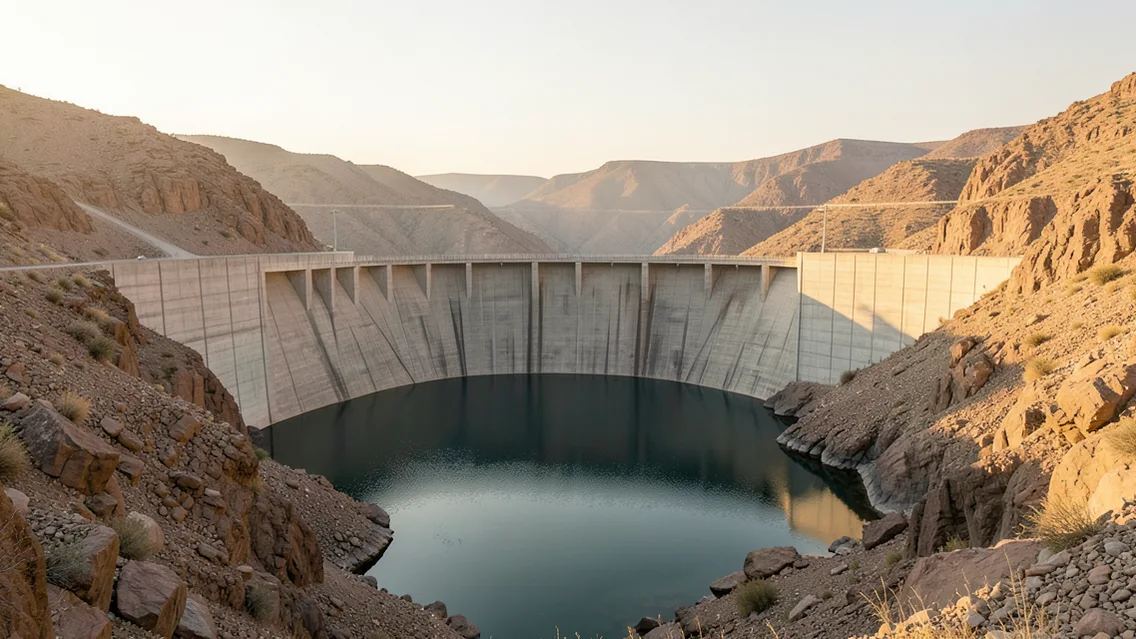
The article describes dams storing runoff, mitigating flood impacts and supporting water use. Dams may serve storage, diversion, groundwater recharge or flood control, or combine functions. Storage capacity is not annual water availability; inflows, evaporation, sediment and operations matter. A dam alone neither desalinates water nor makes it potable.
Interpreting examples and metrics
The source lists King Fahd Dam in Bisha, Wadi Hali, Wadi Bish, Wadi Rabigh, Najran, Abha and others. Compare dams by clearly specified gross or usable storage, structural height or reduction in peak flow. These distinct metrics do not yield one ranking. Historical numbers need dated official references and consistent definitions; large storage does not automatically establish superior flood mitigation.
Design, operation and impacts
Dams affect sediment transport, downstream flows, habitats and water resources; some reservoirs emit greenhouse gases depending on conditions. Feasibility requires catchment, geology, hydrology, structural safety, spillway, operation, maintenance and community and environmental studies. Dams do not eliminate flood risk; warning, response and hazard-area management remain essential. Responsible authorities make operating decisions under approved data and plans.
Comparison and verification table
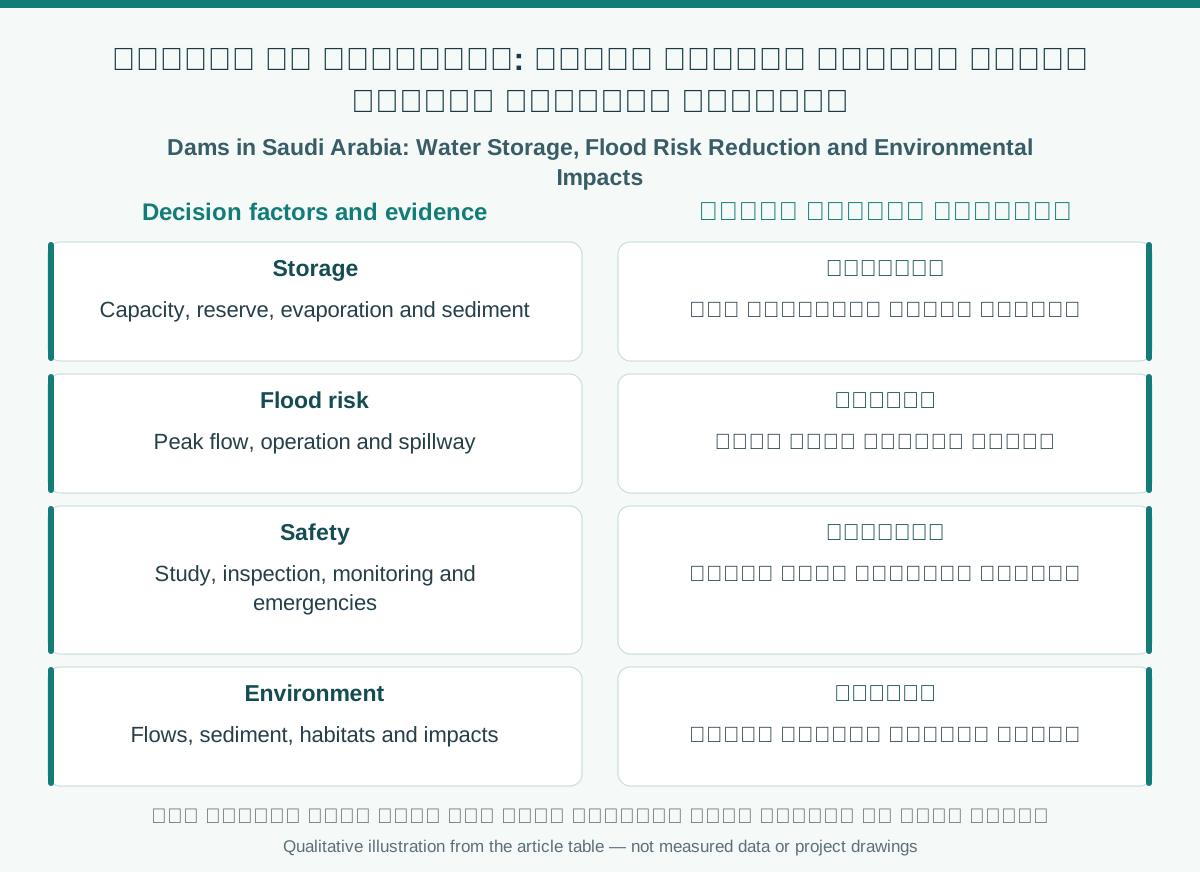
| Factor | Evidence or action |
|---|---|
| Storage | Capacity, reserve, evaporation and sediment |
| Flood risk | Peak flow, operation and spillway |
| Safety | Study, inspection, monitoring and emergencies |
| Environment | Flows, sediment, habitats and impacts |
A visual reading of the article topic
- 01Multiple dam functions
- 02Interpreting examples and metrics
- 03Design, operation and impacts
- 04Comparison and verification table
Practical workflow
- 01 Define dam and catchment function
- 02 Verify metrics and definitions
- 03 Assess risks and impacts
- 04 Monitor approved operation and performance
Conceptual editorial diagram; not measured data.
Sources and limitations
Editorial adaptation based on the original WordPress archive; original source retained separately. 2021 capacities, heights, rankings and dates require official record verification before display; this is neither a current dam ranking nor engineering operating guidance.
Topics and source excerpts
| Topic | Excerpt from article |
|---|---|
| Multiple dam functions | The article describes dams storing runoff, mitigating flood impacts and supporting water use. |
| Interpreting examples and metrics | The source lists King Fahd Dam in Bisha, Wadi Hali, Wadi Bish, Wadi Rabigh, Najran, Abha and others. |
| Design, operation and impacts | Dams affect sediment transport, downstream flows, habitats and water resources; some reservoirs emit greenhouse gases depending on conditions. |
| Practical workflow | 01 Define dam and catchment function |
| Sources and limitations | Editorial adaptation based on the original WordPress archive; original source retained separately. |
| References and limitations | MEWA identifies dams and rainwater harvesting in surface-water initiatives. |
Source excerpts organized for comparison, not newly researched findings.
References and limitations
MEWA identifies dams and rainwater harvesting in surface-water initiatives. Storage capacity is distinct from flow and flood attenuation; use dated records for each dam.
The following references support selected topics in the article.
- MEWA National Transformation Program Initiatives
- MEWA Saudi National Water Strategy 2030
- USGS Ground-Water Development, Sustainability, and Water Budgets