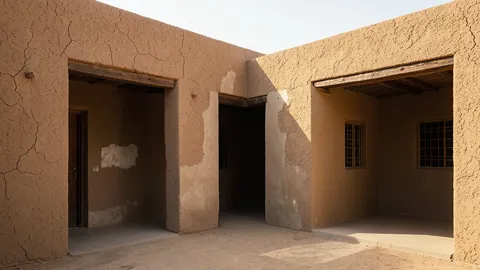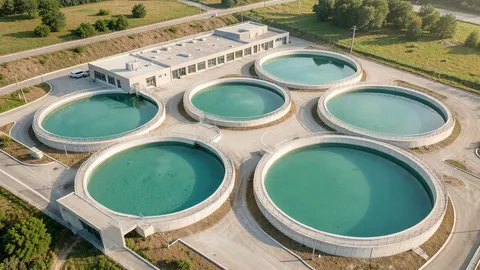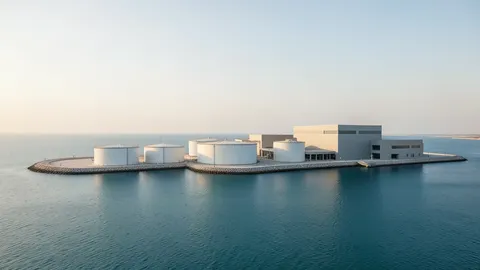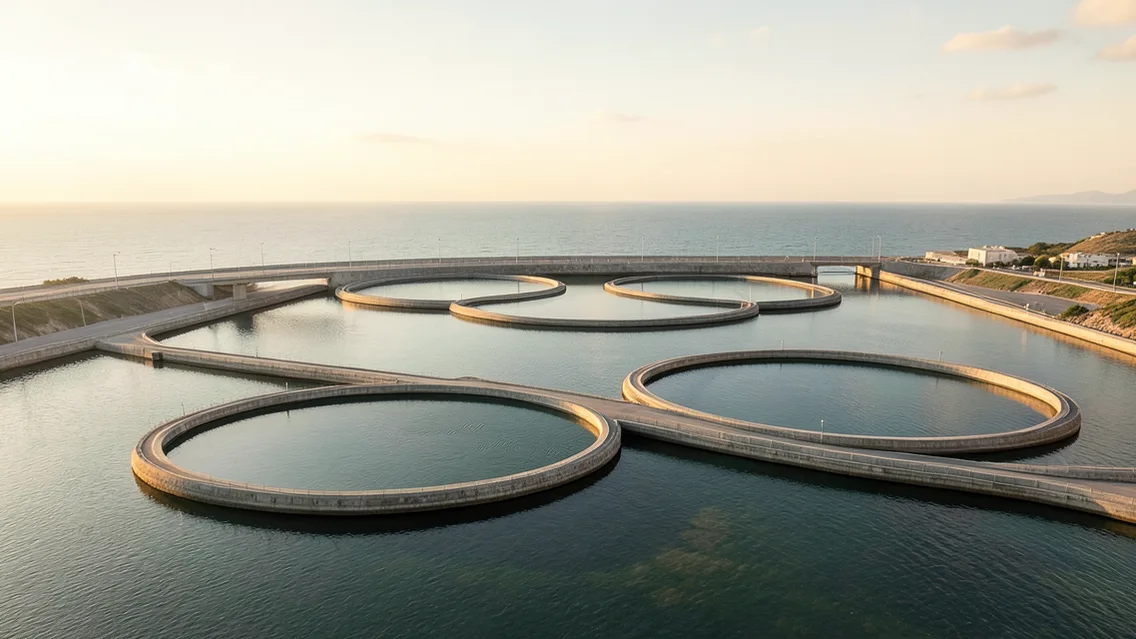
Source diversity and comparison boundaries
The article covers desalination, groundwater, surface water and treated water. Each source’s share varies by year, region and use; drinking water differs from total agricultural, industrial and municipal use. Standardize units, time and scope, distinguishing design capacity, production, distribution and consumption. Do not combine percentages with different denominators in one chart.
Desalination and natural resources
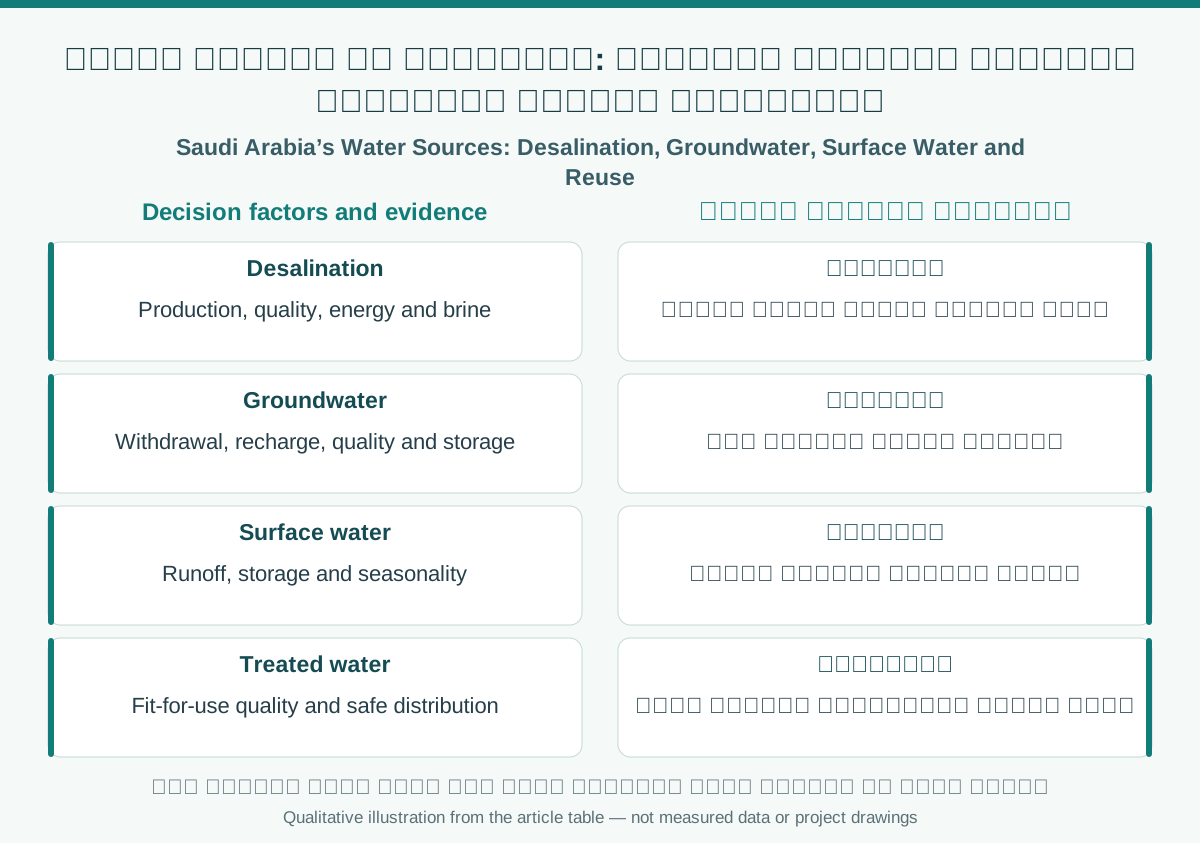
Seawater desalination produces fresh water with necessary treatment, requiring energy, brine management and transmission infrastructure. Groundwater aquifers vary in renewal and quality; sustainable use needs withdrawal, recharge and salinity assessment. Rainfall, runoff and dams support storage, recharge or flood mitigation depending on design. Storage does not make water potable.
Reuse and demand management
Treated water can support specified uses such as irrigation under quality, regulatory and distribution requirements. Treatment does not establish potability; separate-use networks require cross-connection protection. In buildings, monitoring consumption, fixing leaks, selecting efficient fixtures and coordinating irrigation reduce demand. Evaluate actual water savings, service quality, cost and energy while checking authority requirements.
Comparison and verification table
| Factor | Evidence or action |
|---|---|
| Desalination | Production, quality, energy and brine |
| Groundwater | Withdrawal, recharge, quality and storage |
| Surface water | Runoff, storage and seasonality |
| Treated water | Fit-for-use quality and safe distribution |
A visual reading of the article topic
- 01Source diversity and comparison boundaries
- 02Desalination and natural resources
- 03Reuse and demand management
- 04Comparison and verification table
Practical workflow
- 01 Define use and period
- 02 Verify source data
- 03 Compare quality, cost and risk
- 04 Monitor demand and distribution
Conceptual editorial diagram; not measured data.
Sources and limitations
Editorial adaptation based on the original WordPress archive; original source retained separately. The 2021 shares, counts and storage figures have differing definitions and require comparison with official statistics; they are not restated as current. This is not drinking-water treatment guidance.
Topics and source excerpts
| Topic | Excerpt from article |
|---|---|
| Source diversity and comparison boundaries | The article covers desalination, groundwater, surface water and treated water. |
| Desalination and natural resources | Seawater desalination produces fresh water with necessary treatment, requiring energy, brine management and transmission infrastructure. |
| Reuse and demand management | Treated water can support specified uses such as irrigation under quality, regulatory and distribution requirements. |
| Practical workflow | 01 Define use and period |
| Sources and limitations | Editorial adaptation based on the original WordPress archive; original source retained separately. |
| References and limitations | The national water strategy addresses diversified supply, demand and reuse. |
Source excerpts organized for comparison, not newly researched findings.
References and limitations
The national water strategy addresses diversified supply, demand and reuse. Compare sources by year and use category; treatment alone does not establish potability.
The following references support selected topics in the article.
- MEWA Saudi National Water Strategy 2030
- MEWA National Transformation Program Initiatives
- EPA Basic Information about Water Reuse