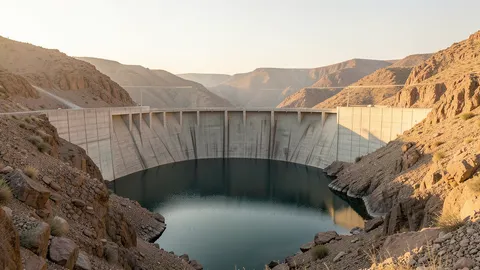
Scarcity does not mean absence of aquifers
The source discusses water challenges in an arid country. Aquifers vary in extent, depth, quality and recharge; the water table describes the surface of saturation in relevant settings, not the voids themselves. Hydrogeology studies groundwater movement, distribution and aquifer properties. No single depletion date applies to all groundwater; assess the specific aquifer, withdrawal, recharge, quality and boundaries.
Water budgets and diversified supply
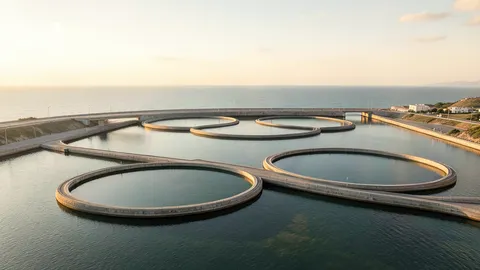
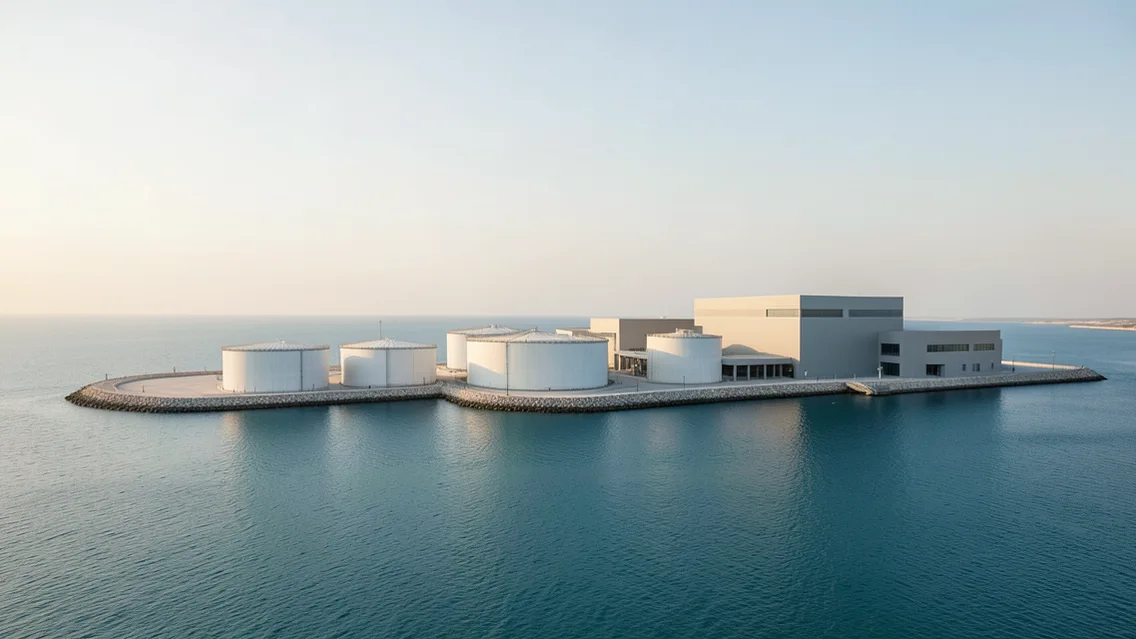
A water budget defines inflows, outflows and storage change. In a simplified hypothetical aquifer, annual recharge of ten million cubic metres and withdrawals of fifteen million produce a five-million deficit before other flows. This is not a measured Saudi aquifer. Desalination, fit-for-use reuse and rainwater management may relieve some pressure on conventional resources but require energy, infrastructure, quality monitoring and costs.
Strategy and operational resilience
The source outlines water objectives including resource sustainability, service quality and emergency preparedness. Assess resilience through source diversity, network reliability, operating storage, response plans and quality, alongside leakage control and separate agricultural, industrial and municipal demand data. Dam functions differ among storage, diversion and flood mitigation. Track metrics on consistent time and scope boundaries and review environmental and financial trade-offs before investment.
Comparison and verification table
| Factor | Evidence or action |
|---|---|
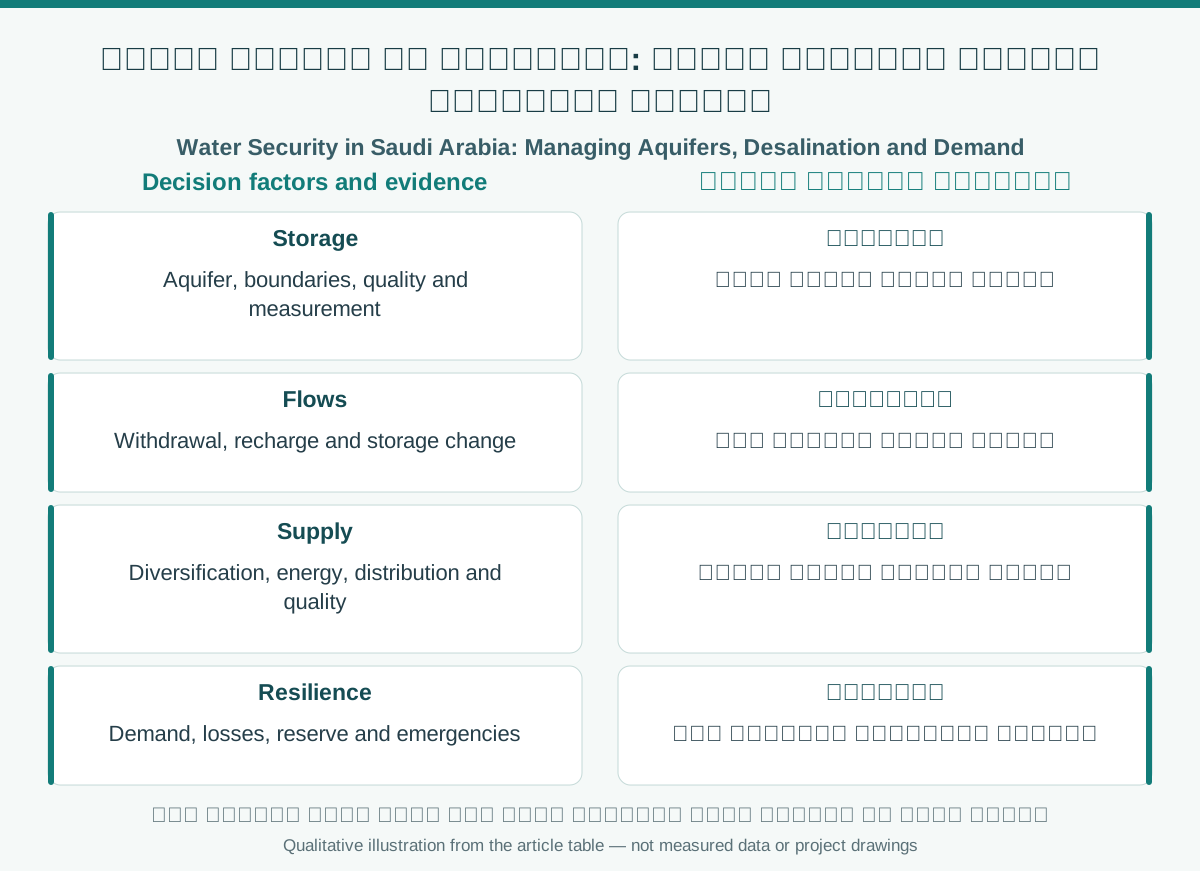
| Storage | Aquifer, boundaries, quality and measurement |
| Flows | Withdrawal, recharge and storage change |
| Supply | Diversification, energy, distribution and quality |
| Resilience | Demand, losses, reserve and emergencies |
A visual reading of the article topic
- 01Scarcity does not mean absence of aquifers
- 02Water budgets and diversified supply
- 03Strategy and operational resilience
- 04Comparison and verification table
Practical workflow
- 01 Define resource and use boundaries
- 02 Review water balance
- 03 Compare supply and demand options
- 04 Assess resilience and impact
Conceptual editorial diagram; not measured data.
Sources and limitations
Editorial adaptation based on the original WordPress archive; original source retained separately. 2021 depletion estimates, dam counts, production and consumption shares require official and hydrogeological verification and are not current forecasts. The example is hypothetical.
Topics and source excerpts
| Topic | Excerpt from article |
|---|---|
| Scarcity does not mean absence of aquifers | The source discusses water challenges in an arid country. |
| Water budgets and diversified supply | A water budget defines inflows, outflows and storage change. |
| Strategy and operational resilience | The source outlines water objectives including resource sustainability, service quality and emergency preparedness. |
| Practical workflow | 01 Define resource and use boundaries |
| Sources and limitations | Editorial adaptation based on the original WordPress archive; original source retained separately. |
| References and limitations | A water budget accounts for inflows, outflows and storage change. |
Source excerpts organized for comparison, not newly researched findings.
References and limitations
A water budget accounts for inflows, outflows and storage change. The hypothetical recharge/withdrawal example yields a five-million-cubic-metre deficit before other flows; it does not measure a Saudi aquifer.
The following references support selected topics in the article.
- USGS Ground-Water Development, Sustainability, and Water Budgets
- MEWA Saudi National Water Strategy 2030