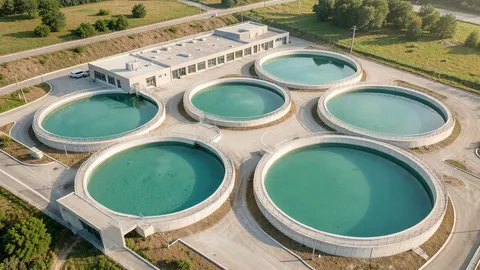
Classification and function
Distinguish industrial storage tanks for petroleum and its products from natural geological reservoirs. Tanks vary by product, operating conditions, pressure, temperature, capacity, roof and installation. Atmospheric or low-pressure storage differs from pressure vessels; classification follows applicable standards and actual conditions, not a generic historical threshold. Materials and containment systems require chemical compatibility, durability and site assessment.
Design within the facility system
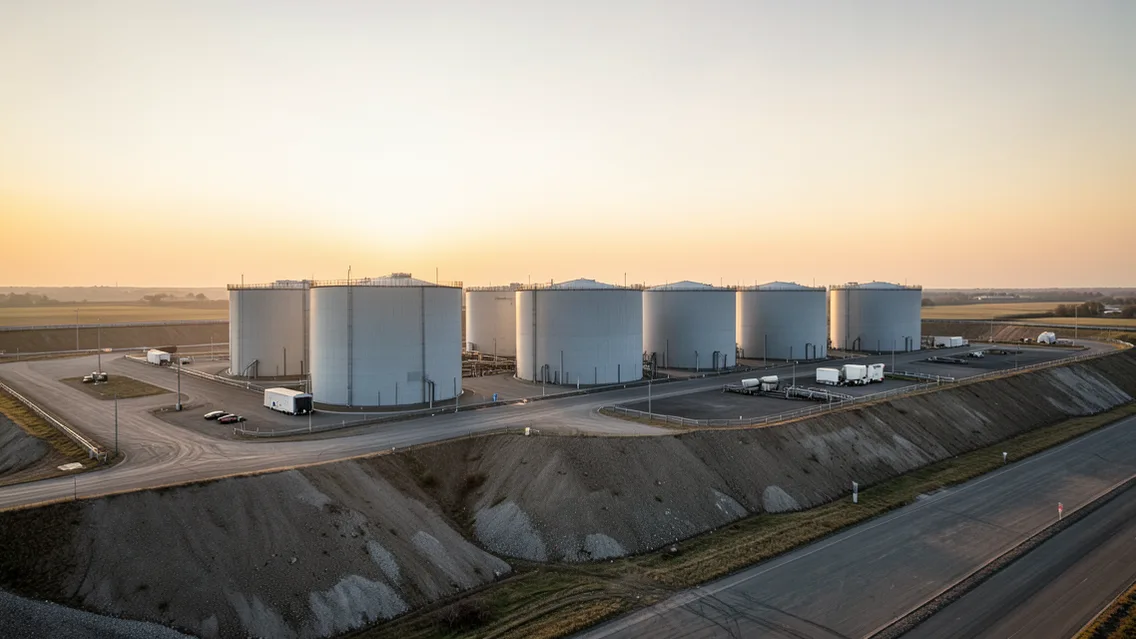
Qualified teams address stored-liquid and vapor properties, loading, foundations, wind, seismic effects, corrosion, secondary containment, fire and spill protection. Measurement, alarms, overfill prevention, venting and protection are integrated through hazard assessment and approved design. API and other standards cover defined engineering scopes, while quality-system certification alone does not certify a specific tank. Document the design standard, edition and applicability.
Inspection, maintenance and risk management
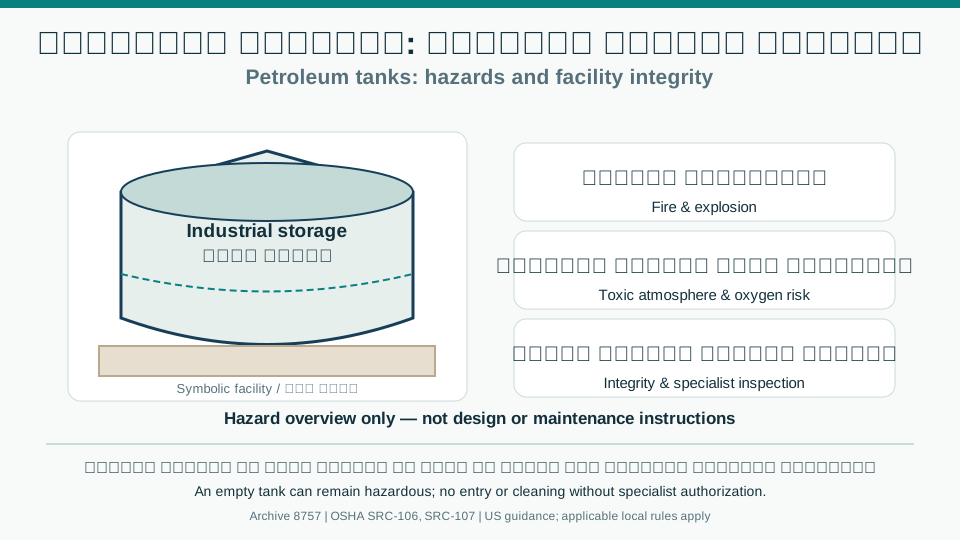
Tanks require integrity programs covering corrosion, leakage, measurement, foundations, roofs and equipment. Entry, cleaning, sludge removal and handling flammable vapors are hazardous operations requiring specialist permits, isolation, monitoring and rescue plans. Do not undertake them from article descriptions or enter a tank simply because it is drained. Suspected leakage or defects require the facility’s approved emergency system and authorized personnel.
Comparison and verification table
| Factor | Evidence or action |
|---|---|
| Stored product | Properties, compatibility and operating limits |
| Design | Standard category, loads and containment |
| Measurement and protection | Approved level measurement, alarms and monitoring |
| Maintenance | Integrity program, permits and specialist inspection |
A visual reading of the article topic
- 01Classification and function
- 02Design within the facility system
- 03Inspection, maintenance and risk management
- 04Comparison and verification table
Practical workflow
- 01 Define tank function and scope
- 02 Establish standards and hazards with specialists
- 03 Review design and safeguards
- 04 Document inspection and safety management
Conceptual editorial diagram; not measured data.
Topics and source excerpts
| Topic | Excerpt from article |
|---|---|
| Classification and function | Distinguish industrial storage tanks for petroleum and its products from natural geological reservoirs. |
| Design within the facility system | Qualified teams address stored-liquid and vapor properties, loading, foundations, wind, seismic effects, corrosion, secondary containment, fire and spill p… |
| Inspection, maintenance and risk management | Tanks require integrity programs covering corrosion, leakage, measurement, foundations, roofs and equipment. |
| Practical workflow | 01 Define tank function and scope |
| Sources and limitations | Editorial adaptation based on the original WordPress archive; original source retained separately. |
Source excerpts organized for comparison, not newly researched findings.
Sources and limitations
Editorial adaptation based on the original WordPress archive; original source retained separately. Historical tank-cleaning, entry, material-mixing and pressure-threshold descriptions are not reproduced as instructions. This is not tank design, maintenance planning or a work permit; consult applicable standards and specialists.
- OSHA: Storage Tanks — Hazard Solutions — Fire, explosion, toxic atmosphere, oxygen imbalance and confined-space hazards; US guidance, local requirements apply.
- OSHA Technical Manual: Industrial Safety Hazards — Empty tanks may retain hazardous atmospheres; specialist assessment required, not entry or conversion authorization.