Function and location
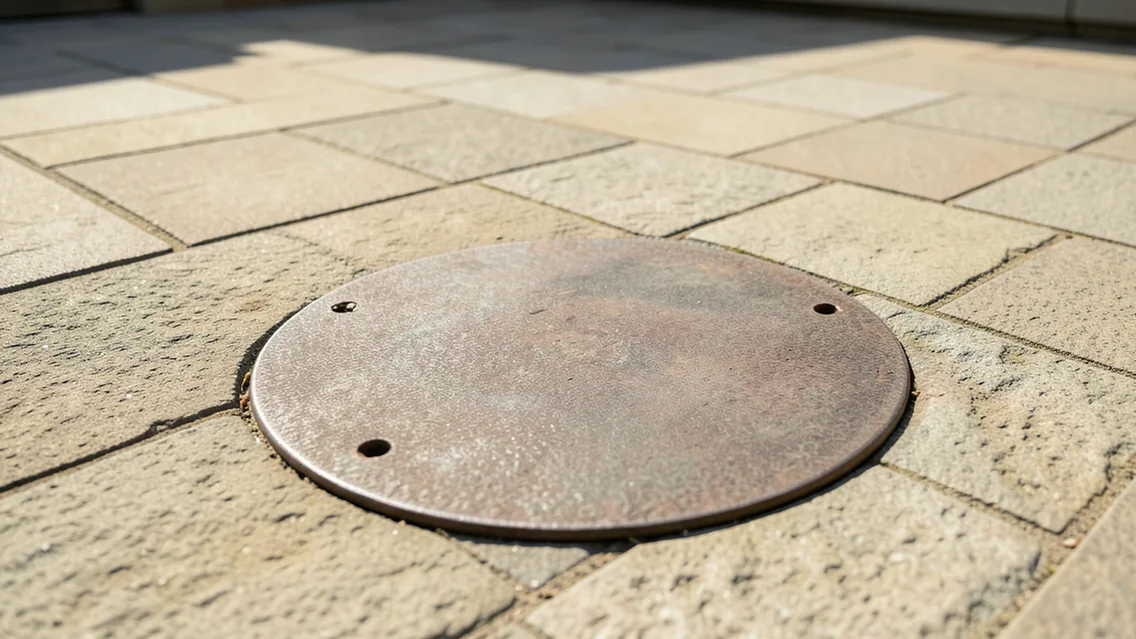
Manholes provide access for inspection, cleaning and maintenance at changes in alignment, level or connections as specified. Typical components include a base, flow channel, shaft, neck and cover depending on type. Account for surface access, traffic and utilities. Sanitary manholes differ from storm drains and cable chambers; one structure is not suitable for every service.
Chambers and pipes
Chambers can be circular or rectangular precast units or other approved materials. Assess traffic loading, ground, groundwater, flotation, corrosion, watertightness and joint compatibility. Gravity sewers differ from force mains in design, pressure and testing. Select diameters, slopes and materials by hydraulic analysis and site conditions. Coordinate potable water crossings according to utility requirements.
Inspection and safety
Before backfilling or concealing joints, check levels, alignment, diameters, materials, base, cover and specified tests. Leakage, pressure or CCTV inspection may be required depending on network type. Retain as-built drawings and records. Sewer entry poses gas, oxygen deficiency and inundation hazards; restrict it to qualified teams under confined-space permit and rescue procedures, preferring surface inspection when feasible.
Comparison and verification table
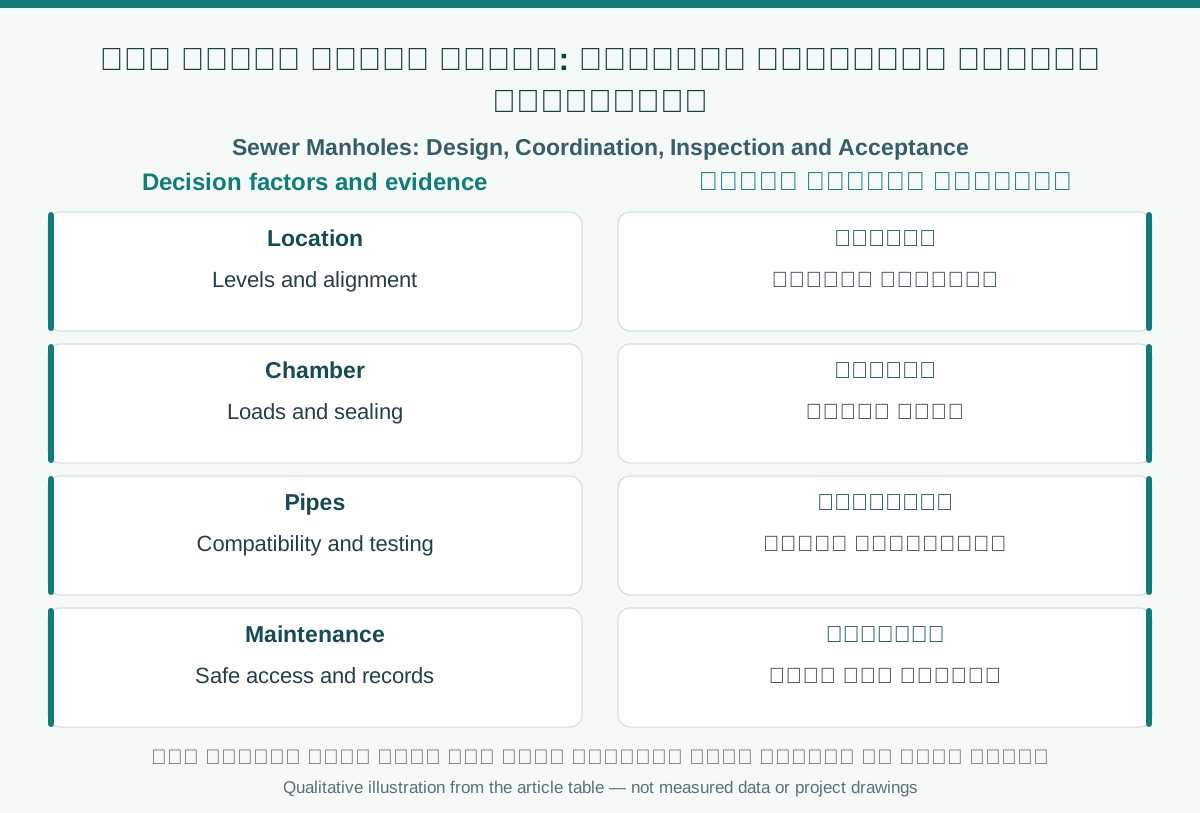
| Factor | Evidence or action |
|---|---|
| Location | Levels and alignment |
| Chamber | Loads and sealing |
| Pipes | Compatibility and testing |
| Maintenance | Safe access and records |
A visual reading of the article topic
- 01Function and location
- 02Chambers and pipes
- 03Inspection and safety
- 04Comparison and verification table
Practical workflow
- 01 Review design
- 02 Verify materials
- 03 Test before concealment
- 04 Document acceptance
Conceptual editorial diagram; not measured data.
Sources and limitations
Editorial adaptation based on the original WordPress archive; original source retained separately. Historical chamber dimensions, slopes, separation distances and water or pressure test values require checking the applicable code and utility requirements; they are not universal values.
Topics and source excerpts
| Topic | Excerpt from article |
|---|---|
| Function and location | Manholes provide access for inspection, cleaning and maintenance at changes in alignment, level or connections as specified. |
| Chambers and pipes | Chambers can be circular or rectangular precast units or other approved materials. |
| Inspection and safety | Before backfilling or concealing joints, check levels, alignment, diameters, materials, base, cover and specified tests. |
| Practical workflow | 01 Review design |
| Sources and limitations | Editorial adaptation based on the original WordPress archive; original source retained separately. |
| References and limitations | Access chambers support collection-system inspection; distinguish surface inspection from hazardous confined entry. |
Source excerpts organized for comparison, not newly researched findings.
References and limitations
Access chambers support collection-system inspection; distinguish surface inspection from hazardous confined entry. Safety guidance warns of unexpectedly lethal sewer atmospheres; use trained personnel under applicable local requirements.
The following references support selected topics in the article.
- EPA Report on Condition Assessment Technology of Wastewater Collection Systems
- EPA Wastewater Technology Fact Sheet: Sewers, Force Main (2000)
- OSHA 1910.146 Appendix E: Sewer System Entry
- Saudi Plumbing Code SBC 701 (2024)