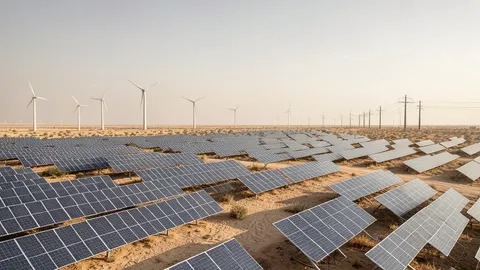
Projects and targets over time
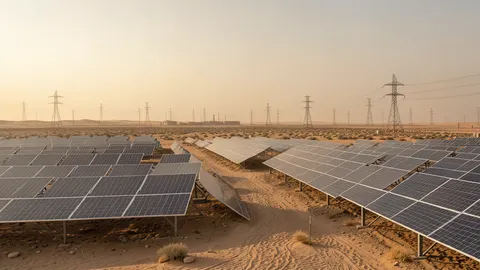
The 2021 article discusses Sakaka and Saudi solar-development initiatives. Distinguish individual projects from national targets, and nameplate capacity in MW from generated energy in MWh. Investment announcements or construction starts do not establish actual generation. Updated studies should record project status, information source and date, separating targets from documented delivery.
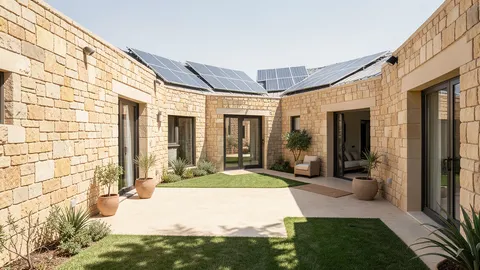
Solar energy in buildings
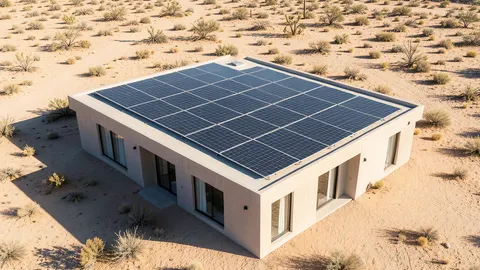
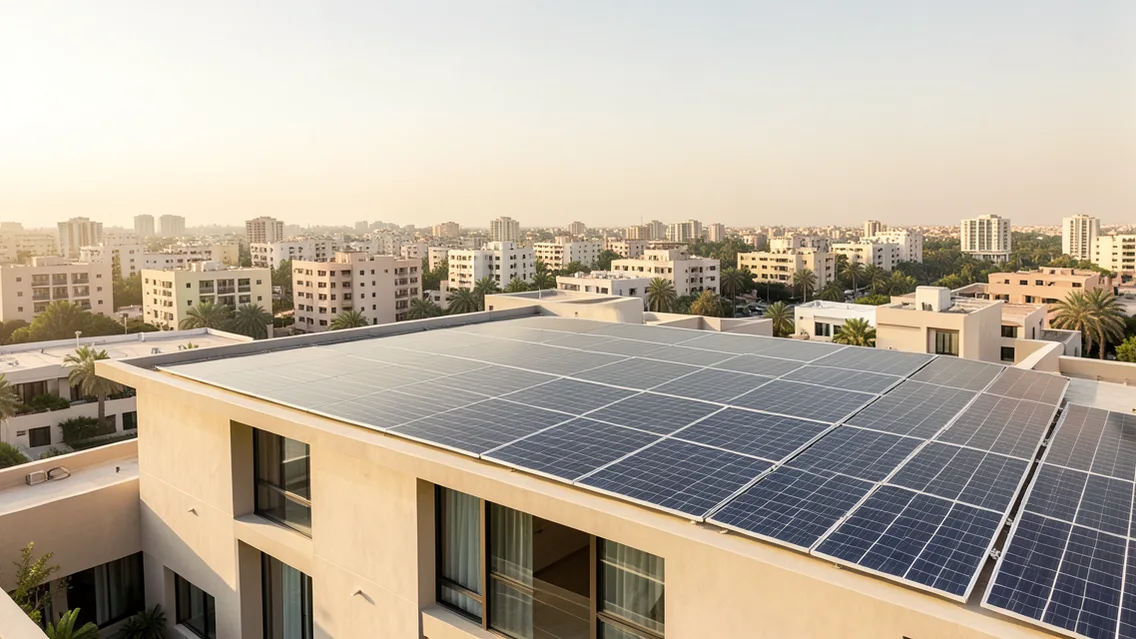
Home systems begin with demand profiles, roof area, shading, structural condition and electrical compatibility. Output depends on irradiance, temperature, soiling and losses, while storage needs depend on purpose. Hypothetically, a 10 kWp array with assumed annual specific yield of 1,500 kWh/kWp produces 15,000 kWh per year. This is neither a site-specific forecast nor guaranteed savings.
Feasibility, grid integration and sustainability
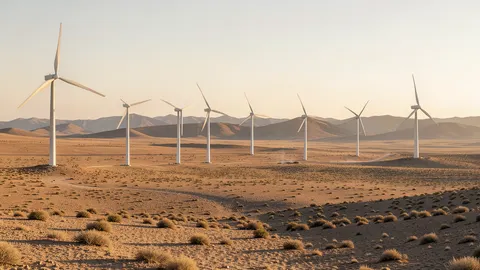
Feasibility compares equipment, installation, protection, maintenance and replacement costs with self-consumption and export value under applicable connection arrangements. Do not assume historical fees, tariffs, panel prices or cost-reduction rates still apply. Consider manufacturing, land use and end-of-life panel management; solar power does not create a pollution- or virus-free environment. Qualified professionals handle design, connection and commissioning.
Comparison and verification table
| Factor | Evidence or action |
|---|---|
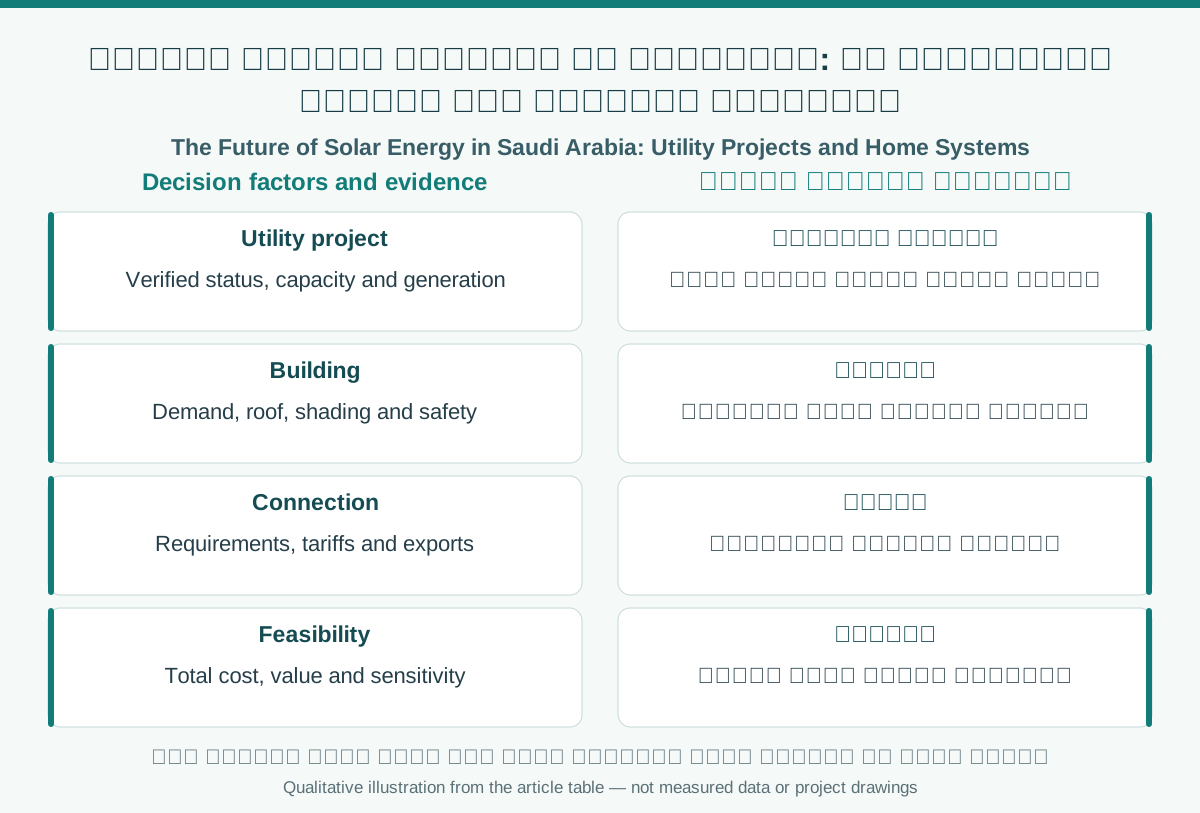
| Utility project | Verified status, capacity and generation |
| Building | Demand, roof, shading and safety |
| Connection | Requirements, tariffs and exports |
| Feasibility | Total cost, value and sensitivity |
A visual reading of the article topic
- 01Projects and targets over time
- 02Solar energy in buildings
- 03Feasibility, grid integration and sustainability
- 04Comparison and verification table
Practical workflow
- 01 Define project scope
- 02 Verify resource and demand data
- 03 Review connection and costs
- 04 Assess generation and impact
Conceptual editorial diagram; not measured data.
Sources and limitations
Editorial adaptation based on the original WordPress archive; original source retained separately. Sakaka figures, targets, prices and fees in the 2021 article need official updates; the example is hypothetical. No installation recommendation or current output forecast is provided.
Topics and source excerpts
| Topic | Excerpt from article |
|---|---|
| Projects and targets over time | The 2021 article discusses Sakaka and Saudi solar-development initiatives. |
| Solar energy in buildings | Home systems begin with demand profiles, roof area, shading, structural condition and electrical compatibility. |
| Feasibility, grid integration and sustainability | Feasibility compares equipment, installation, protection, maintenance and replacement costs with self-consumption and export value under applicable connect… |
| Practical workflow | 01 Define project scope |
| Sources and limitations | Editorial adaptation based on the original WordPress archive; original source retained separately. |
| References and limitations | Distinguish commissioned capacity from actual generation and date the figures. |
Source excerpts organized for comparison, not newly researched findings.
References and limitations
Distinguish commissioned capacity from actual generation and date the figures. Residential systems require location- and loss-based estimates and connection checks.
The following references support selected topics in the article.
- GASTAT Renewable Energy Statistics 2024 announcement, 14 July 2025
- GASTAT Methodology and Quality Report for Renewable Energy Statistics 2025, 26 July 2026
- System Advisor Model Photovoltaic Models, NLR
- Saudi Energy small-scale solar PV service