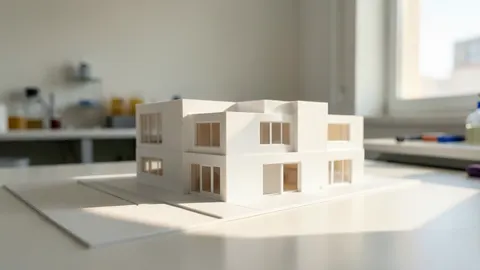
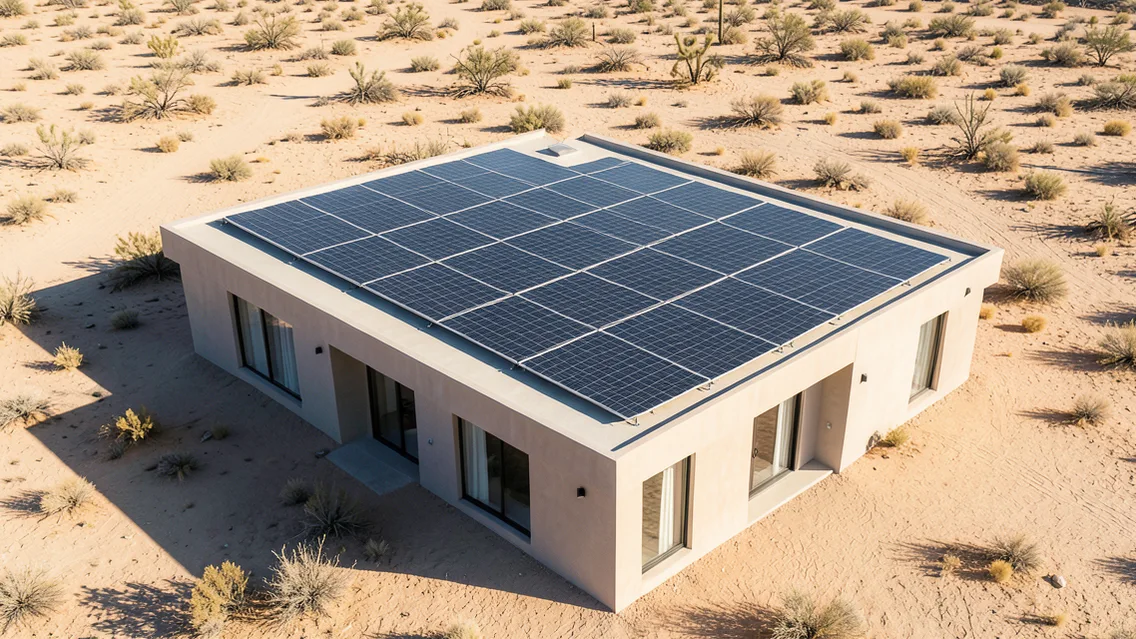
Define the objective
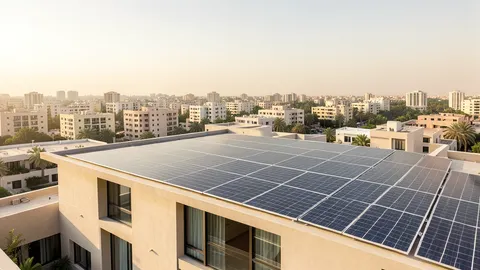
The source covers solar electricity, array connections and water heating. Begin with demand and its timing, roof area, shading, orientation, heat and dust. Assess roof capacity, waterproofing and maintenance access. Grid-connected systems differ from off-grid and hybrid systems, and batteries are not always required. Nominal power is not daily energy yield.
Components and compatibility
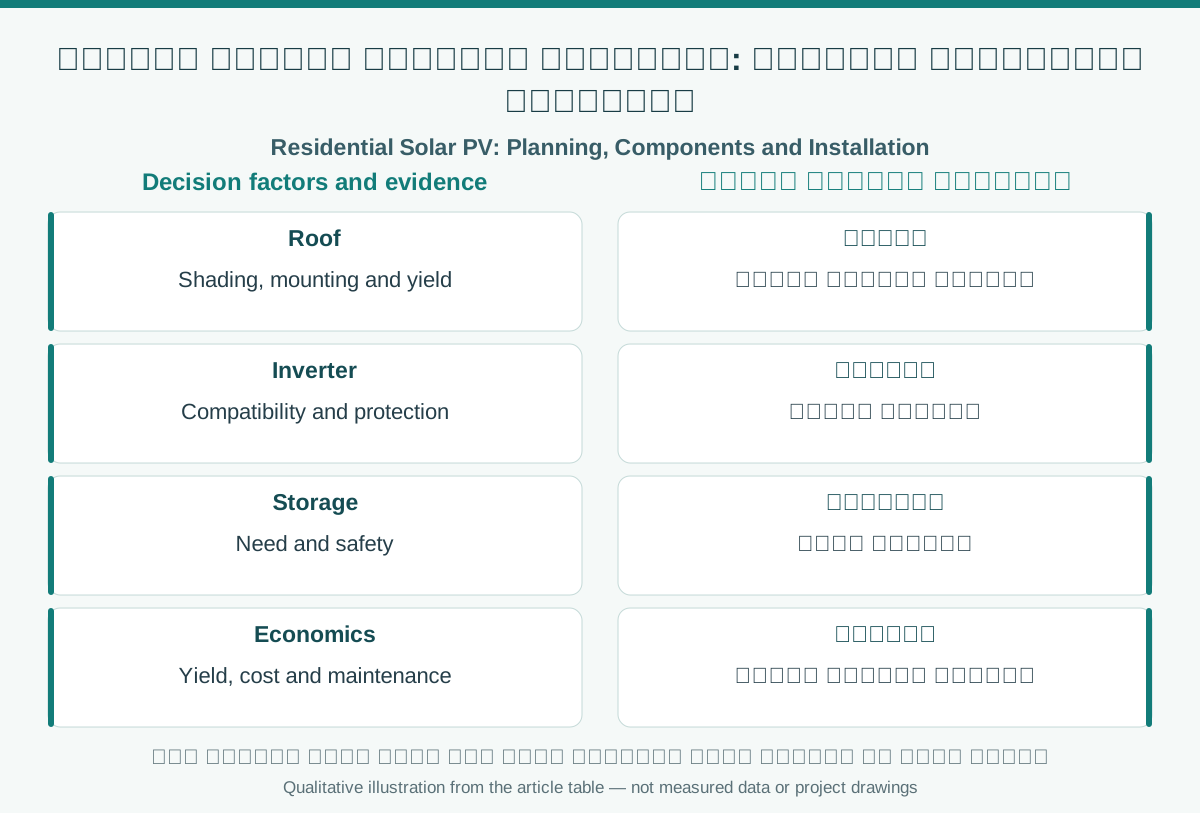
PV modules produce DC electricity and the inverter converts it to AC when needed. Systems may include charge control, storage, protection, earthing, isolation and monitoring. Series and parallel connections affect voltage and current, but array design must also account for temperature, equipment limits and protection. Illuminated modules may remain energized even after parts of the system are isolated; this is not a DIY wiring guide.
Installation and economics
Qualified professionals approve mounting, wind resistance, electrical protection, fire requirements and grid connection, then conduct commissioning tests. Compare expected annual generation, losses, cost, maintenance, warranty and tariff assumptions rather than panel count alone. Solar water heating is a thermal technology distinct from PV; choose according to building loads.
Comparison and verification table
| Factor | Evidence or action |
|---|---|
| Roof | Shading, mounting and yield |
| Inverter | Compatibility and protection |
| Storage | Need and safety |
| Economics | Yield, cost and maintenance |
A visual reading of the article topic
- 01Define the objective
- 02Components and compatibility
- 03Installation and economics
- 04Comparison and verification table
Practical workflow
- 01 Analyze demand and site
- 02 Select system architecture
- 03 Approve design
- 04 Commission
Conceptual editorial diagram; not measured data.
Sources and limitations
Editorial adaptation based on the original WordPress archive; original source retained separately. Financing in Egyptian pounds, prices and wiring details in the 2021 source reflect a historical, not necessarily Saudi, context and are not adopted as current terms or wiring instructions.
Topics and source excerpts
| Topic | Excerpt from article |
|---|---|
| Define the objective | The source covers solar electricity, array connections and water heating. |
| Components and compatibility | PV modules produce DC electricity and the inverter converts it to AC when needed. |
| Installation and economics | Qualified professionals approve mounting, wind resistance, electrical protection, fire requirements and grid connection, then conduct commissioning tests. |
| Practical workflow | 01 Analyze demand and site |
| Sources and limitations | Editorial adaptation based on the original WordPress archive; original source retained separately. |
| References and limitations | PV modules produce DC and inverters convert to AC where required. |
Source excerpts organized for comparison, not newly researched findings.
References and limitations
PV modules produce DC and inverters convert to AC where required. Select the system for loads, site, losses and connection requirements; general articles do not provide wiring design.
The following references support selected topics in the article.
- DOE Solar Photovoltaic Technology Basics
- DOE Solar Photovoltaic System Design Basics
- System Advisor Model Photovoltaic Models, NLR
- Saudi Energy small-scale solar PV service