Calculate consumption in the correct units
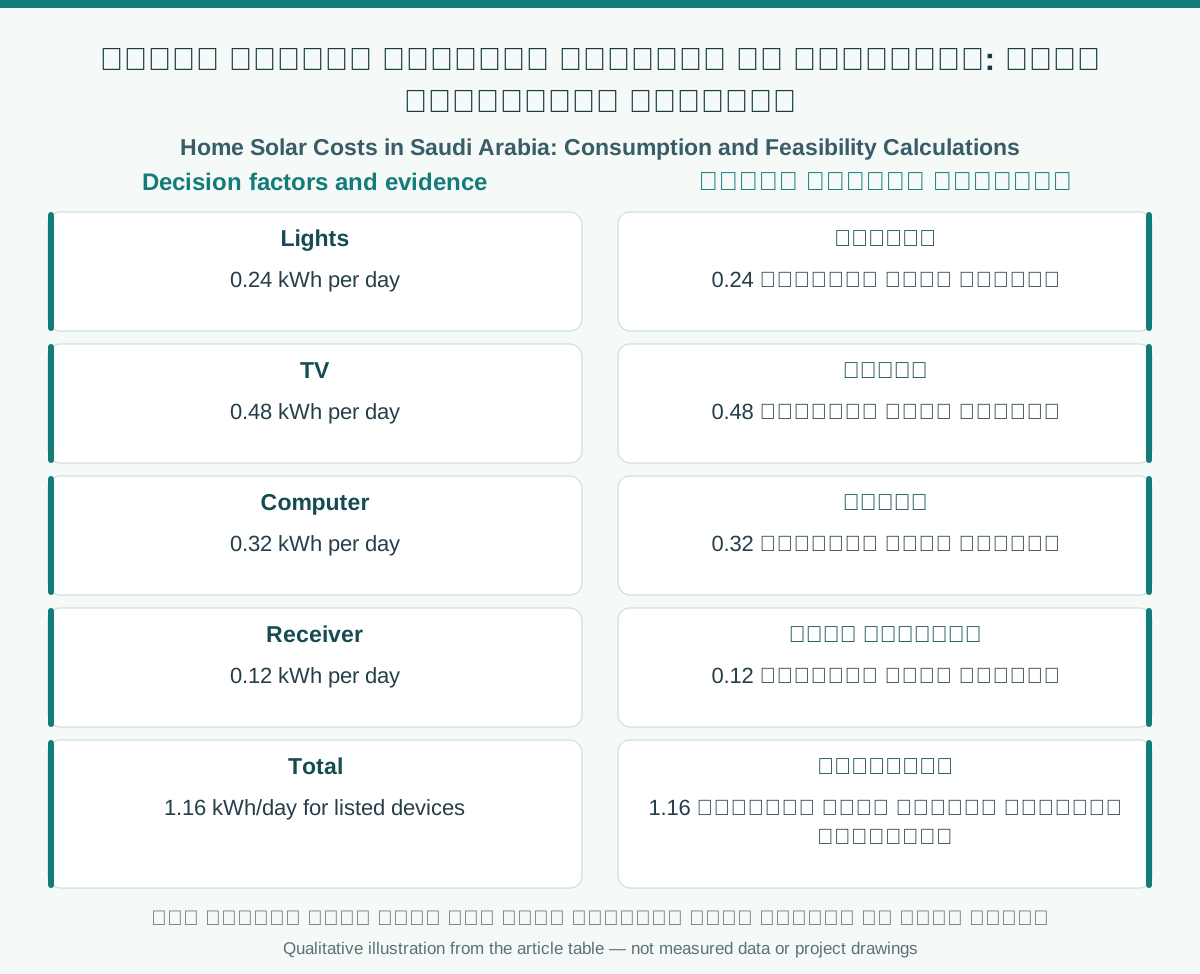
The source lists panel prices and household loads. Multiply power in watts by operating hours and device count to obtain watt-hours, not watts per hour. Its example: four 10 W lamps for six hours use 240 Wh; an 80 W TV for six hours 480 Wh; an 80 W computer for four hours 320 Wh; a 20 W receiver for six hours 120 Wh. Total: 1,160 Wh or 1.16 kWh per day. This is not whole-house consumption.
Sizing and energy generation
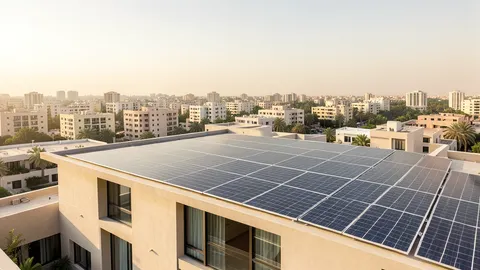
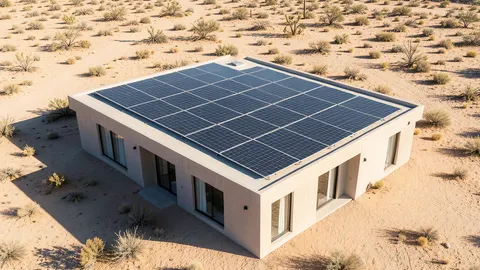
Use twelve months of bills where available, separating daytime, nighttime, cooling and seasonal loads. Specialists review roof area, shading, orientation, heat, soiling, efficiencies, structural capacity and electrical safety. Hypothetically, 5 kWp with five equivalent sun hours and a performance ratio of 0.8 yields an estimated 20 kWh per day under these assumptions, not a daily or annual guarantee. Batteries depend on storage objectives and connection arrangements.
Cost and payback
System costs extend beyond panels to inverters, installation, protection, engineering, connection, maintenance, replacement and possible storage. Compare written offers of equivalent scope and value self-consumed and exported electricity only under verified tariffs and connection terms. Hypothetically, SAR 25,000 upfront and SAR 2,500 annual net savings yield ten-year simple payback, excluding financing and changing performance or tariffs. Obtain qualified assessment before commitment; the 2021 supplier list is not current.
Illustrative daily device consumption
| Factor | Evidence or action |
|---|---|
| Lights | 0.24 kWh per day |
| TV | 0.48 kWh per day |
| Computer | 0.32 kWh per day |
| Receiver | 0.12 kWh per day |
| Total | 1.16 kWh/day for listed devices |
A visual reading of the article topic
- 01Calculate consumption in the correct units
- 02Sizing and energy generation
- 03Cost and payback
- 04Illustrative daily device consumption
Practical workflow
- 01 Measure actual consumption
- 02 Assess roof and expected generation
- 03 Compare system and connection offers
- 04 Test payback and sensitivity
Conceptual editorial diagram; not measured data.
Sources and limitations
Editorial adaptation based on the original WordPress archive; original source retained separately. 2021 panel prices, providers, tariffs and energy targets are not verified as current. Generation and payback examples are hypothetical; the source load example has corrected units. The original video is preserved.
Topics and source excerpts
| Topic | Excerpt from article |
|---|---|
| Calculate consumption in the correct units | The source lists panel prices and household loads. |
| Sizing and energy generation | Use twelve months of bills where available, separating daytime, nighttime, cooling and seasonal loads. |
| Cost and payback | System costs extend beyond panels to inverters, installation, protection, engineering, connection, maintenance, replacement and possible storage. |
| Practical workflow | 01 Measure actual consumption |
| Sources and limitations | Editorial adaptation based on the original WordPress archive; original source retained separately. |
| References and limitations | Estimate solar output using resource, orientation, temperature and losses; complete assessment through official connection service and dated quotations. |
Source excerpts organized for comparison, not newly researched findings.
References and limitations
Estimate solar output using resource, orientation, temperature and losses; complete assessment through official connection service and dated quotations. An example is not a commercial offer or guaranteed output.
The following references support selected topics in the article.
- System Advisor Model Photovoltaic Models, NLR
- DOE Solar Photovoltaic System Design Basics
- Saudi Energy small-scale solar PV service