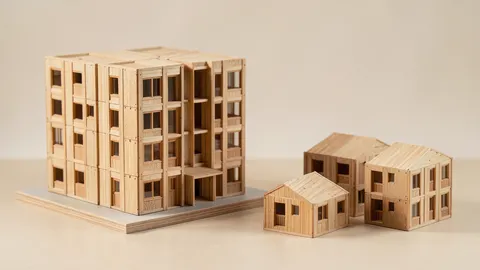
The property as a registration unit
The article explains a shift toward associating information and rights with an identified property. Verification includes property identity, location, area, boundaries and relevant rights or restrictions as documented in authorized records. Standardized information may reduce ambiguity, but a digital record does not by itself resolve every dispute or surveying discrepancy.
Checks before a transaction
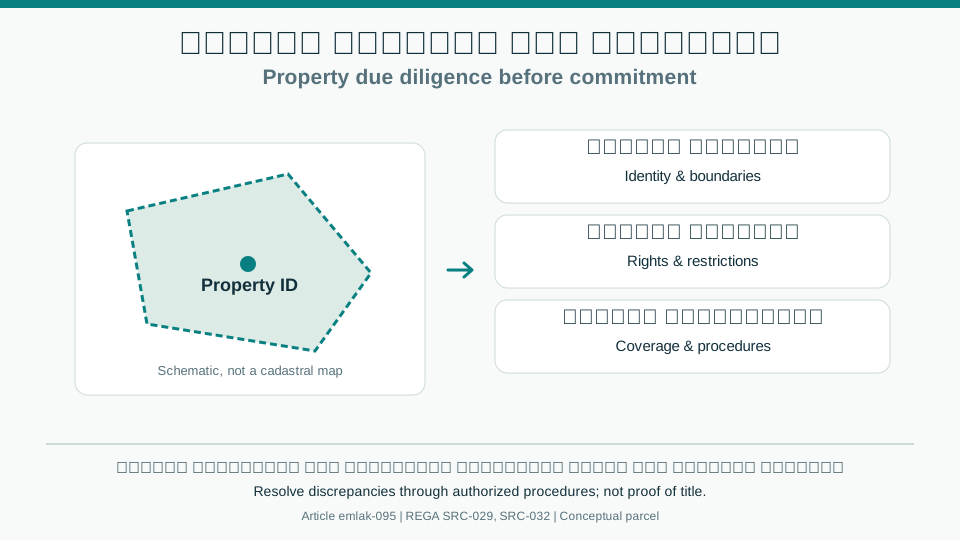
Identify the property and authorized institution, and consult official information about registration coverage and the applicable procedure. Compare ownership, plans and boundaries against authorized documentation and available records, and verify parties' authority and transaction-relevant rights or restrictions. Resolve discrepancies through approved correction procedures rather than concealing conflicts or relying on marketing listings.
Data and investment decisions
Reliable records may support due diligence, valuation and financing procedures, while feasibility, technical condition and risk assessment remain separate tasks. Preserve documents and verification dates. Announcing registration in an area does not establish completion for every property there; confirm property-specific deadlines and obligations with the official institution.
Decision review table
| Factor | Evidence or action |
|---|---|
| Property identity | Identifier, location, area and boundaries |
| Rights | Documents, restrictions and party authority |
| Procedure | Coverage, timing and official channels |
| Discrepancy | Documentation and authorized correction |
A visual reading of the article topic
- 01The property as a registration unit
- 02Checks before a transaction
- 03Data and investment decisions
- 04Decision review table
Practical workflow
- 01 Identify property
- 02 Consult official records
- 03 Reconcile documents
- 04 Resolve discrepancies before commitment
Conceptual editorial diagram; not measured data.
Topics and source excerpts
| Topic | Excerpt from article |
|---|---|
| The property as a registration unit | The article explains a shift toward associating information and rights with an identified property. |
| Checks before a transaction | Identify the property and authorized institution, and consult official information about registration coverage and the applicable procedure. |
| Data and investment decisions | Reliable records may support due diligence, valuation and financing procedures, while feasibility, technical condition and risk assessment remain separate… |
| Practical workflow | 01 Identify property |
| Sources and limitations | Editorial development based on the author’s original Emlak article; previous text retained. |
Source excerpts organized for comparison, not newly researched findings.
Sources and limitations
Editorial development based on the author’s original Emlak article; previous text retained. The report of 58,500 parcels in specific regions, registration dates and legal effects require reconciliation with REGA and relevant authorities. This is educational, not a determination of title or legal obligations.
- REGA: Law of Real Estate Registration — Articles 8 and 10–14 on initial registration, evidentiary force, challenges and subsequent rights; not proof of individual eligibility or registered title through a token.
- REGA: Implementing Regulations of the Law of Real Estate Registration — Initial registration, overlapping deeds, limited area discrepancies and registration without application where conditions are met; controls and notification apply, not proof of an individual property's registration.