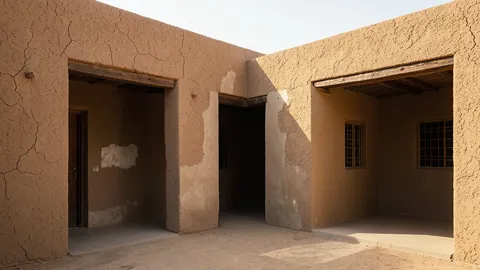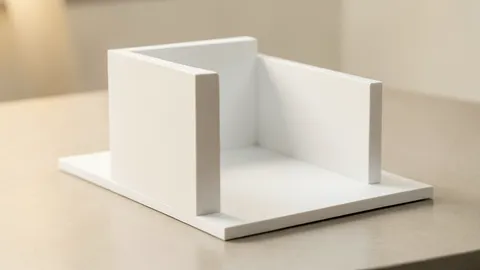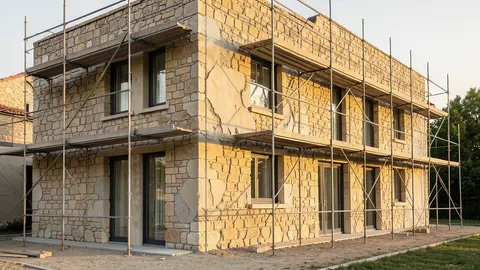
Each joint has a function
The source describes joints accommodating movement caused by thermal change, shrinkage and other factors. Distinguish expansion or movement joints designed for anticipated displacement, contraction or control joints locating cracking in specific applications, and construction joints associated with placement interruptions. Seismic separation may accommodate different movements between building blocks. A slab groove-depth rule cannot determine structural separation width.
Coordinate joints across building systems
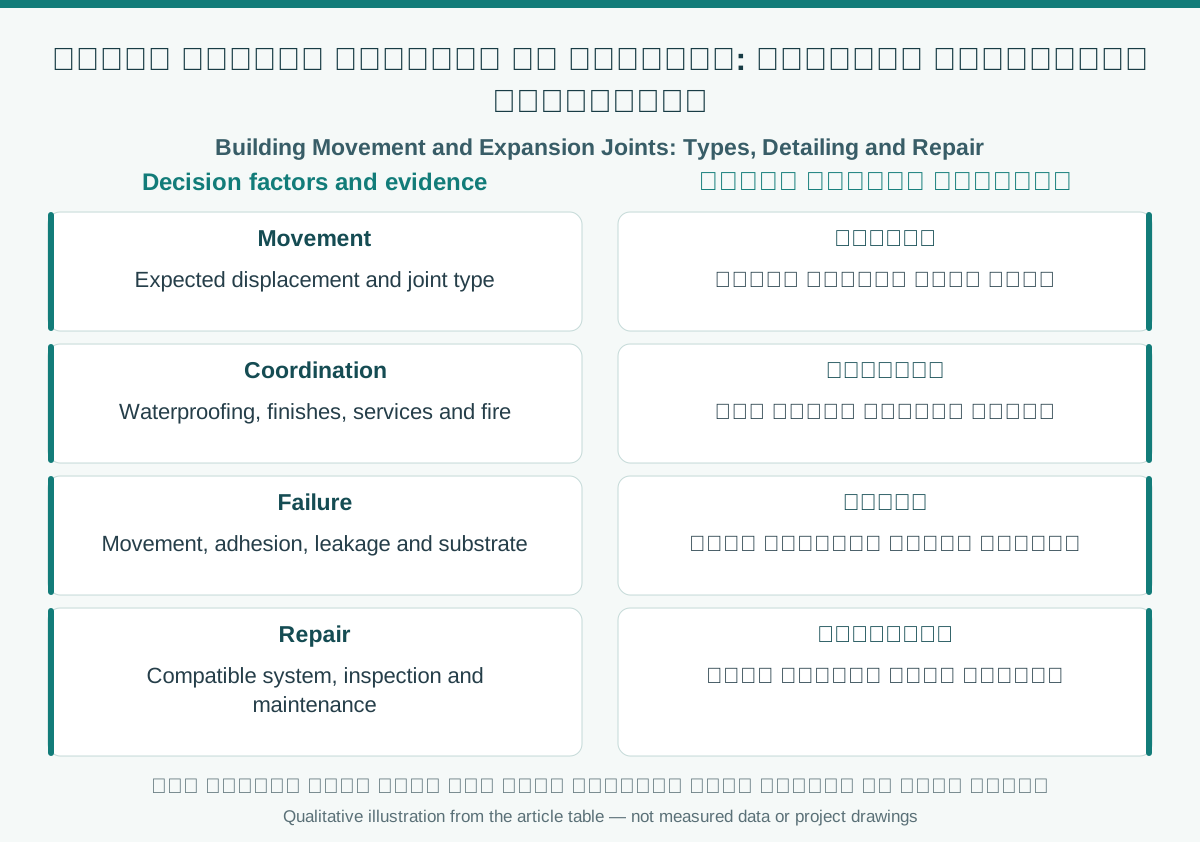
Specialists determine expected movement, width and detailing from geometry, materials, climate and structural system. Architects coordinate joint function across finishes, waterproofing, ceilings, services and required fire and acoustic barriers. Finishes and services must not restrain intended movement; seals and covers are selected for movement capacity, exposure and location. Do not rigidly fill a structural gap merely to conceal it.
Diagnose failure before repair
For cracked or leaking joint covers, examine adhesion, cover position, adjacent movement, substrate condition and water source. Unexpected displacement or structural damage requires professional assessment before intervention. The approved system determines preparation, materials, acceptance tests and maintenance. Do not cut existing concrete to introduce a joint without reviewing reinforcement, services and design.
Comparison and verification table
| Factor | Evidence or action |
|---|---|
| Movement | Expected displacement and joint type |
| Coordination | Waterproofing, finishes, services and fire |
| Failure | Movement, adhesion, leakage and substrate |
| Repair | Compatible system, inspection and maintenance |
A visual reading of the article topic
- 01Each joint has a function
- 02Coordinate joints across building systems
- 03Diagnose failure before repair
- 04Comparison and verification table
Practical workflow
- 01 Identify joint type
- 02 Verify movement and damage
- 03 Approve details with specialist
- 04 Check continuity and maintenance
Conceptual editorial diagram; not measured data.
Sources and limitations
Editorial adaptation based on the original WordPress archive; original source retained separately. Historical dimensional and cutting rules must not be used to design joints or alter existing elements without engineering review. The source video is preserved.
Topics and source excerpts
| Topic | Excerpt from article |
|---|---|
| Each joint has a function | The source describes joints accommodating movement caused by thermal change, shrinkage and other factors. |
| Coordinate joints across building systems | Specialists determine expected movement, width and detailing from geometry, materials, climate and structural system. |
| Diagnose failure before repair | For cracked or leaking joint covers, examine adhesion, cover position, adjacent movement, substrate condition and water source. |
| Practical workflow | 01 Identify joint type |
| Sources and limitations | Editorial adaptation based on the original WordPress archive; original source retained separately. |
| References and limitations | ACI distinguishes contraction joints for crack-location control, expansion joints for movement, and construction joints for placement sequence. |
Source excerpts organized for comparison, not newly researched findings.
References and limitations
ACI distinguishes contraction joints for crack-location control, expansion joints for movement, and construction joints for placement sequence. Joint dimensions and continuity follow project design.
The following references support selected topics in the article.
- ACI FAQ – Difference between a contraction joint, isolation joint, expansion joint, construction joint, and a cold joint
- Saudi Code for Structural Design Loads, Seismic, and Wind SBC 301 (2024)
- ACI FAQ – What steps are taken in the repair of concrete structures?