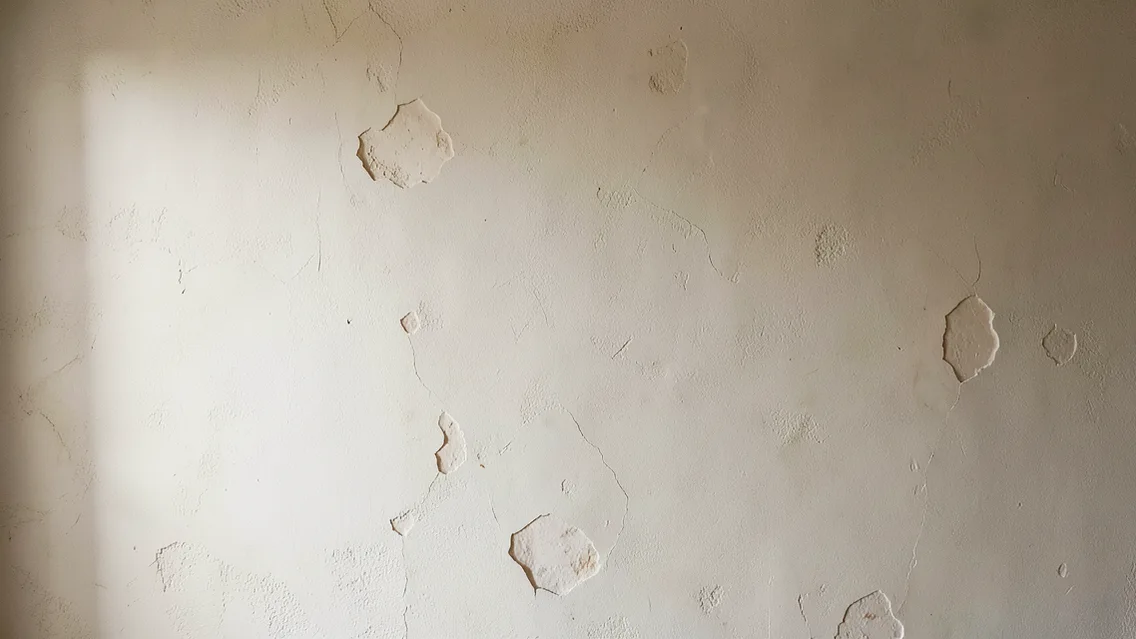
Causes and damage patterns
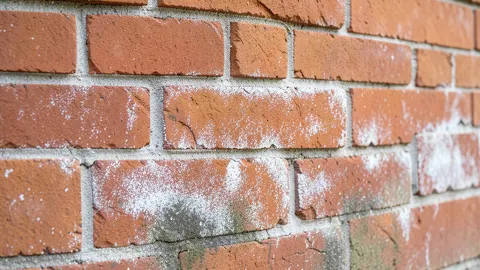
The article describes peeling caused by poor preparation, leaks or weak adhesion. Dust, salts, moisture, incompatible coatings and application or drying conditions may affect adhesion. Examine damage pattern, location and timing, distinguishing coating-only defects from substrate cracks or persistent moisture. More expensive paint does not automatically repair a leak or defective plaster.
Repair the cause and prepare the substrate
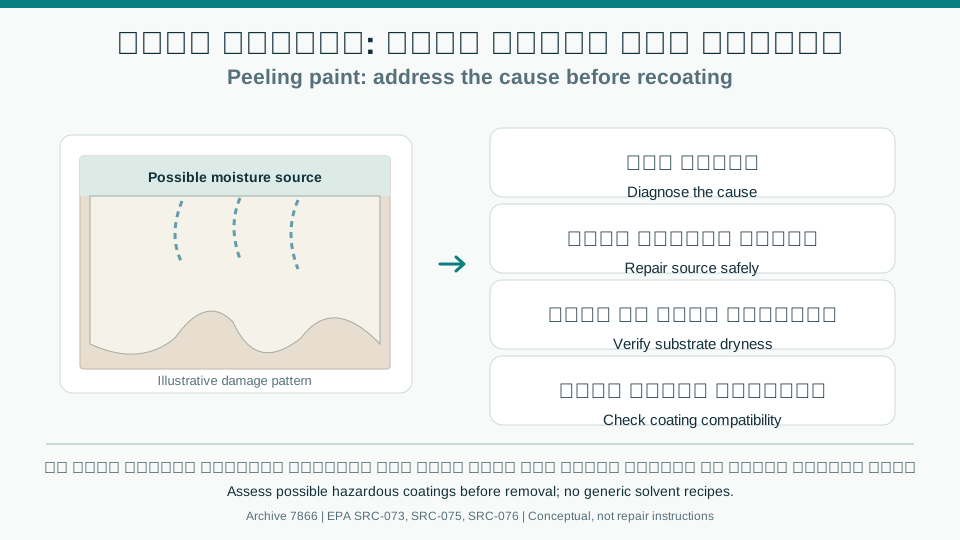
Correct water sources or substrate defects before repainting. If old coatings may contain hazardous materials, do not dry-sand or scrape before suitable assessment; extensive damage, mold or dampness near electricity needs appropriate specialist attention. Choose removal and preparation methods and protective equipment according to coating type and safety data. Do not add fuel or unapproved solvents or seal damp walls without assessment.
Select a finish system and verify
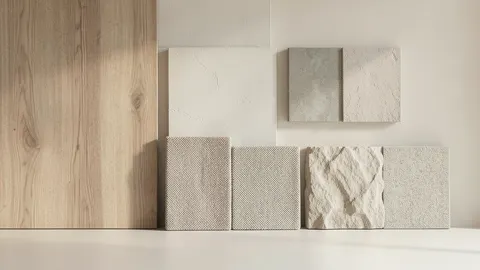
After verifying substrate suitability and dryness, select a compatible primer, filler and paint for the substrate and exposure following manufacturer guidance. Test a limited area when appropriate and check temperature, humidity, recoating and drying requirements for the specific product. Review adhesion, color uniformity and stability after a suitable period, documenting cause and repair. Peeling may recur if dampness or substrate movement remains.
Comparison and verification table
| Factor | Evidence or action |
|---|---|
| Moisture | Leak or condensation and verified drying |
| Substrate | Soundness, cleanliness and defects |
| Coating | Compatibility, safety data and conditions |
| Acceptance | Adhesion, uniformity and no recurrence |
A visual reading of the article topic
- 01Causes and damage patterns
- 02Repair the cause and prepare the substrate
- 03Select a finish system and verify
- 04Comparison and verification table
Practical workflow
- 01 Diagnose damage pattern
- 02 Repair source safely
- 03 Select compatible coating system
- 04 Verify cured finish
Conceptual editorial diagram; not measured data.
Topics and source excerpts
| Topic | Excerpt from article |
|---|---|
| Causes and damage patterns | The article describes peeling caused by poor preparation, leaks or weak adhesion. |
| Repair the cause and prepare the substrate | Correct water sources or substrate defects before repainting. |
| Select a finish system and verify | After verifying substrate suitability and dryness, select a compatible primer, filler and paint for the substrate and exposure following manufacturer guida… |
| Practical workflow | 01 Diagnose damage pattern |
| Sources and limitations | Editorial adaptation based on the original WordPress archive; original source retained separately. |
Source excerpts organized for comparison, not newly researched findings.
Sources and limitations
Editorial adaptation based on the original WordPress archive; original source retained separately. Generic historical solvent and sealing recipes are not endorsed. Product guidance, safety data and substrate assessment determine suitable procedures; this is not a mixing recipe.
- US EPA: Basic Mold Cleanup Steps — Address moisture, dry surfaces and avoid coating mold before remediation; not a universal finishing recipe.
- US EPA: Best Practices for Indoor Air Quality When Remodeling — Correct defects, moisture and leaks before refinishing; specific hazardous materials and local requirements still need review.
- US EPA: Post-Disaster Renovations and Lead-Based Paint — Sanding, cutting and demolition may generate hazardous lead dust; US guidance is not Saudi regulation.