From symptoms to causes
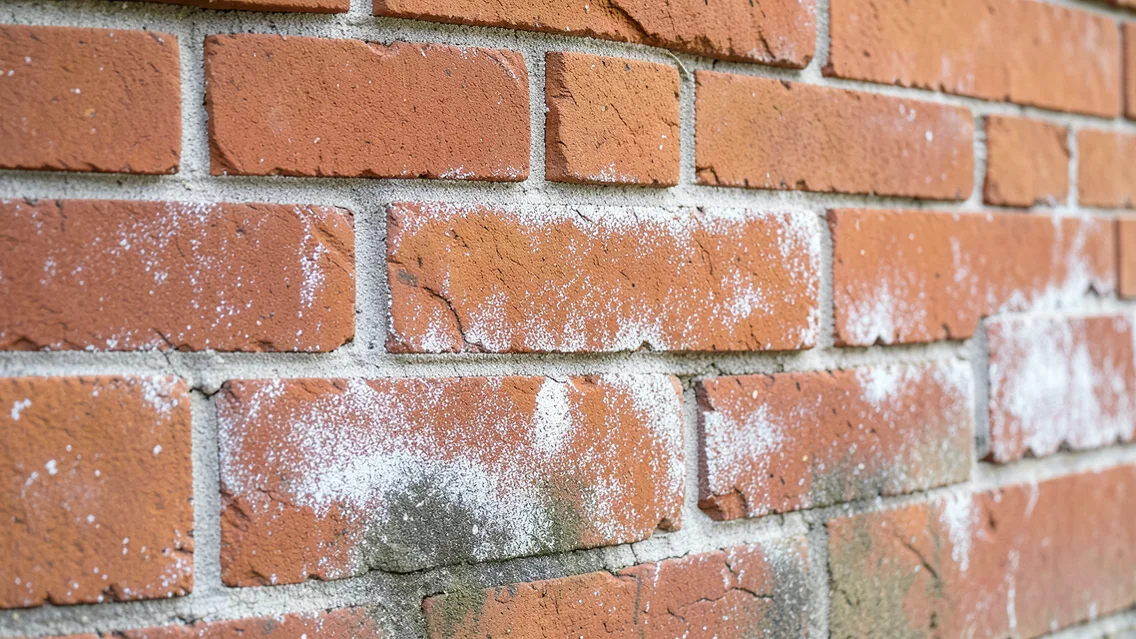
The article discusses damp patches, peeling paint and salt deposits. Causes may include leaking pipes, rain penetration, ground moisture or condensation on cold surfaces. White deposits may form when salt-bearing water migrates and evaporates; they do not alone establish rising damp. Record location, timing and links to rainfall or water use, and obtain appropriate investigation if the problem persists.
Source repair and safe drying
Repairs depend on cause: fixing leaks, reviewing envelope and drainage details, or improving ventilation and humidity control for the climate. Wet areas near electricity or severely damaged materials need professional assessment before work. Do not use diesel or open flames to dry walls or conceal moisture beneath impermeable layers without examining water and vapor movement; damage can worsen or migrate.
Verification before refinishing
After source repair, monitor drying with suitable measurement methods and check for recurrence. Extensive or recurring mold requires safe specialist remediation, especially on porous materials. Choose finishes compatible with the construction and conditions, reviewing ventilation and maintenance during wet or humid periods. A disappearing stain alone does not prove resolution.
Comparison and verification table
| Factor | Evidence or action |
|---|---|
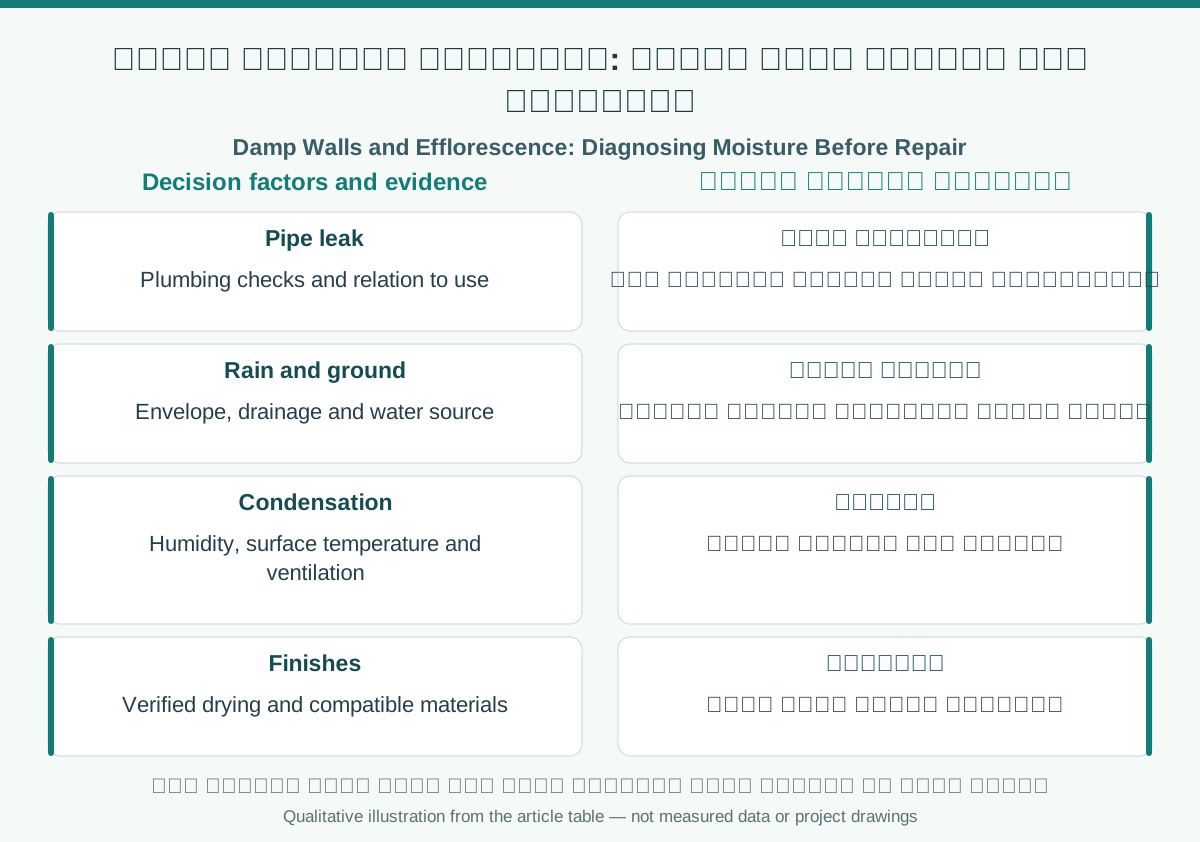
| Pipe leak | Plumbing checks and relation to use |
| Rain and ground | Envelope, drainage and water source |
| Condensation | Humidity, surface temperature and ventilation |
| Finishes | Verified drying and compatible materials |
A visual reading of the article topic
- 01From symptoms to causes
- 02Source repair and safe drying
- 03Verification before refinishing
- 04Comparison and verification table
Practical workflow
- 01 Record symptoms
- 02 Diagnose source
- 03 Repair cause safely
- 04 Verify drying before refinishing
Conceptual editorial diagram; not measured data.
Sources and limitations
Editorial adaptation based on the original WordPress archive; original source retained separately. Historical diesel, flame and coating recipes remain in the source only and are not endorsed. Persistent damp or structural or electrical damage requires specialist assessment.
Topics and source excerpts
| Topic | Excerpt from article |
|---|---|
| From symptoms to causes | The article discusses damp patches, peeling paint and salt deposits. |
| Source repair and safe drying | Repairs depend on cause: fixing leaks, reviewing envelope and drainage details, or improving ventilation and humidity control for the climate. |
| Verification before refinishing | After source repair, monitor drying with suitable measurement methods and check for recurrence. |
| Practical workflow | 01 Record symptoms |
| Sources and limitations | Editorial adaptation based on the original WordPress archive; original source retained separately. |
| References and limitations | Moisture guidance emphasizes fixing water sources and drying materials before sealing or painting. |
Source excerpts organized for comparison, not newly researched findings.
References and limitations
Moisture guidance emphasizes fixing water sources and drying materials before sealing or painting. Stains or odor alone do not establish cause.
The following references support selected topics in the article.
- EPA Biological Contaminants and Indoor Air Quality
- EPA Indoor Air Quality