Two distinct functions within one envelope
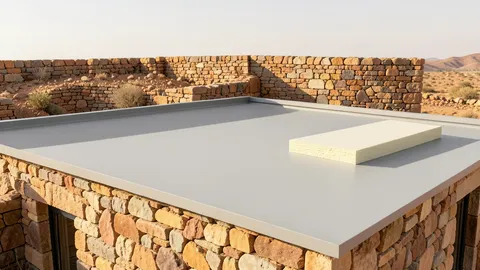
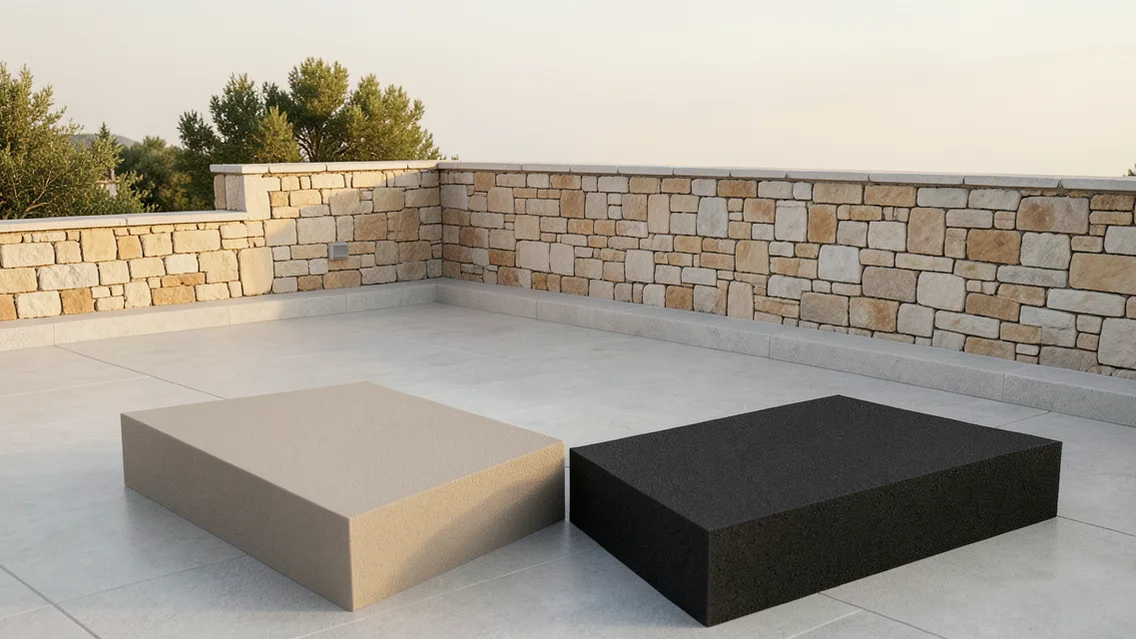
The source compares conventional roofs with waterproofing above insulation and inverted roofs with suitable insulation above the waterproofing. Waterproofing controls water penetration; insulation reduces heat transfer. Some products combine properties, but functions cannot be substituted without evidence. Design includes structure, drainage, air barriers and vapor control as appropriate to assembly and climate.
Layer order and material choice
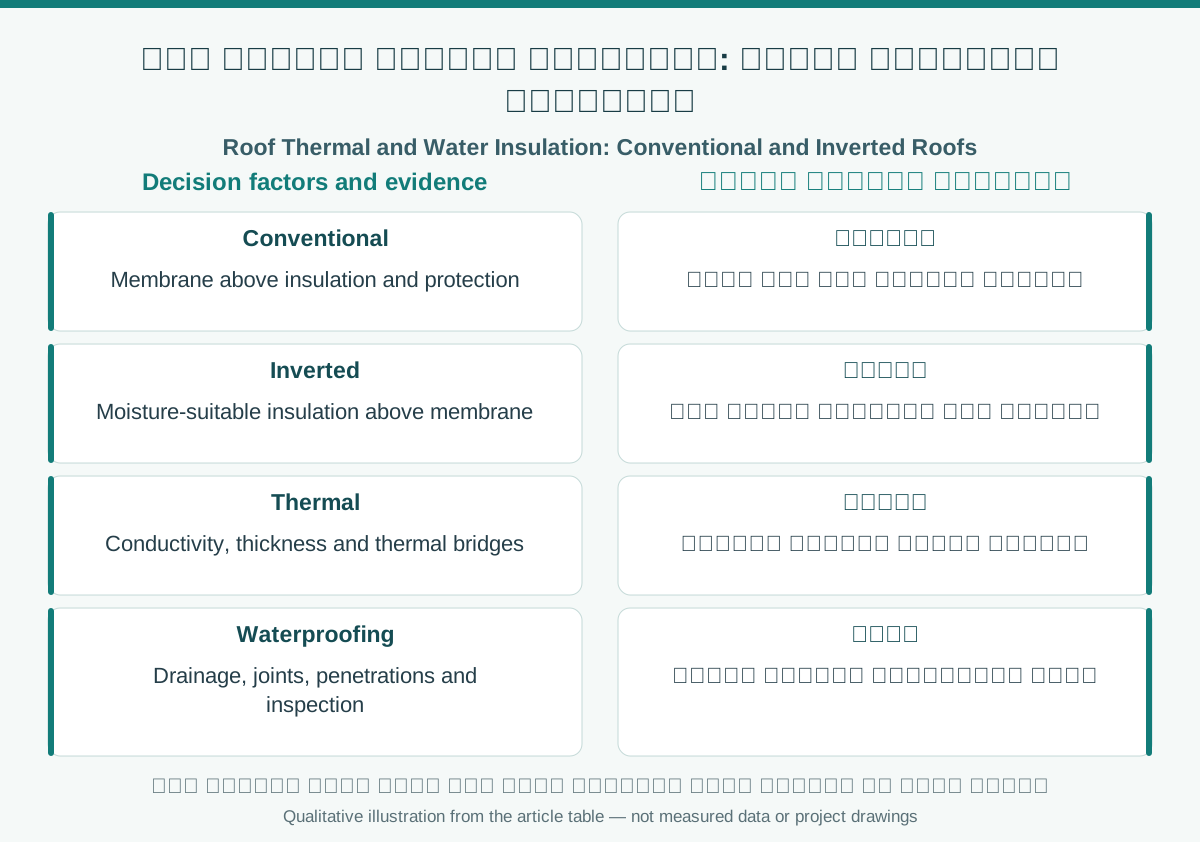
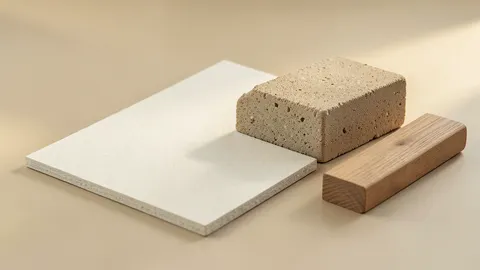
Conventional roofs require suitable membrane protection; inverted roofs require insulation capable of moisture and load exposure, with coordinated drainage and protective layers. Not all polystyrene, mineral wool or foams fit every position. Review thermal conductivity, water absorption, compressive strength, fire performance and compatibility. Assess added loads before installing paving, ballast or equipment. Reflective coatings may reduce solar absorption but do not automatically replace thermal insulation or waterproofing.
Calculation and performance monitoring
For illustration, a dry insulation layer 0.10 m thick with conductivity 0.035 W/m·K has thermal resistance of about 2.86 m²·K/W. This is the assumed layer resistance, not the complete roof U-value; calculations require thermal bridges, other layers and use conditions. Review penetrations, slopes and condensation with specialists, retaining waterproofing checks and maintenance records and comparing energy use over equivalent periods.
Comparison and verification table
| Factor | Evidence or action |
|---|---|
| Conventional | Membrane above insulation and protection |
| Inverted | Moisture-suitable insulation above membrane |
| Thermal | Conductivity, thickness and thermal bridges |
| Waterproofing | Drainage, joints, penetrations and inspection |
A visual reading of the article topic
- 01Two distinct functions within one envelope
- 02Layer order and material choice
- 03Calculation and performance monitoring
- 04Comparison and verification table
Practical workflow
- 01 Define roof performance
- 02 Compare layer assemblies
- 03 Review loads, moisture and fire
- 04 Inspect installation and performance
Conceptual editorial diagram; not measured data.
Sources and limitations
Editorial adaptation based on the original WordPress archive; original source retained separately. The example is hypothetical and layer-specific. Historical claims about fire resistance, suitability, environment and savings require verified data; this is not a construction roof detail.
Topics and source excerpts
| Topic | Excerpt from article |
|---|---|
| Two distinct functions within one envelope | The source compares conventional roofs with waterproofing above insulation and inverted roofs with suitable insulation above the waterproofing. |
| Layer order and material choice | Conventional roofs require suitable membrane protection; inverted roofs require insulation capable of moisture and load exposure, with coordinated drainage… |
| Calculation and performance monitoring | For illustration, a dry insulation layer 0.10 m thick with conductivity 0.035 W/m·K has thermal resistance of about 2.86 m²·K/W. |
| Practical workflow | 01 Define roof performance |
| Sources and limitations | Editorial adaptation based on the original WordPress archive; original source retained separately. |
| References and limitations | For the assumed homogeneous layer, thermal resistance is thickness divided by conductivity, approximately 2.86 m²·K/W. |
Source excerpts organized for comparison, not newly researched findings.
References and limitations
For the assumed homogeneous layer, thermal resistance is thickness divided by conductivity, approximately 2.86 m²·K/W. This is not the whole-roof performance; layer order follows verified assembly details.
The following references support selected topics in the article.
- DOE/PNNL Building America Solution Center – Building Science Introduction: Heat Flow
- WBDG – UFGS 07 55 00 Protected Membrane Roofing (PMR)
- DOE Building Science Education – Air Barriers vs Vapor Barriers
- WBDG – Moisture Management
- WBDG – Integrity Testing for Roofing and Waterproofing Membranes
- Saudi Code for Energy Conservation – Residential Building (SBC 602), 2024 catalogue