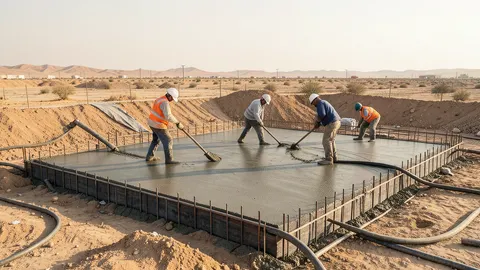
Why winter curing differs
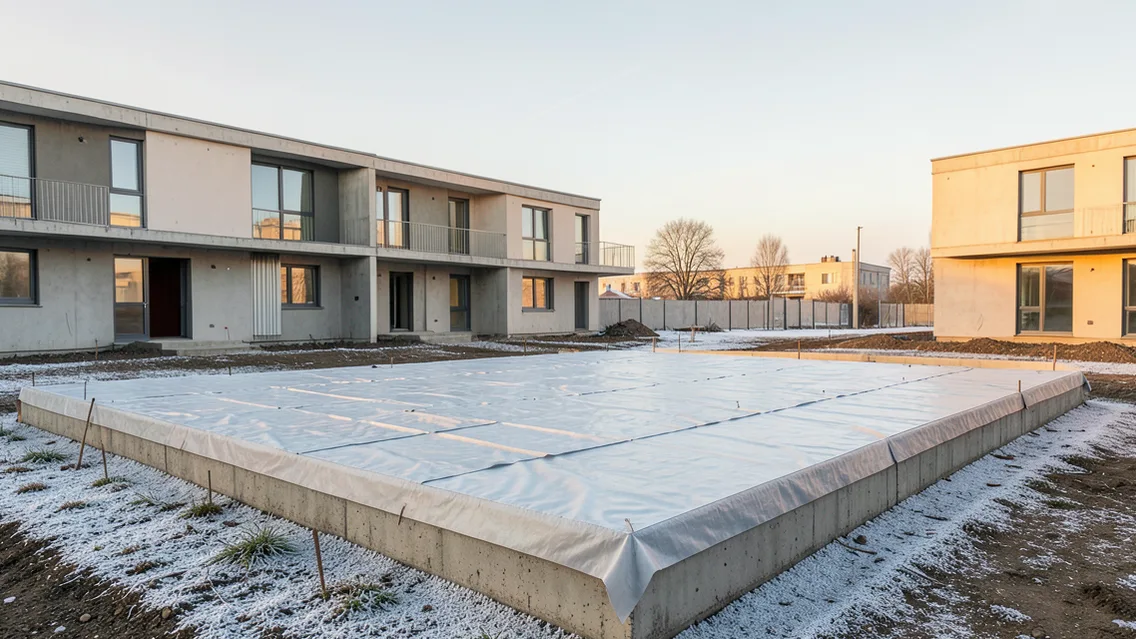
Cementitious hydration requires suitable moisture and temperature. Cold conditions may slow strength development; freezing fresh concrete under certain conditions can cause significant damage. Lower evaporation does not remove the need for curing. Review forecast, concrete and member temperature, wind exposure and heat loss, with a protection plan before placement. Thin exposed members differ from massive concrete with internally generated hydration heat.
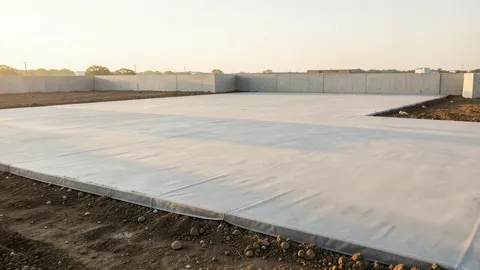
Water or alternative protection
Water or wet coverings may be suitable where continuous moisture can be maintained without freezing or harmful thermal change. If cold conditions make water use unsafe or impractical, a competent professional specifies moisture and temperature protection, such as membranes, insulating covers or a protected enclosure. Check curing compounds against later finishes. Temporary heating or protection requires ventilation, fire and workplace safety assessment; frozen surface water is not an adequate curing method.
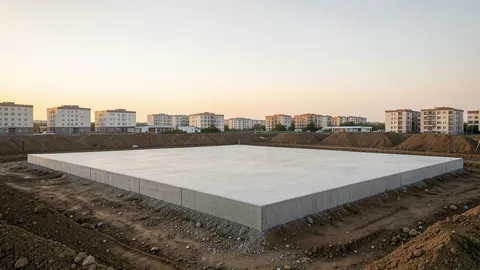
Duration and strength verification
Curing and cold-weather protection duration depend on mixture, measured concrete temperature, strength and durability requirements, exposure and approved specifications. Record start, method, temperature and continuity; use specified strength assessment or tests when deciding to end protection, strip forms or load members. Consider thermal gradients when removing covers to avoid harmful abrupt changes. Watering for a fixed number of days does not guarantee design strength, and suspected freezing or damage requires engineering assessment before affected work continues.
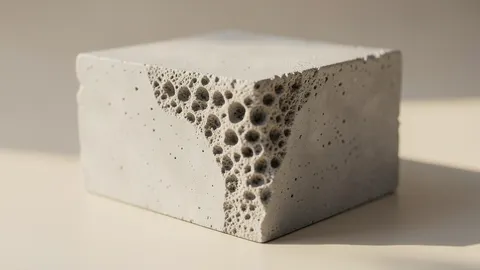
Comparison and verification table
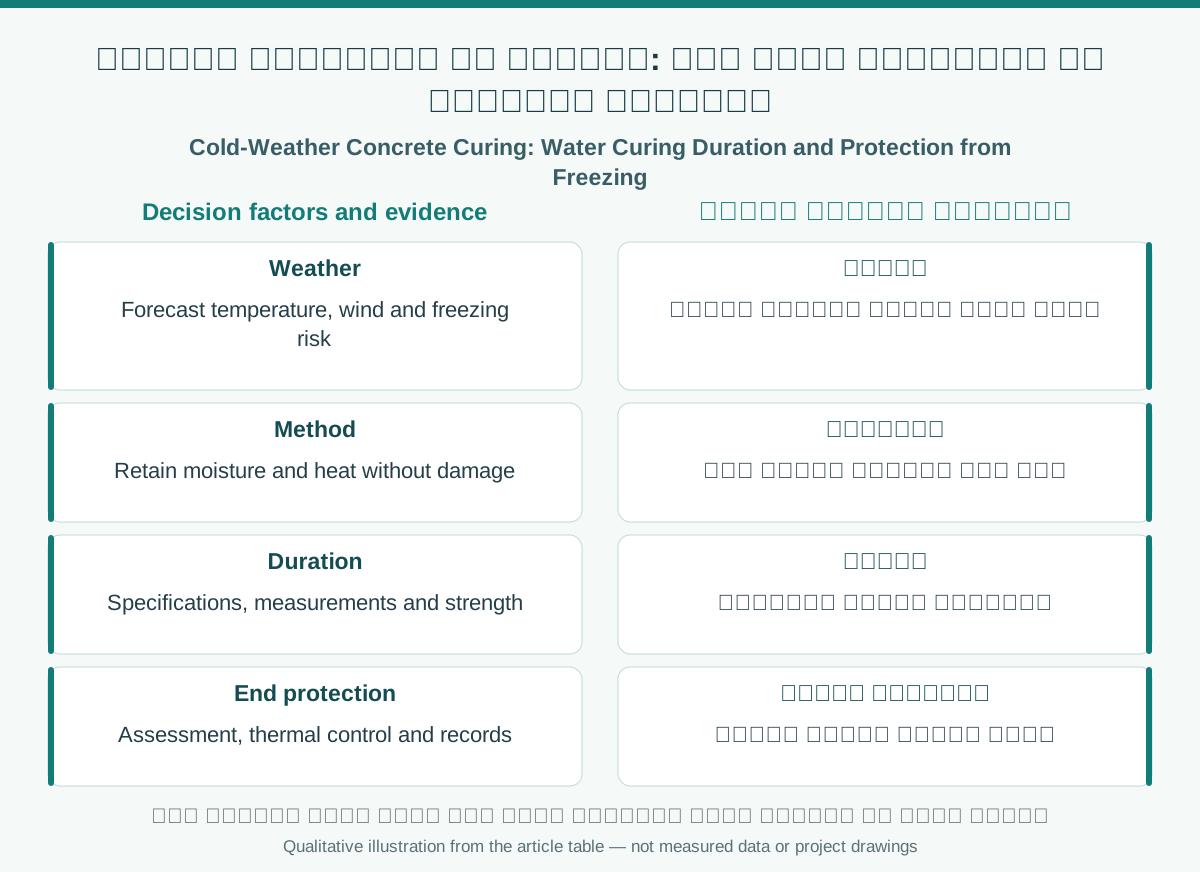
| Factor | Evidence or action |
|---|---|
| Weather | Forecast temperature, wind and freezing risk |
| Method | Retain moisture and heat without damage |
| Duration | Specifications, measurements and strength |
| End protection | Assessment, thermal control and records |
A visual reading of the article topic
- 01Why winter curing differs
- 02Water or alternative protection
- 03Duration and strength verification
- 04Comparison and verification table
Practical workflow
- 01 Plan protection before placement
- 02 Monitor concrete temperature
- 03 Maintain moisture appropriately
- 04 Verify before ending protection
Conceptual editorial diagram; not measured data.
Sources and limitations
Editorial adaptation based on the original WordPress archive; original source retained separately. Historical durations, temperatures and service-life or strength-loss percentages require mixture, code and specification review; no universal number of days is prescribed.
Topics and source excerpts
| Topic | Excerpt from article |
|---|---|
| Why winter curing differs | Cementitious hydration requires suitable moisture and temperature. |
| Water or alternative protection | Water or wet coverings may be suitable where continuous moisture can be maintained without freezing or harmful thermal change. |
| Duration and strength verification | Curing and cold-weather protection duration depend on mixture, measured concrete temperature, strength and durability requirements, exposure and approved s… |
| Practical workflow | 01 Plan protection before placement |
| Sources and limitations | Editorial adaptation based on the original WordPress archive; original source retained separately. |
| References and limitations | ACI cold-weather references emphasize early-freezing protection, suitable strength-development conditions and avoidance of harmful thermal changes. |
Source excerpts organized for comparison, not newly researched findings.
References and limitations
ACI cold-weather references emphasize early-freezing protection, suitable strength-development conditions and avoidance of harmful thermal changes. Select curing and protection duration for measured conditions and project requirements, not the season alone.
The following references support selected topics in the article.
- ACI — Cold Weather Concrete
- ACI — Effect of freezing on concrete
- ACI — How does temperature influence curing?
- ACI University — Guide to Cold Weather Concreting, Chapter 8
- ACI — Methods to ensure adequate curing moisture