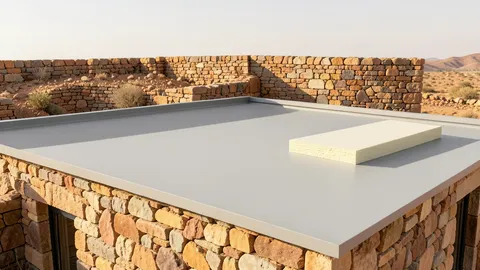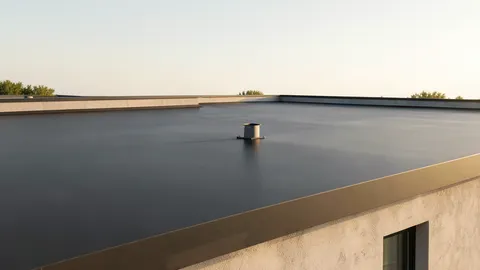
Insulation within the thermal envelope
Insulation limits conductive heat transfer through walls, roofs, floors and relevant assemblies. Performance depends on layer resistance and whole-assembly transmittance, together with air leakage, solar gains and glazing. Set design requirements for climate, use, HVAC and applicable rules rather than one material thickness. In hot climates, roofs, shading and thermal bridges can affect cooling loads depending on the building.
Materials and assemblies
The source presents mineral wool, polyurethane, insulation boards and double glazing. Compare declared conductivity, test conditions, density, aging, moisture, compression, fire and installation suitability. Window performance depends on glass, frames, spacers and solar gain. Assess condensation, layer order, air and vapor control for the climate rather than assuming one barrier suits every wall. Verify required assembly fire performance rather than product material alone.
Installation and measurement
Coordinate insulation continuity at wall, roof, foundation, opening and column junctions, addressing details that allow thermal bridges, air or water leakage. Inspect fixing and protection before concealment and document approved materials, thicknesses and details. Air-leakage testing or thermal imaging under suitable conditions can help specialists diagnose defects; review consumption while accounting for weather and operation. Insulation alone does not guarantee a fixed energy saving or service life.
Comparison and verification table
| Factor | Evidence or action |
|---|---|
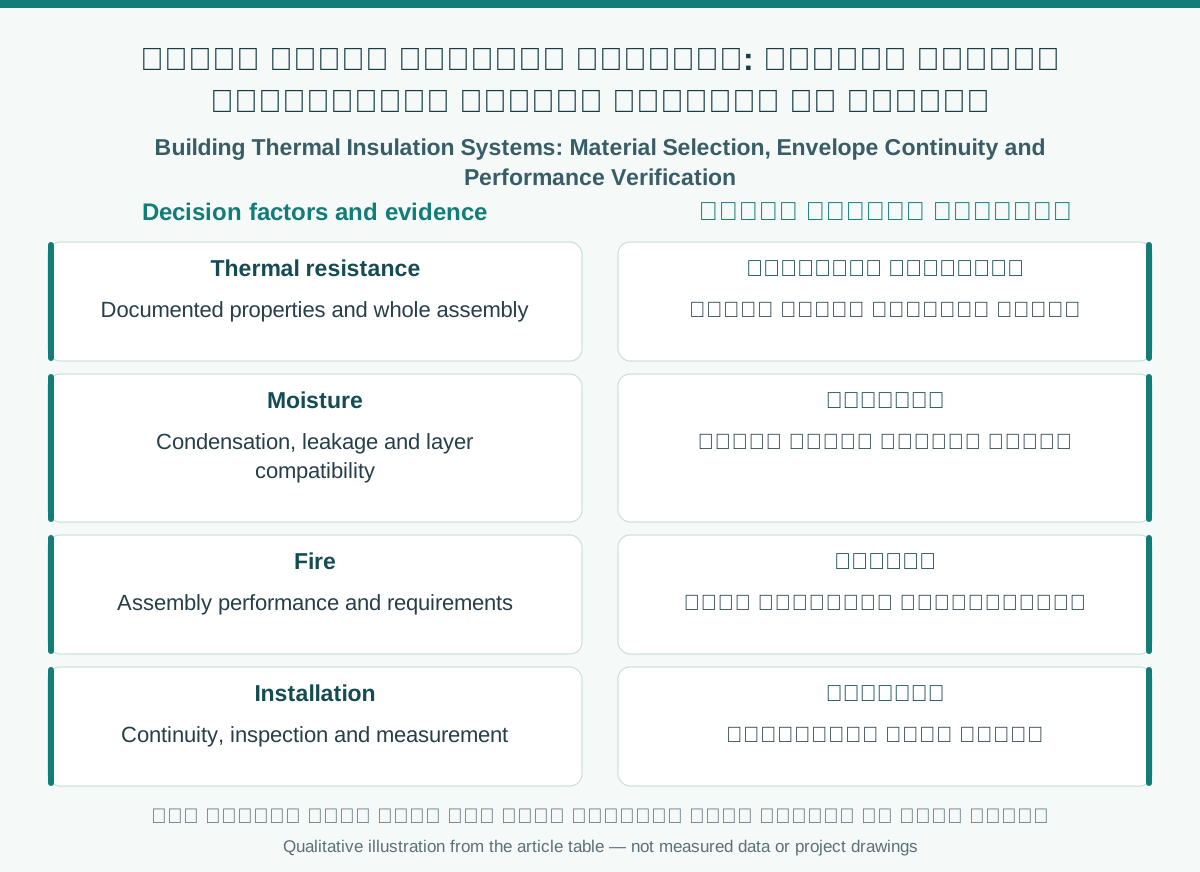
| Thermal resistance | Documented properties and whole assembly |
| Moisture | Condensation, leakage and layer compatibility |
| Fire | Assembly performance and requirements |
| Installation | Continuity, inspection and measurement |
A visual reading of the article topic
- 01Insulation within the thermal envelope
- 02Materials and assemblies
- 03Installation and measurement
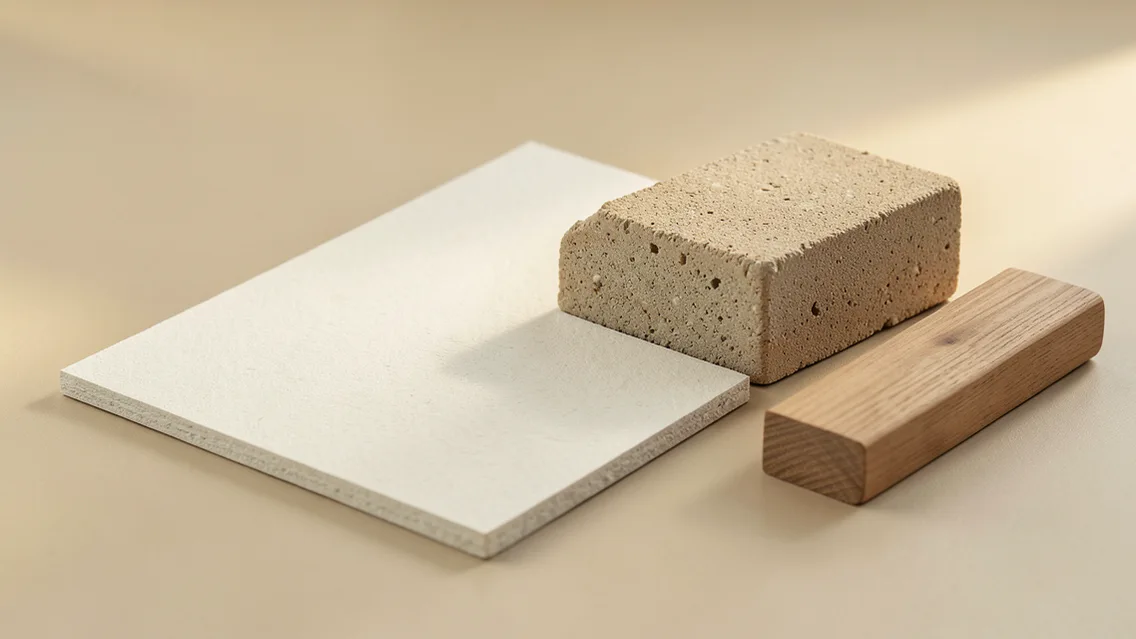
- 04Comparison and verification table
Practical workflow
- 01 Define envelope needs
- 02 Compare materials and assemblies
- 03 Coordinate junctions and protection
- 04 Verify installation and performance
Conceptual editorial diagram; not measured data.
Sources and limitations
Editorial adaptation based on the original WordPress archive; original source retained separately. The source's electricity-saving percentage is not a guarantee; values, thicknesses and compliance depend on analysis, specifications and applicable code.
Topics and source excerpts
| Topic | Excerpt from article |
|---|---|
| Insulation within the thermal envelope | Insulation limits conductive heat transfer through walls, roofs, floors and relevant assemblies. |
| Materials and assemblies | The source presents mineral wool, polyurethane, insulation boards and double glazing. |
| Installation and measurement | Coordinate insulation continuity at wall, roof, foundation, opening and column junctions, addressing details that allow thermal bridges, air or water leaka… |
| Practical workflow | 01 Define envelope needs |
| Sources and limitations | Editorial adaptation based on the original WordPress archive; original source retained separately. |
| References and limitations | Building-science guidance links insulation continuity, bridging, gaps and climate-specific air and vapor control to enclosure performance. |
Source excerpts organized for comparison, not newly researched findings.
References and limitations
Building-science guidance links insulation continuity, bridging, gaps and climate-specific air and vapor control to enclosure performance. Consult the applicable Saudi energy code for the building type.
The following references support selected topics in the article.
- DOE/PNNL Building America Solution Center – Building Science Introduction: Heat Flow
- DOE Building Science Education – Continuous Rigid Insulation Sheathing and Siding
- DOE Building Science Education – Air Barriers vs Vapor Barriers
- WBDG – HVAC Integration of the Building Envelope
- Saudi Code for Energy Conservation – Nonresidential Building (SBC 601), 2024 catalogue
- Saudi Code for Energy Conservation – Residential Building (SBC 602), 2024 catalogue