Positive and negative-side waterproofing
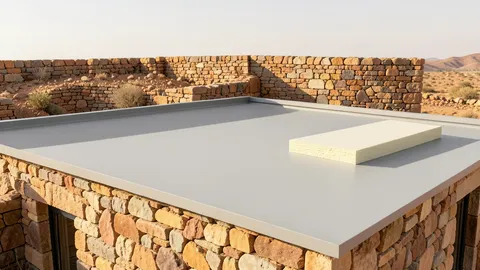
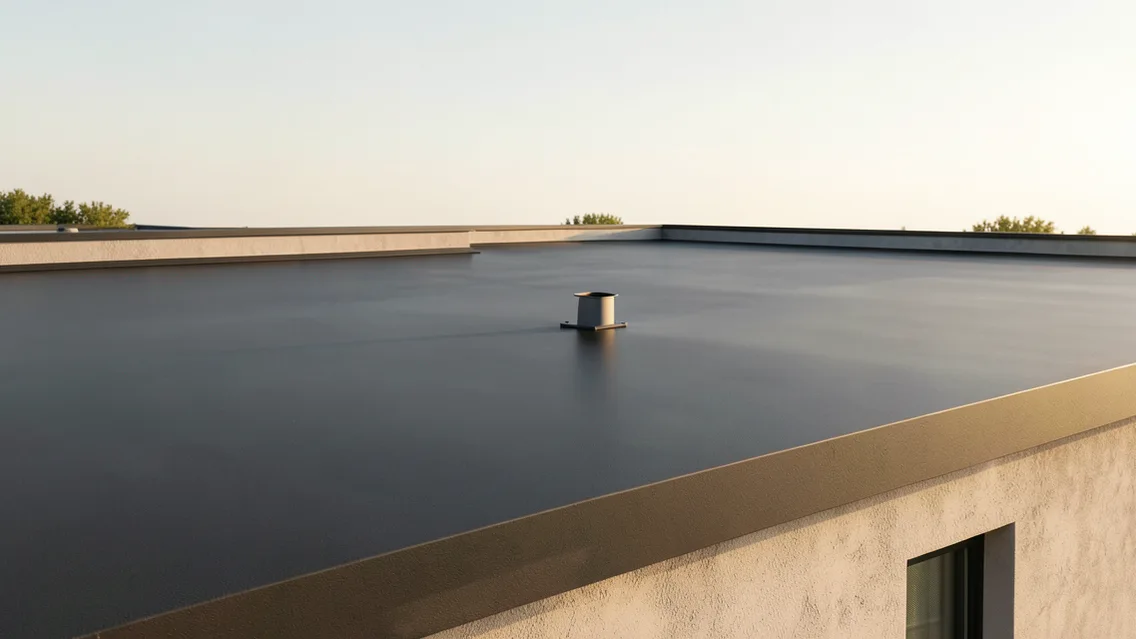
The article addresses treatment from the water-exposed side or its opposite. Positive-side waterproofing is applied where water approaches; negative-side treatment is applied from the opposite side when needed using a system suitable for pressure and substrate. The distinction is not simply full versus partial coverage. Roof solutions begin with water paths, leak locations, slopes, outlets and penetrations.
Selecting a waterproofing assembly
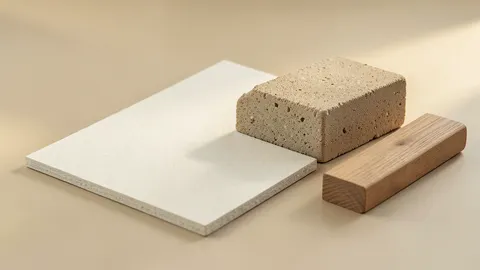
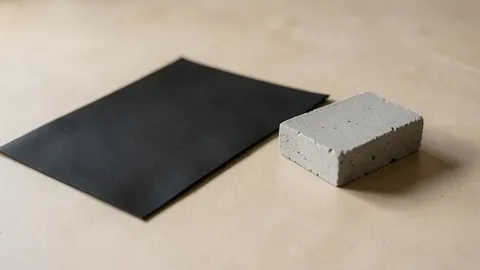
Liquid membranes, bituminous or synthetic sheets and metal roofing differ in substrate, joints, UV exposure and movement requirements. Distinguish thermal insulation foam from liquid polyurethane waterproofing membranes; not every foam prevents leakage. Timber may be a roof component, not automatically a waterproof membrane. Review layer compatibility, outlet and edge details, and fire requirements.
Installation, verification and maintenance
Before installation, assess substrate conditions, moisture, slopes, outlets and details with specialists, selecting a system approved for the application. Drinking-water tanks and pools require suitable products rather than generic roof materials. Select verification methods compatible with the assembly and structural capacity; do not flood-test roofs without professional assessment of loading and drainage. Retain inspection results, warranty and checks after servicing or membrane penetrations.
Comparison and verification table
| Factor | Evidence or action |
|---|---|
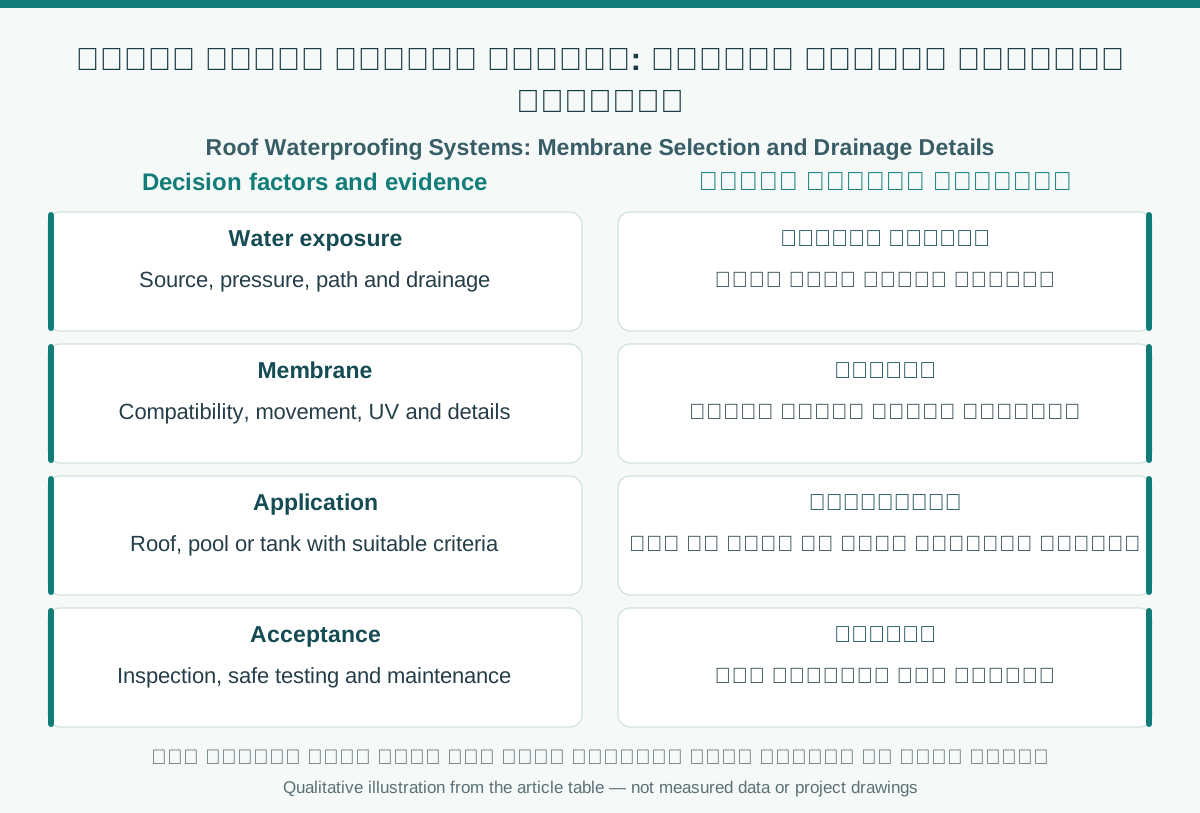
| Water exposure | Source, pressure, path and drainage |
| Membrane | Compatibility, movement, UV and details |
| Application | Roof, pool or tank with suitable criteria |
| Acceptance | Inspection, safe testing and maintenance |
A visual reading of the article topic
- 01Positive and negative-side waterproofing
- 02Selecting a waterproofing assembly
- 03Installation, verification and maintenance
- 04Comparison and verification table
Practical workflow
- 01 Identify water source
- 02 Review drainage and substrate
- 03 Choose compatible system
- 04 Verify specified performance
Conceptual editorial diagram; not measured data.
Sources and limitations
Editorial adaptation based on the original WordPress archive; original source retained separately. Source claims about cost, thermal insulation and universal suitability need product and design evidence. No material guarantees leak prevention without appropriate detailing and execution.
Topics and source excerpts
| Topic | Excerpt from article |
|---|---|
| Positive and negative-side waterproofing | The article addresses treatment from the water-exposed side or its opposite. |
| Selecting a waterproofing assembly | Liquid membranes, bituminous or synthetic sheets and metal roofing differ in substrate, joints, UV exposure and movement requirements. |
| Installation, verification and maintenance | Before installation, assess substrate conditions, moisture, slopes, outlets and details with specialists, selecting a system approved for the application. |
| Practical workflow | 01 Identify water source |
| Sources and limitations | Editorial adaptation based on the original WordPress archive; original source retained separately. |
| References and limitations | IIBEC distinguishes source-side from opposite-side waterproofing. |
Source excerpts organized for comparison, not newly researched findings.
References and limitations
IIBEC distinguishes source-side from opposite-side waterproofing. Roof slopes, drains and penetrations require coordination, and watertightness testing must suit the assembly and structural capacity.
The following references support selected topics in the article.
- IIBEC – A Case Study of Waterproofing Strategies for a Typical Mat and Deep Foundation System
- WBDG – Moisture Management
- WBDG – Integrity Testing for Roofing and Waterproofing Membranes
- Saudi Fire Protection Code (SBC 801), 2024 catalogue