Material definition and uses
The article discusses bitumen in roads, waterproofing and protection. Bitumen is a hydrocarbon binder obtained from petroleum refining or natural deposits, distinct from coal tar in source, composition and hazards. Road asphalt is a designed mixture of binder and aggregate. Common names such as tar and pitch are not interchangeable technical specifications.
Modified membranes and coatings
Bituminous products include oxidized or polymer-modified materials, reinforced sheets, liquid coatings and emulsions for specific applications. SBS and APP denote different modifier families across many products; labels alone do not establish flexibility, heat resistance or installation methods. Review specifications, primer and substrate compatibility, joints, protection, water and UV exposure, using products approved for the intended application.
Installation hazards and review
Some assemblies involve hot work; self-adhered and cold-applied systems also exist according to specifications. Heat, flames, solvents and fumes introduce fire, burn and occupational exposure risks, so this article does not instruct torching or heating. Qualified installers review risk assessments, safety data, hot-work requirements, ventilation and protection, then inspect continuity and joints against the system. Odor or tack by touch is not an acceptance test.
Comparison and verification table
| Factor | Evidence or action |
|---|---|
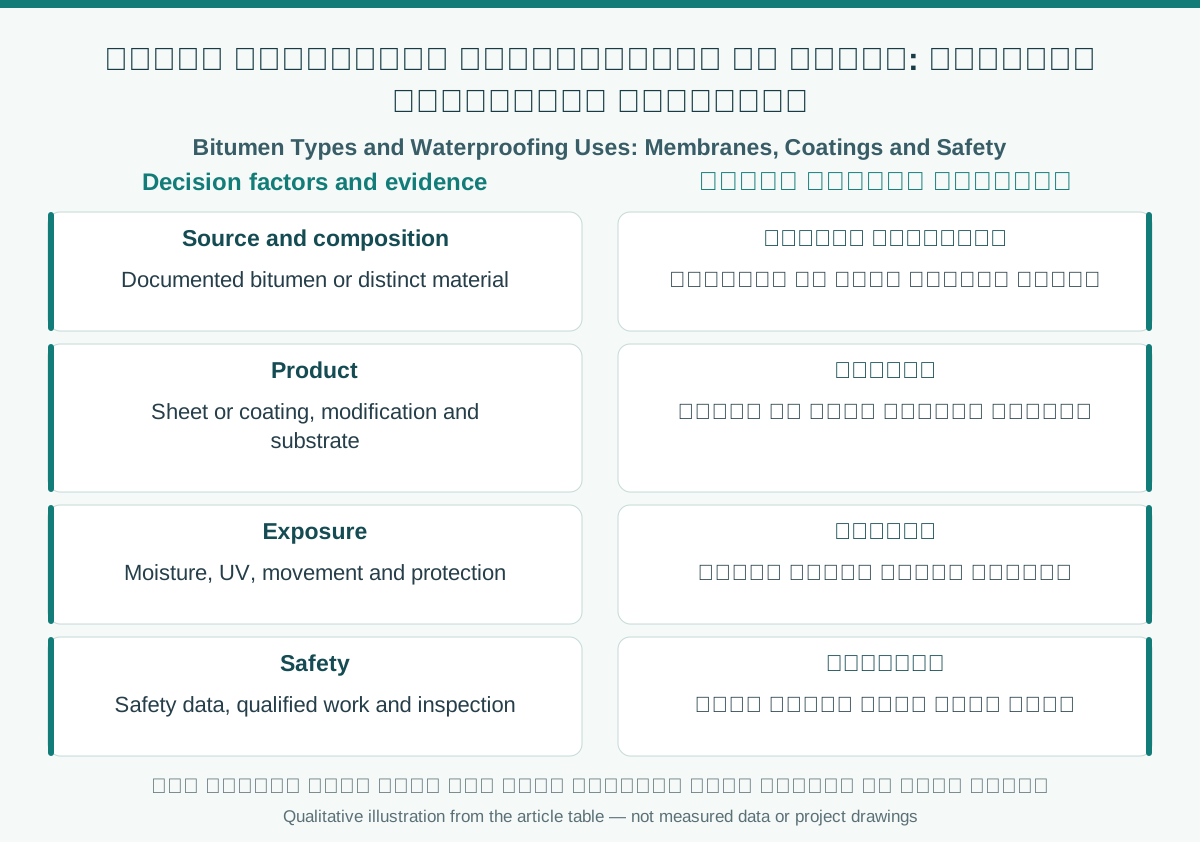
| Source and composition | Documented bitumen or distinct material |
| Product | Sheet or coating, modification and substrate |
| Exposure | Moisture, UV, movement and protection |
| Safety | Safety data, qualified work and inspection |
A visual reading of the article topic
- 01Material definition and uses
- 02Modified membranes and coatings
- 03Installation hazards and review
- 04Comparison and verification table
Practical workflow
- 01 Define application and exposure
- 02 Review product and assembly specification
- 03 Approve safety procedure
- 04 Inspect waterproofing and retain records
Conceptual editorial diagram; not measured data.
Sources and limitations
Editorial adaptation based on the original WordPress archive; original source retained separately. Heating, touch-test and chemical or health claims from 2021 are not endorsed without review. Follow verified safety data, supplier documentation and specialist guidance.
Topics and source excerpts
| Topic | Excerpt from article |
|---|---|
| Material definition and uses | The article discusses bitumen in roads, waterproofing and protection. |
| Modified membranes and coatings | Bituminous products include oxidized or polymer-modified materials, reinforced sheets, liquid coatings and emulsions for specific applications. |
| Installation hazards and review | Some assemblies involve hot work; self-adhered and cold-applied systems also exist according to specifications. |
| Practical workflow | 01 Define application and exposure |
| Sources and limitations | Editorial adaptation based on the original WordPress archive; original source retained separately. |
| References and limitations | FHWA distinguishes binder and aggregate in paving mixtures; NRCA addresses fire hazards in torch-applied modified-bitumen roofing. |
Source excerpts organized for comparison, not newly researched findings.
References and limitations
FHWA distinguishes binder and aggregate in paving mixtures; NRCA addresses fire hazards in torch-applied modified-bitumen roofing. Application method and safety measures must follow product documentation and competent assessment.
The following references support selected topics in the article.
- FHWA – Warm Mix Asphalt FAQs
- NRCA – Specifying the CERTA Program
- WBDG – Moisture Management
- WBDG – Integrity Testing for Roofing and Waterproofing Membranes