Heat source and distribution
The source describes boilers heating water, distributing it to radiators and returning it. Central heating manages heat centrally and delivers it to required zones; boilers, heat pumps or other sources may be used with hydronic or air distribution. Not every system has a water loop or outdoor heat source. Climate, insulation and use determine actual heating needs.
Components, control and safety
Hydronic systems may include distribution, pumps, exchangers or emitters, controls, expansion and protection components according to design. Open and sealed arrangements have different pressure and supply requirements; neither is universally safer. Combustion systems need code-compliant ventilation, flues and protective measures; do not improvise changes to valves, boilers or fuel piping. Specialists verify electrical, pressure and temperature safety before operation.
Life-cycle selection
Systems require zone load calculations, operating-temperature and control studies, and assessment of source and distribution efficiency. Compare hot-water and warm-air heating and consider heat pumps when appropriate. Steam is a specialist system, not a default residential choice. Assess installation, fuel or electricity, maintenance and service costs, then verify actual performance and comfort after handover.
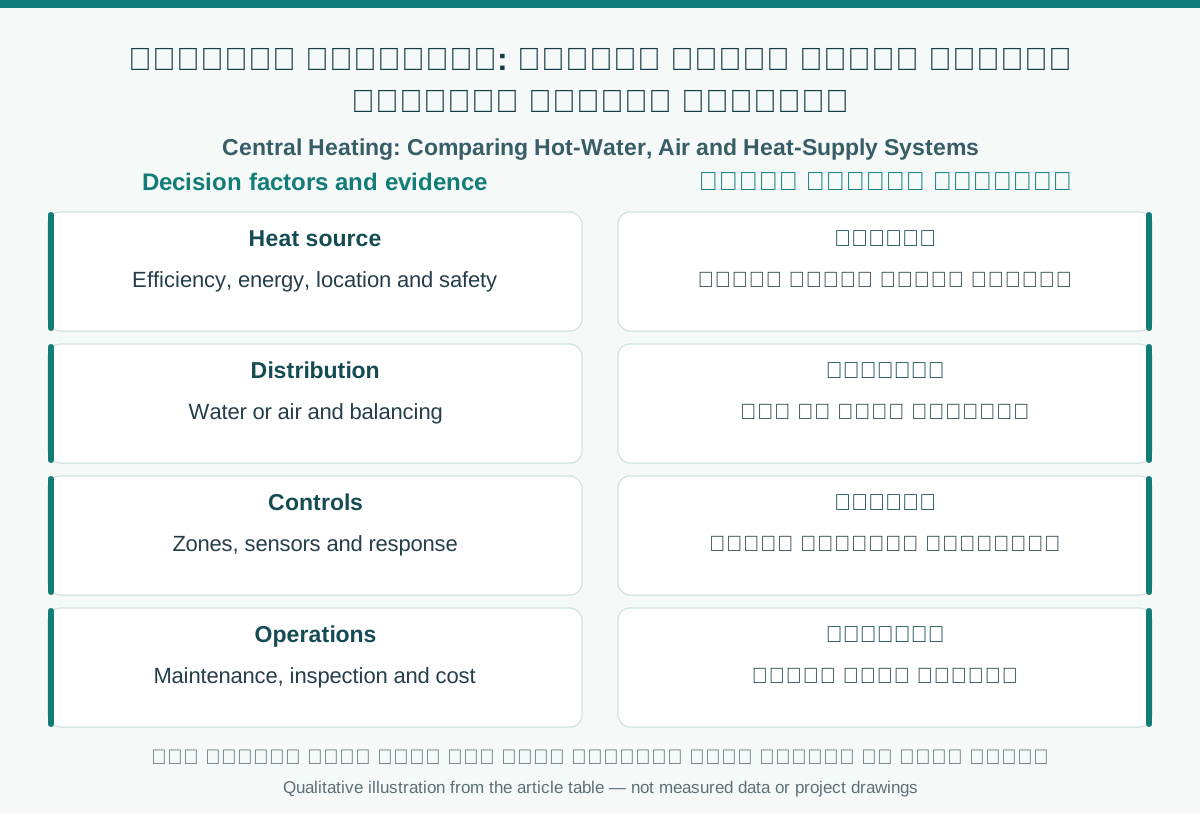
Comparison and verification table
| Factor | Evidence or action |
|---|---|
| Heat source | Efficiency, energy, location and safety |
| Distribution | Water or air and balancing |
| Controls | Zones, sensors and response |
| Operations | Maintenance, inspection and cost |
A visual reading of the article topic
- 01Heat source and distribution
- 02Components, control and safety
- 03Life-cycle selection
- 04Comparison and verification table
Practical workflow
- 01 Calculate heating need with specialist
- 02 Compare sources and distribution
- 03 Coordinate safety and controls
- 04 Verify commissioning and maintenance
Conceptual editorial diagram; not measured data.
Sources and limitations
Editorial adaptation based on the original WordPress archive; original source retained separately. Tank, pressure, fuel and system-benefit claims from 2021 require technical verification. This article is not a boiler or fuel-system installation guide.
Topics and source excerpts
| Topic | Excerpt from article |
|---|---|
| Heat source and distribution | The source describes boilers heating water, distributing it to radiators and returning it. |
| Components, control and safety | Hydronic systems may include distribution, pumps, exchangers or emitters, controls, expansion and protection components according to design. |
| Life-cycle selection | Systems require zone load calculations, operating-temperature and control studies, and assessment of source and distribution efficiency. |
| Practical workflow | 01 Calculate heating need with specialist |
| Sources and limitations | Editorial adaptation based on the original WordPress archive; original source retained separately. |
| References and limitations | Heat generation and distribution vary; establish loads, controls and equipment characteristics before comparison. |
Source excerpts organized for comparison, not newly researched findings.
References and limitations
Heat generation and distribution vary; establish loads, controls and equipment characteristics before comparison. US efficiency thresholds are not Saudi requirements.
The following references support selected topics in the article.
- DOE Minimum Efficiency Requirements for Heating and Cooling Products (2023)
- DOE About Building Energy Modeling