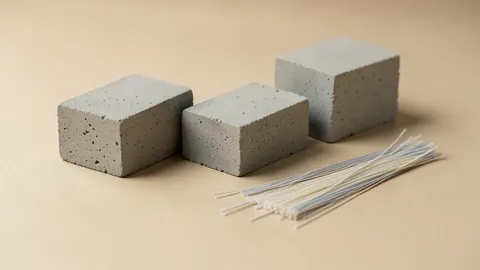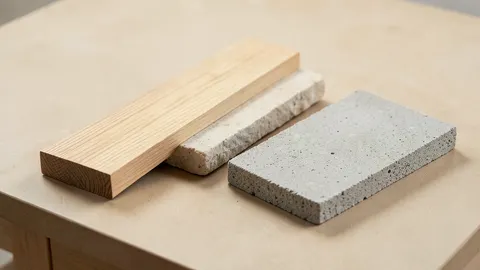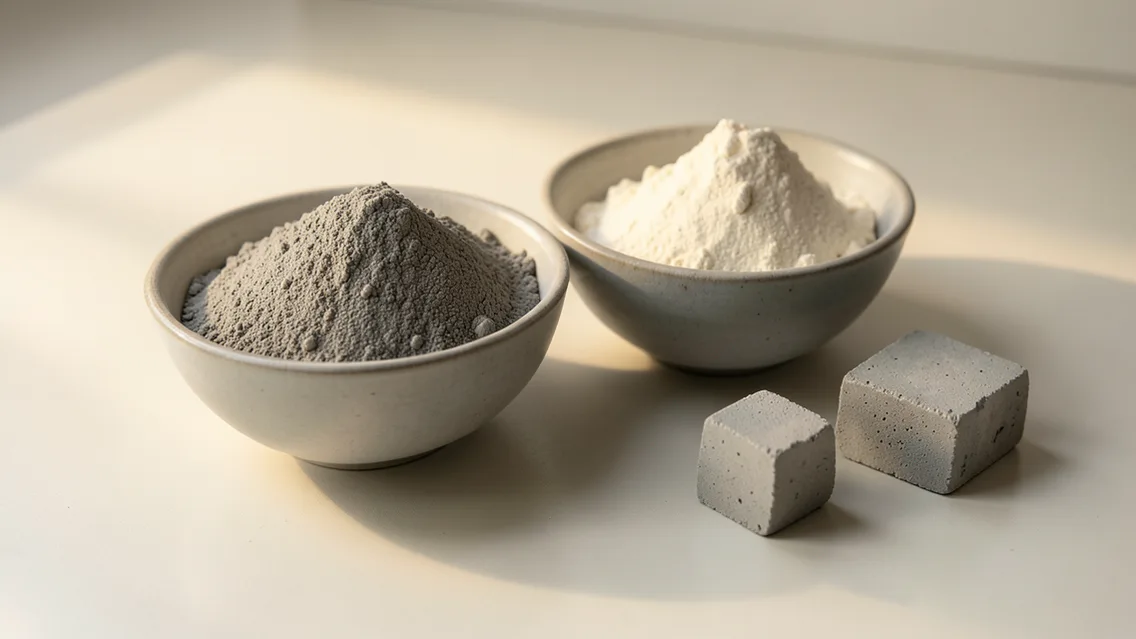
Cement is not concrete
Hydraulic cement reacts with water to form hydration products that contribute to hardening. Concrete additionally contains aggregates, water and binders, and may include admixtures. Cement selection depends on element function, project specifications, exposure, strength and thermal needs; increasing cement content does not improve every property.
Cement categories and applications
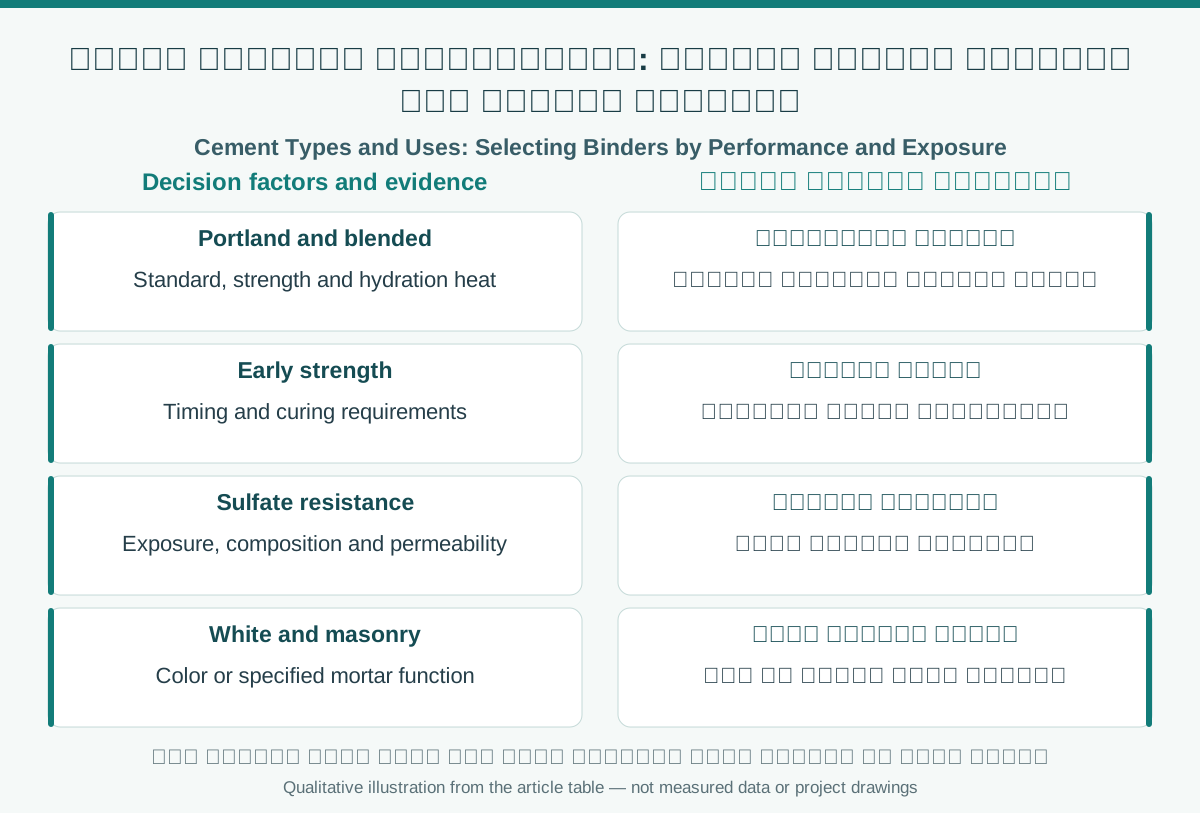
General-purpose Portland cement serves varied applications under specifications, while slag- or pozzolan-blended cements can modify hydration and durability. Setting time differs from early strength development; cold-weather placement needs separate protection and curing plans. Sulfate-resistant products are selected by exposure, cement composition and concrete permeability; sulfate attack relates partly to aluminate compounds, not simply tricalcium silicate content.
Selection and verification
White or colored cement serves visual requirements, while masonry cement is intended for suitable mortars and is not an automatic substitute for structural cement. Compare conformity certificates, strength results, required properties and compatibility with admixtures and aggregates. Durability also depends on mix design, water-to-binder ratio, curing and execution. Generic lists cannot determine mix recipes or chemical limits.
Comparison and verification table
| Factor | Evidence or action |
|---|---|
| Portland and blended | Standard, strength and hydration heat |
| Early strength | Timing and curing requirements |
| Sulfate resistance | Exposure, composition and permeability |
| White and masonry | Color or specified mortar function |
A visual reading of the article topic
- 01Cement is not concrete
- 02Cement categories and applications
- 03Selection and verification
- 04Comparison and verification table
Practical workflow
- 01 Define function and exposure
- 02 Review cement class
- 03 Verify compatibility and mix
- 04 Accept performance under specification
Conceptual editorial diagram; not measured data.
Sources and limitations
Editorial adaptation based on the original WordPress archive; original source retained separately. Chemical percentages, fineness limits and British standards cited in 2021 require edition and applicability checks. This is not a mix specification or final structural selection.
Topics and source excerpts
| Topic | Excerpt from article |
|---|---|
| Cement is not concrete | Hydraulic cement reacts with water to form hydration products that contribute to hardening. |
| Cement categories and applications | General-purpose Portland cement serves varied applications under specifications, while slag- or pozzolan-blended cements can modify hydration and durabilit… |
| Selection and verification | White or colored cement serves visual requirements, while masonry cement is intended for suitable mortars and is not an automatic substitute for structural… |
| Practical workflow | 01 Define function and exposure |
| Sources and limitations | Editorial adaptation based on the original WordPress archive; original source retained separately. |
| References and limitations | ACI distinguishes hydraulic cement, concrete and mortar, and identifies blended and pozzolanic materials. |
Source excerpts organized for comparison, not newly researched findings.
References and limitations
ACI distinguishes hydraulic cement, concrete and mortar, and identifies blended and pozzolanic materials. Product selection follows specifications, performance and exposure rather than the commercial label alone.
The following references support selected topics in the article.
- ACI FAQ – Definition of concrete, hydraulic cement, mortar, and grout
- Saudi Code for Concrete Structures SBC 304 (2024)