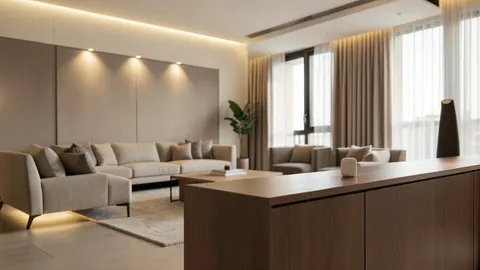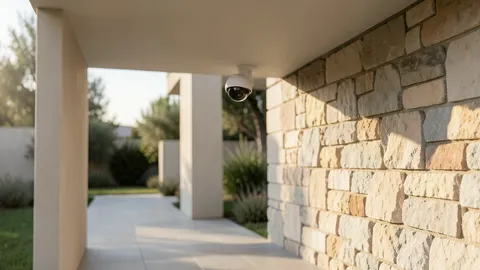
Define the purpose before equipment
The article reviews home camera types and locations. Start by defining risks and a legitimate purpose, such as monitoring a property entrance or documenting a gate incident, rather than recording all household activity. Respect residents, visitors and neighbors, and avoid recording private spaces or others’ property without a legitimate basis. Lighting, locks, alerts and daily practices can also improve security.
System selection and responsible coverage
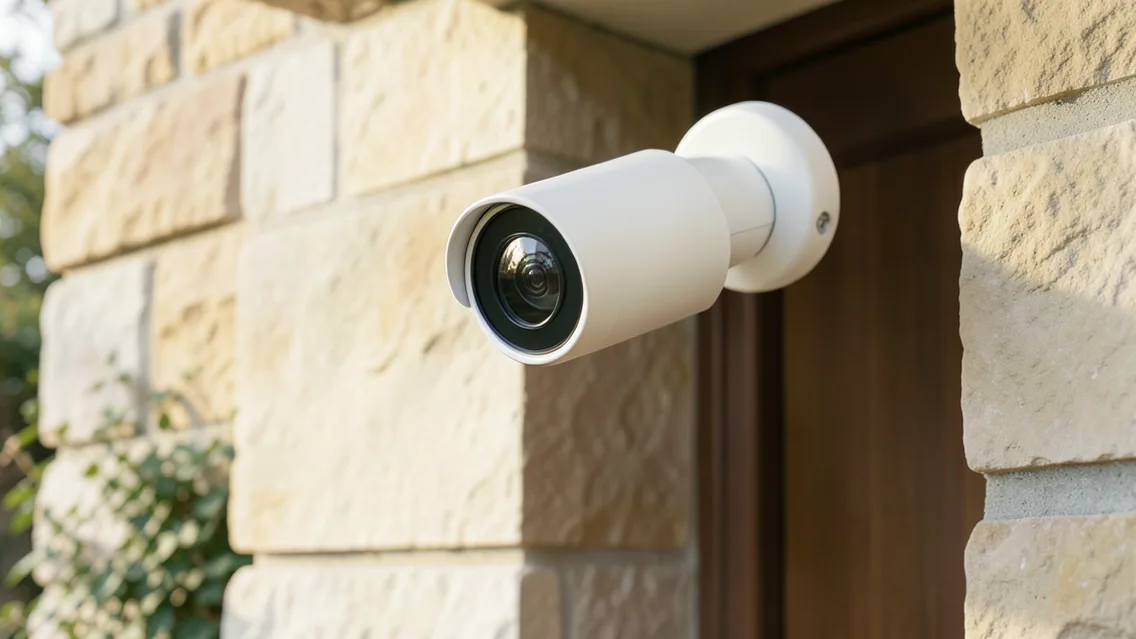
Terms such as dome and bullet describe camera form, whereas network connection and local or cloud recording describe system architecture. Night vision, image quality and weather resistance depend on specifications. Review fields of view at authorized access areas and lighting conditions, applying privacy masks where appropriate. Camera count is not determined by floor area alone, and image resolution cannot guarantee crime prevention.
Data security and operation
Define authorized recording access and necessary retention under applicable requirements. Protect accounts with unique passwords, multifactor authentication where available and updates. Test alerts, incident recording and service recovery after outages; do not leave remote access unprotected. Use qualified installation support and review notice and recording requirements before operation.
Decision review table
| Factor | Evidence or action |
|---|---|
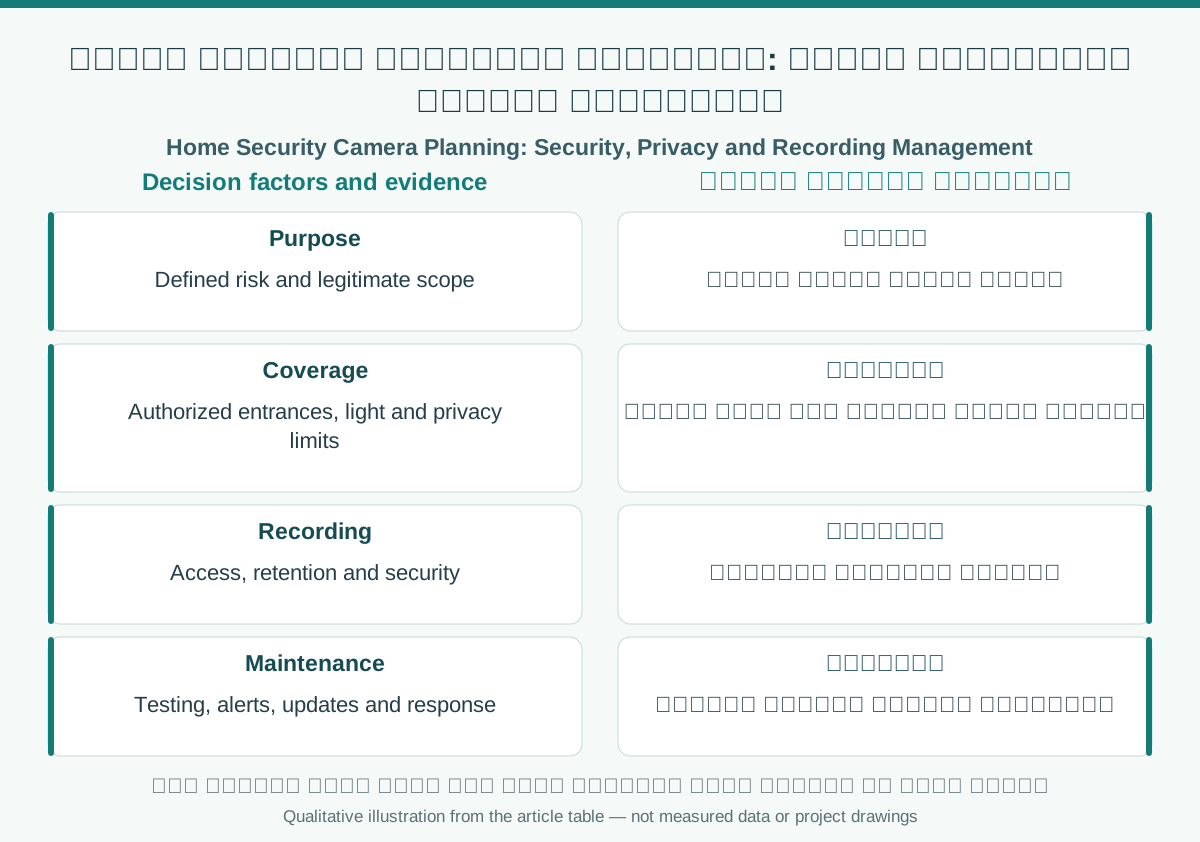
| Purpose | Defined risk and legitimate scope |
| Coverage | Authorized entrances, light and privacy limits |
| Recording | Access, retention and security |
| Maintenance | Testing, alerts, updates and response |
A visual reading of the article topic
- 01Define the purpose before equipment
- 02System selection and responsible coverage
- 03Data security and operation
- 04Decision review table
Practical workflow
- 01 Define need and scope
- 02 Review privacy and requirements
- 03 Choose suitable system
- 04 Test security and operation
Conceptual editorial diagram; not measured data.
Sources and limitations
Editorial adaptation based on the original WordPress archive; original source retained separately. Camera counts, retention durations and product features in the 2021 text are not universal standards. Verify current Saudi rules, privacy rights and actual specifications before installation; covert monitoring or filming private spaces is not recommended.
Topics and source excerpts
| Topic | Excerpt from article |
|---|---|
| Define the purpose before equipment | The article reviews home camera types and locations. |
| System selection and responsible coverage | Terms such as dome and bullet describe camera form, whereas network connection and local or cloud recording describe system architecture. |
| Data security and operation | Define authorized recording access and necessary retention under applicable requirements. |
| Practical workflow | 01 Define need and scope |
| Sources and limitations | Editorial adaptation based on the original WordPress archive; original source retained separately. |
| References and limitations | Article 1 of the Saudi surveillance law excludes individually installed cameras inside private residential units and compounds from its defined term; this… |
Source excerpts organized for comparison, not newly researched findings.
References and limitations
Article 1 of the Saudi surveillance law excludes individually installed cameras inside private residential units and compounds from its defined term; this is not an exemption from other privacy duties. Review recording access, accounts and updates.
The following references support selected topics in the article.
- Saudi Law on Use of Security Surveillance Cameras (2022), arts 1, 6
- NIST IR 8425 Consumer IoT Product Core Baseline (2022)
- FTC Securing Your Internet-Connected Devices at Home