How technology entered the bathroom
Home technology is no longer limited to lighting and HVAC. Bathroom equipment can include electronic seats, touch-free control, washing, heating and air drying. Not every function benefits every user. Start with actual needs rather than the number of features.
Comfort, hygiene and reliability
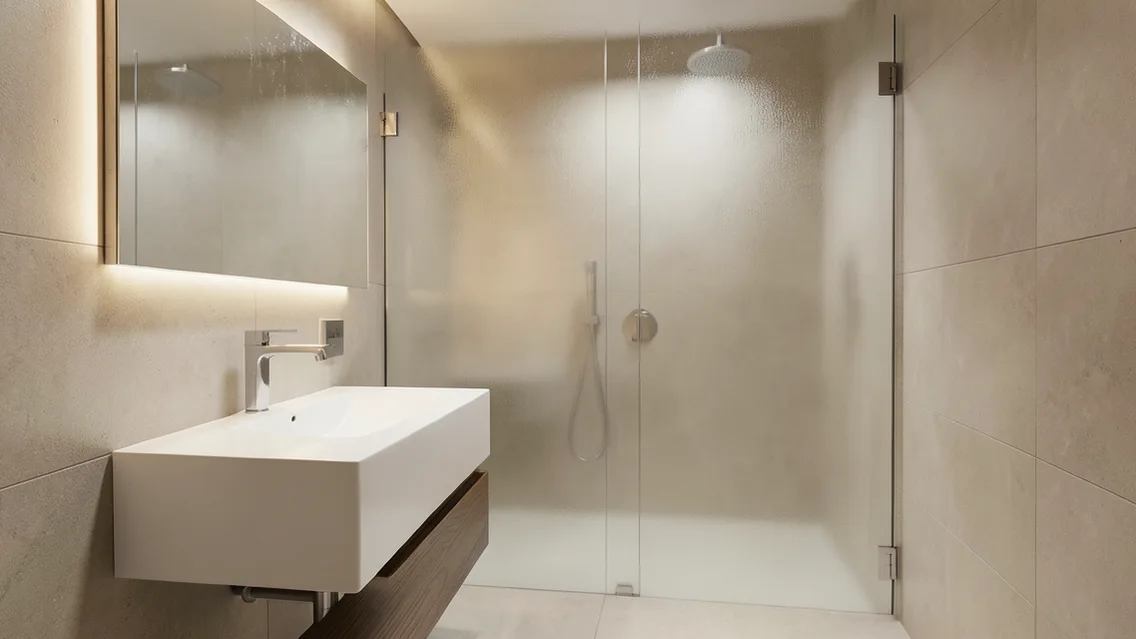
Check basic functionality, compatibility with electricity, water and drainage, and manual operation during faults. Consider age, mobility and ease of cleaning. Electronic controls are not useful to someone unable to operate them easily; test the interface and check fallback operation before purchase.
Devices and health data
Research and experimental devices may explore health sensing and analysis, but a smart toilet is not automatically a medical device. Diagnostic claims require appropriate performance evidence and regulatory authorization, and should not replace medical advice. For connected equipment, review collected data, processing purposes and options for disabling connectivity or deleting data.
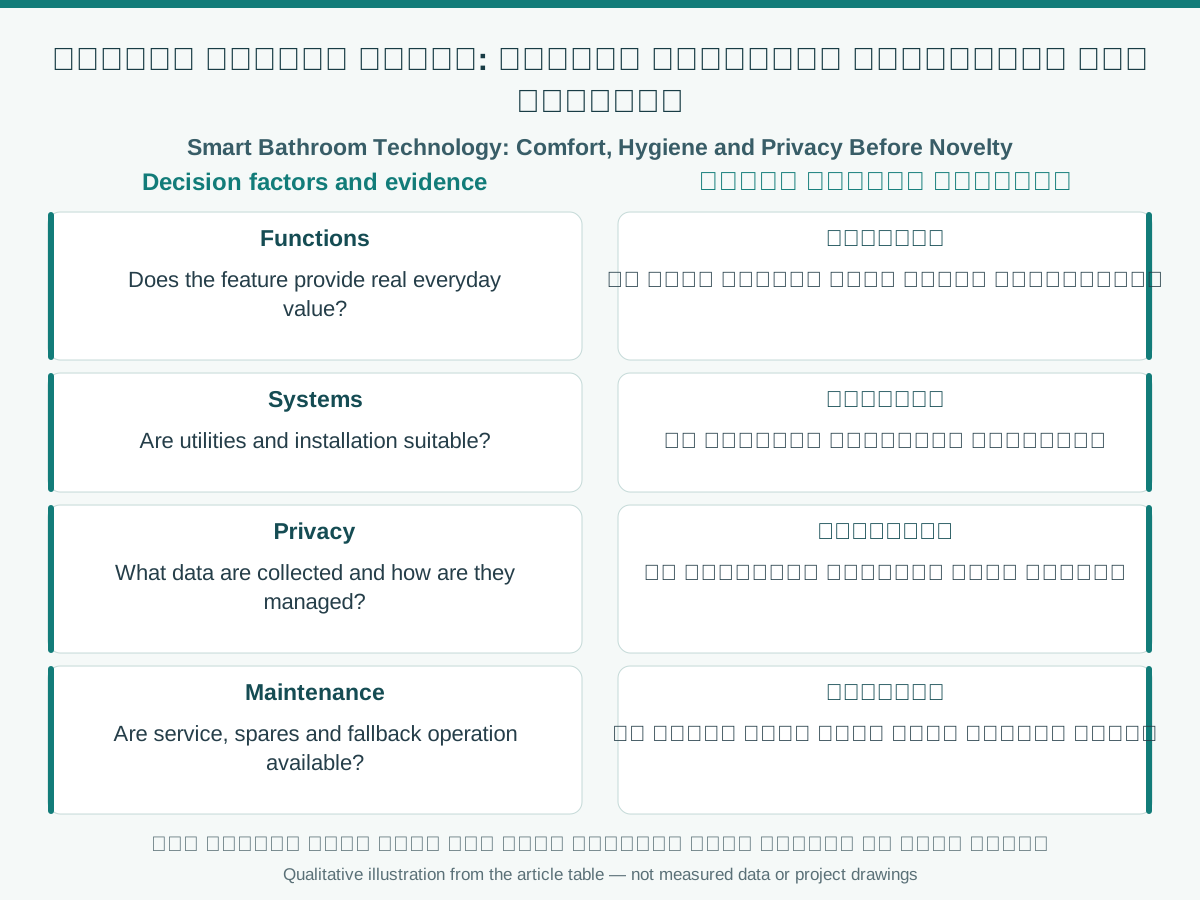
Identify the need
Compare functions
Review systems and privacy
Verify maintenance
Water, sustainability and maintenance
Compare flow, consumption and serviceable components using documented specifications and tests. Do not assume every smart fixture saves water or energy. Check spare parts, local service, warranty and installation compatibility with building systems and wet-area requirements through a qualified specialist.
A visual reading of the article topic
- 01How technology entered the bathroom
- 02Comfort, hygiene and reliability
- 03Devices and health data
- 04Water, sustainability and maintenance
Practical decision checklist
| Category | Selection question |
|---|---|
| Functions | Does the feature provide real everyday value? |
| Systems | Are utilities and installation suitable? |
| Privacy | What data are collected and how are they managed? |
| Maintenance | Are service, spares and fallback operation available? |
Decision pathway
- Identify the need
- Compare functions
- Review systems and privacy
- Verify maintenance
Scope and source
The examples do not recommend a specific device, guarantee savings or make a medical claim.
Digital editorial expansion of the author's Knowledge Fragments, page 190. The previous source text is retained in the editorial record.
Topics and source excerpts
| Topic | Excerpt from article |
|---|---|
| How technology entered the bathroom | Home technology is no longer limited to lighting and HVAC. |
| Comfort, hygiene and reliability | Check basic functionality, compatibility with electricity, water and drainage, and manual operation during faults. |
| Devices and health data | Research and experimental devices may explore health sensing and analysis, but a smart toilet is not automatically a medical device. |
| Water, sustainability and maintenance | Compare flow, consumption and serviceable components using documented specifications and tests. |
| Decision pathway | Identify the need |
| Scope and source | The examples do not recommend a specific device, guarantee savings or make a medical claim. |
Source excerpts organized for comparison, not newly researched findings.
References and limitations
Intended medical purpose determines regulatory scope; not every smart toilet is diagnostic. Review system and data security.
The following references support selected topics in the article.
- SFDA medical device definition
- NIST IR 8425 public abstract