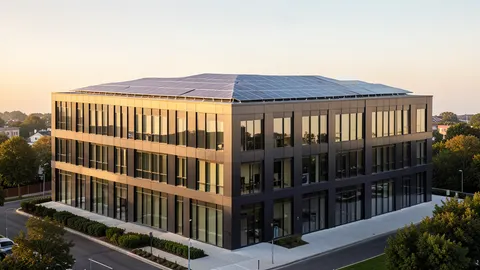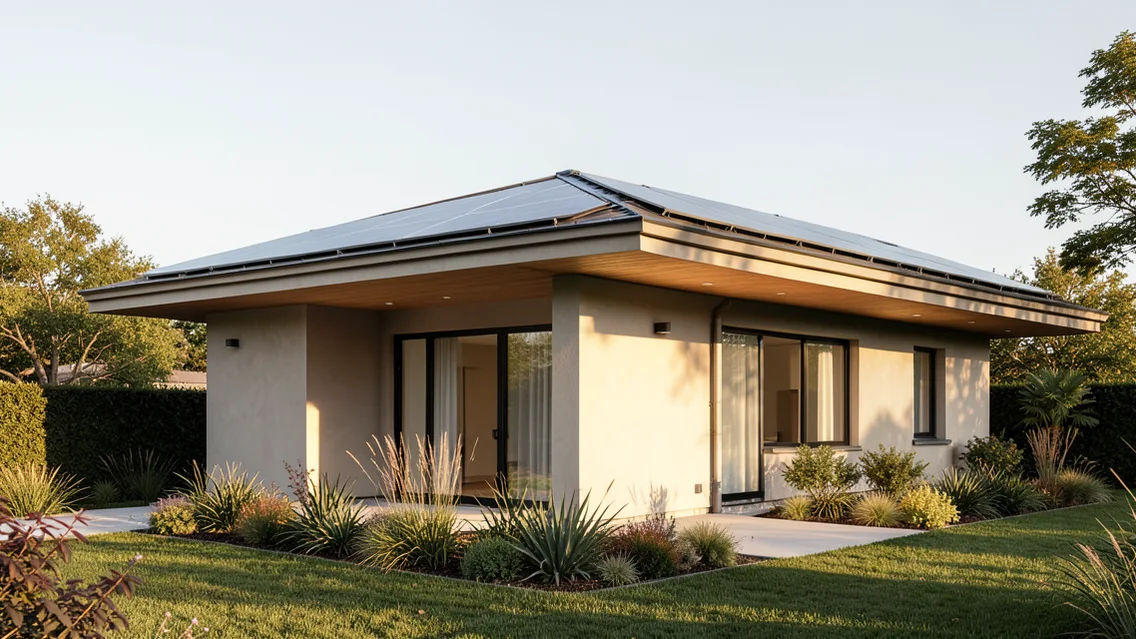
Do rooftop solar panels automatically make a building net-zero energy? No. Net-zero begins with reducing energy demand, then balancing that demand with renewable generation and verifying performance.
What is a net-zero energy building?
A net-zero energy building is a highly efficient building that achieves an annual energy balance within a defined accounting boundary and methodology. The US Department of Energy’s 2015 definition compares annual delivered energy with exported on-site renewable energy on a source-energy basis. Net-zero energy does not necessarily mean grid independence, zero utility bills or zero carbon emissions; these are different objectives.
Reducing loads begins with architecture
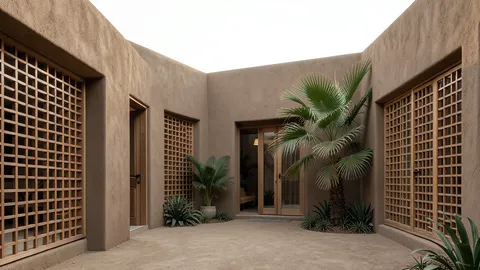
In hot climates, including much of Saudi Arabia, building orientation, shading, the thermal envelope, air leakage, HVAC and lighting efficiency should be considered before sizing renewable generation. The aim is to reduce demand without compromising comfort or indoor air quality.
Illustrative calculation: demand and generation capacity
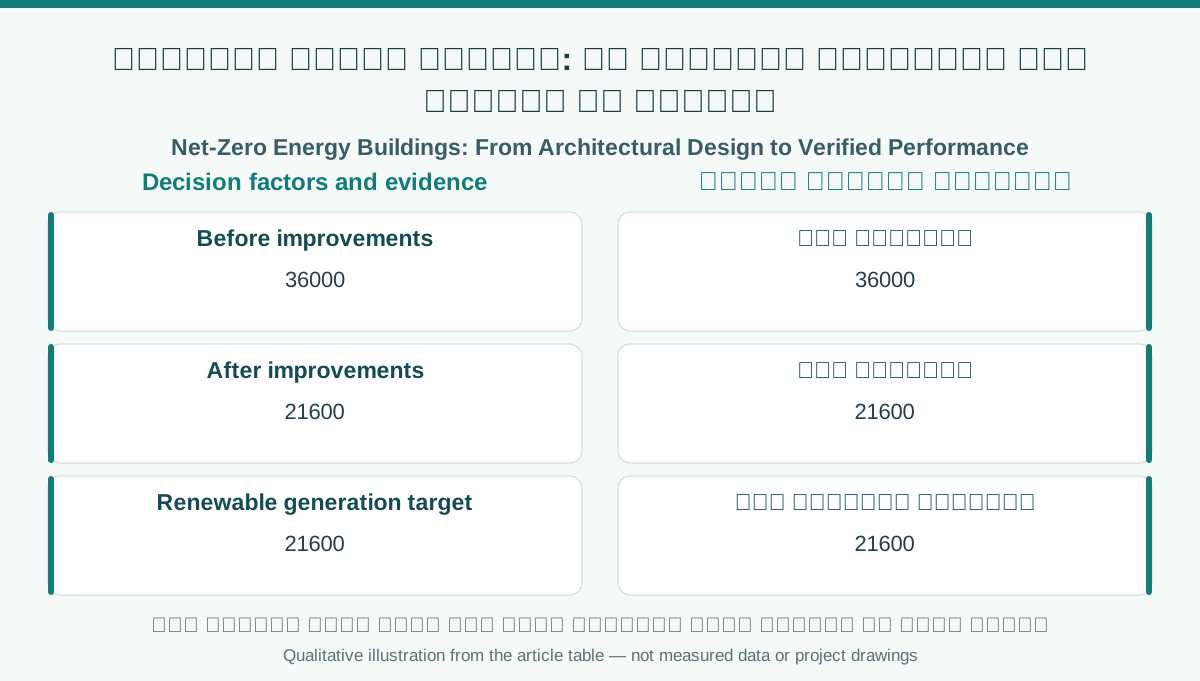
Consider a hypothetical all-electric building of 300 m², with an initial annual energy intensity of 120 kWh/m², an assumed 40% reduction in demand and an assumed annual photovoltaic yield of 1700 kWh per installed kWp. Initial annual consumption is 36000 kWh, falling to 21600 kWh in this scenario. Estimated PV capacity is 12.7 kWp rather than 21.2 kWp. These are hypothetical educational values, not measured results for a Saudi building or a site-specific estimate.
| Illustrative scenario | Annual energy (kWh) |
|---|---|
| Before improvements | 36000 |
| After improvements | 21600 |
| Renewable generation target | 21600 |
Actual feasibility depends on the site, shading, panel orientation, losses, tariffs and operating costs. This simplified annual electricity balance neither verifies net-zero certification nor determines battery capacity.
Architectural decisions that matter
A visual reading of the article topic
- 01Solar PV generation
- 02Insulated thermal envelope
- 03External shading
- 04Climate-appropriate glazing
- 05Efficient HVAC
| Element | Decision | Expected effect |
|---|---|---|
| Orientation | Study solar exposure | Reduce unwanted heat gains |
| Shading | Protect openings by orientation | Reduce cooling loads |
| Insulation | Improve the thermal envelope | Limit heat transfer |
| Glazing | Select suitable areas and properties | Balance daylight and heat |
| HVAC | Size systems according to actual loads | Reduce consumption |
| Solar generation | Assess area, shading and generation | Offset annual demand |
Five steps toward net-zero energy
- Define the target, methodology and measurement boundary.
- Reduce loads through orientation, shading and the building envelope.
- Improve the efficiency of HVAC, lighting and equipment.
- Size renewable generation against the reduced demand.
- Measure actual consumption and generation over a full year and verify the balance under the chosen methodology.
Measurement and verification after occupancy
Pre-construction energy modelling helps compare options, but verified performance needs metered records and clear definitions of loads, site boundaries and time period. Without these data, it is more accurate to describe the project as pursuing net-zero energy than to claim that it has achieved it.
Conclusion
A net-zero energy building is not merely a building with solar panels. It is an integrated system that begins with architectural decisions and ends with measured performance. The fundamental question is: how can we design a building that needs less energy?
References and editorial note
Editorial expansion of the author’s Knowledge Fragments, page 178. US Department of Energy, common definition of zero energy buildings (2015): https://www.energy.gov/cmei/buildings/articles/doe-releases-common-definition-zero-energy-buildings-campuses-and
Topics and source excerpts
| Topic | Excerpt from article |
|---|---|
| What is a net-zero energy building? | A net-zero energy building is a highly efficient building that achieves an annual energy balance within a defined accounting boundary and methodology. |
| Reducing loads begins with architecture | In hot climates, including much of Saudi Arabia, building orientation, shading, the thermal envelope, air leakage, HVAC and lighting efficiency should be c… |
| Illustrative calculation: demand and generation capacity | Consider a hypothetical all-electric building of 300 m², with an initial annual energy intensity of 120 kWh/m², an assumed 40% reduction in demand and an a… |
| Five steps toward net-zero energy | Define the target, methodology and measurement boundary. |
| Measurement and verification after occupancy | Pre-construction energy modelling helps compare options, but verified performance needs metered records and clear definitions of loads, site boundaries and… |
| Conclusion | A net-zero energy building is not merely a building with solar panels. |
Source excerpts organized for comparison, not newly researched findings.
International Energy Agency, Energy Efficiency 2024, cooling and heatwave-driven electricity demand: https://www.iea.org/reports/energy-efficiency-2024/how-can-energy-efficiency-alleviate-rising-heatwave-driven-electricity-demand
References and limitations
DOE's definition compares annual delivered and exported source energy; illustrative PV sizing does not prove a measured zero-energy outcome.
The following references support selected topics in the article.
US DOE common zero-energy definition announcement 2015