Evidence-based critique
The source explores critique as a way to reveal strengths and weaknesses in modern buildings. Establish the program, objectives, constraints and design stage, then select verifiable criteria rather than relying on aesthetic impressions. Distinguish preferences from documented dimensional, functional or safety conflicts. Architectural opinion alone cannot establish structural inadequacy; refer such concerns to the responsible specialist.
Performance, coordination and innovation
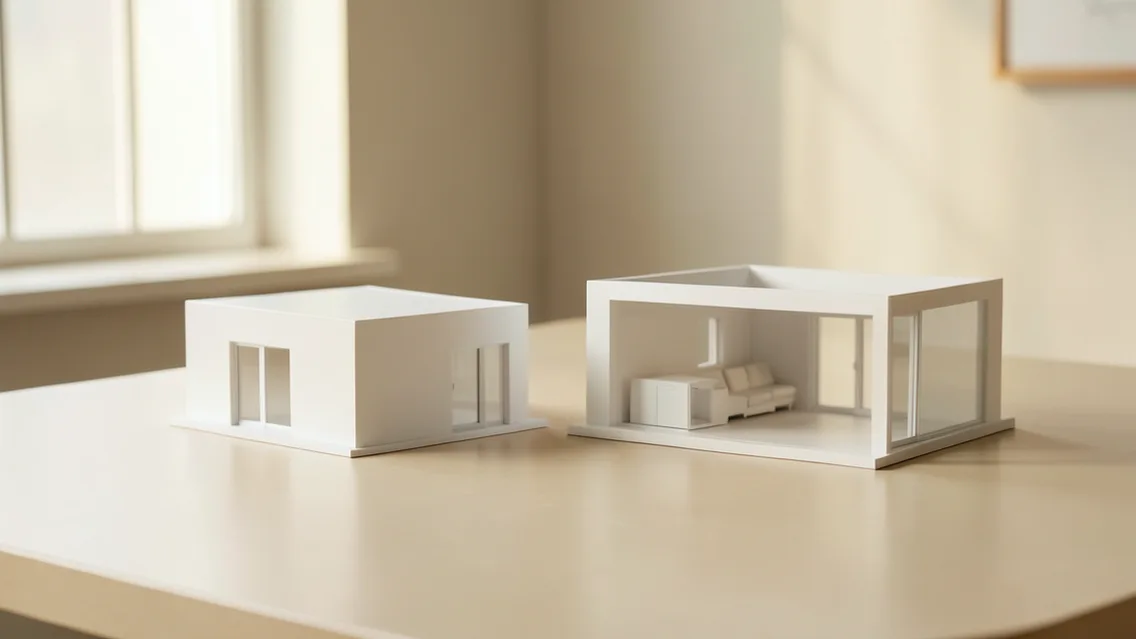
Review spatial distribution, circulation, daylight, ventilation, privacy and maintainability, comparing envelopes, insulation, systems and services against project goals. Simulation, calculations and prototypes can reveal differences when inputs are suitable and documented. Innovation does not justify bypassing requirements; test new approaches against a baseline for performance, cost, buildability and risk. Early review can reveal conflicts before detailing is approved.
Turn critique into professional learning
Record issue location, reference, impact, priority and responsible party, then track responses, revisions and verification. Categorize recurring problems to inform training and checklists without treating one project's cause as universal. Evaluate critique through documented design improvements and resolved conflicts, not issue count alone. Technical and regulatory approval remains with authorized professionals and authorities.
Comparison and verification table
| Factor | Evidence or action |
|---|---|
| Function | Program, circulation and comfort |
| Performance | Simulation, evidence and assumptions |
| Coordination | Discipline and conflict review |
| Learning | Decision and recurring-issue log |
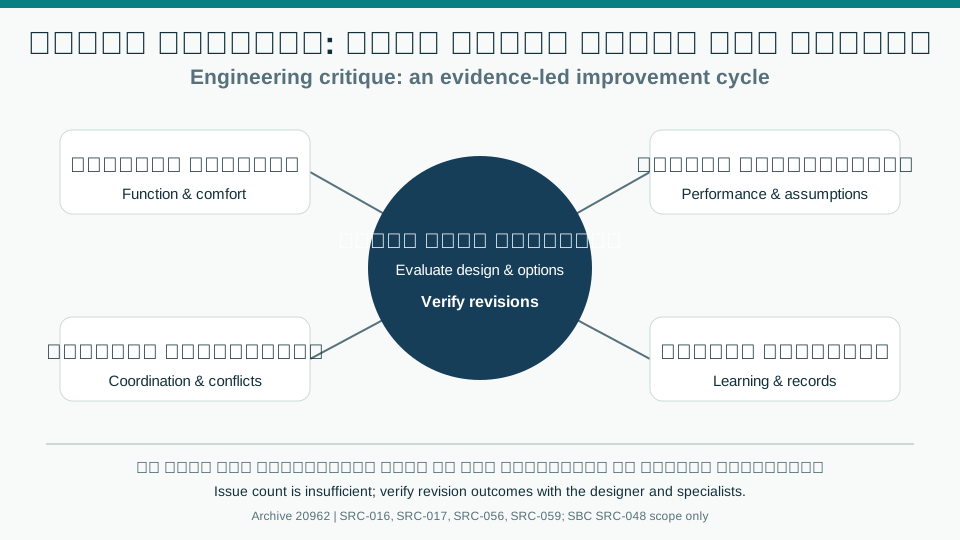
A visual reading of the article topic
- 01Evidence-based critique
- 02Performance, coordination and innovation
- 03Turn critique into professional learning
- 04Comparison and verification table
Practical workflow
- 01 Define review objectives
- 02 Examine evidence and options
- 03 Record issues and priorities
- 04 Verify revisions
Conceptual editorial diagram; not measured data.
Topics and source excerpts
| Topic | Excerpt from article |
|---|---|
| Evidence-based critique | The source explores critique as a way to reveal strengths and weaknesses in modern buildings. |
| Performance, coordination and innovation | Review spatial distribution, circulation, daylight, ventilation, privacy and maintainability, comparing envelopes, insulation, systems and services against… |
| Turn critique into professional learning | Record issue location, reference, impact, priority and responsible party, then track responses, revisions and verification. |
| Practical workflow | 01 Define review objectives |
| Sources and limitations | Editorial adaptation based on the original WordPress archive; original source retained separately. |
Source excerpts organized for comparison, not newly researched findings.
Sources and limitations
Editorial adaptation based on the original WordPress archive; original source retained separately. Benefits in the source depend on review quality; critique is not engineering certification or a guarantee of error-free construction.
- APPA: Programming — Readable alternative on early programming, users, costs and schedules in institutional facilities; no mandatory residential areas or savings rates.
- WBDG: Meet Performance Objectives — Stakeholder needs, documented performance measures and staged reviews; no quantified savings.
- AIA: A Problem Well Stated — Owner Project Requirements — Practitioner guidance on brief, site, function, performance and cost; not code approval or endorsement of every practice.
- buildingSMART: BCF use-case guidance — Exchange of model issues, descriptions, status, comments and viewpoints; not causal evidence of error reduction.
- Saudi Building Code: Residential Code SBC 1101–1102, 2024 — Scope of qualifying homes and covered disciplines; detailed clauses and project compliance not verified.