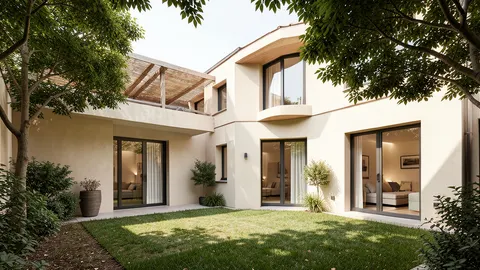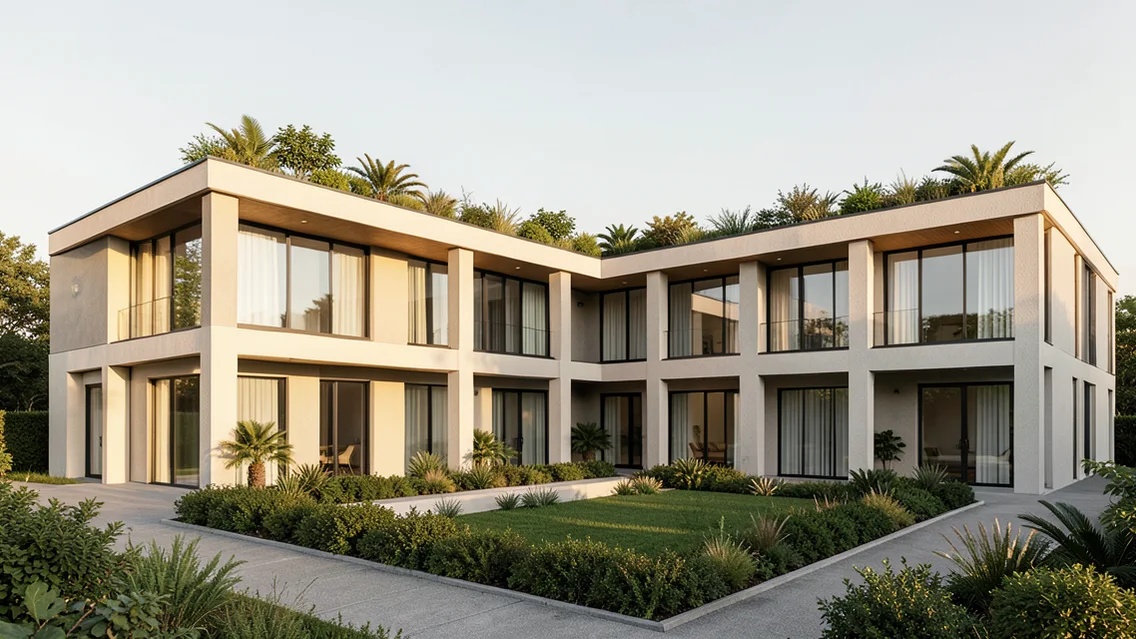
What is a green building?
The article describes green architecture as a practice considering resources and the environment throughout the building life cycle. It does not mean a zero-impact building: construction, operation, maintenance and dismantling have varying impacts. Define assessment boundaries and performance targets for site, climate and function, comparing options rather than relying on a marketing label or single material.
Energy, materials and water
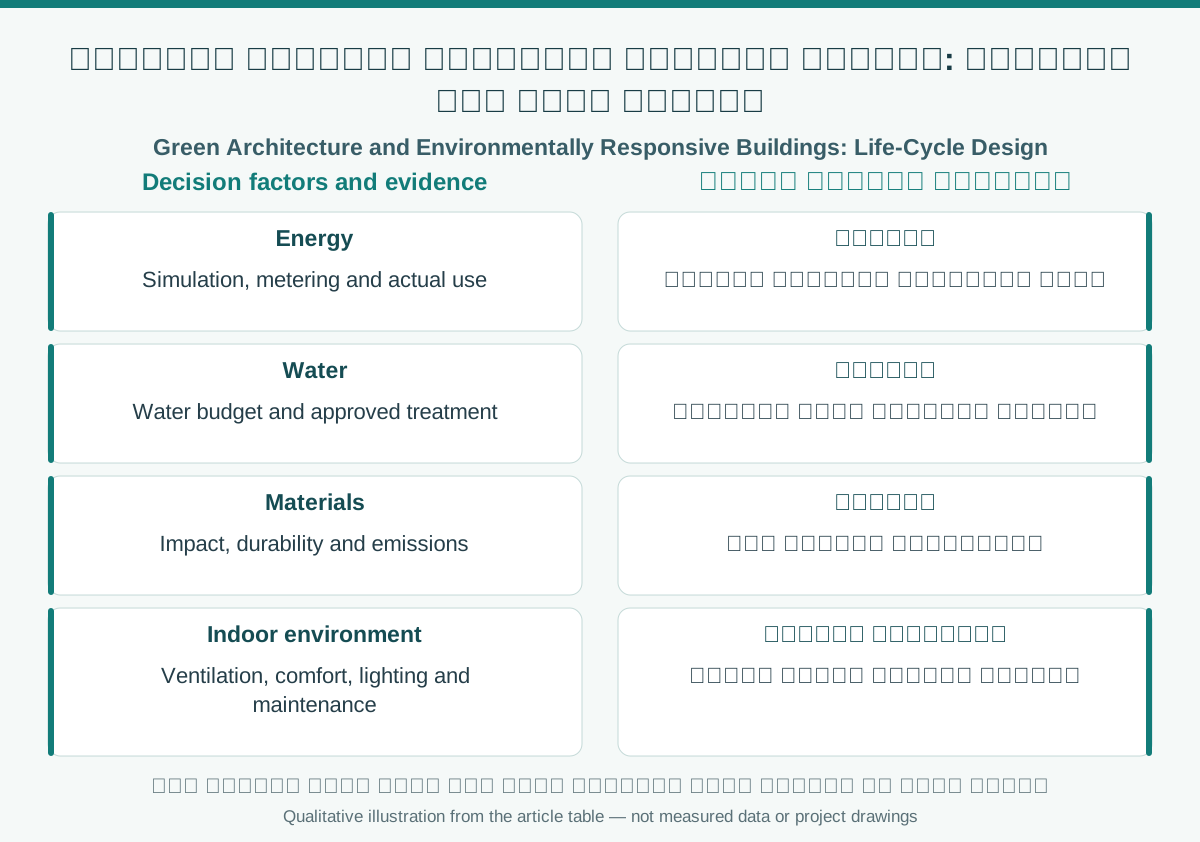
Start with orientation, shading, insulation and envelope efficiency before selecting systems for calculated loads. Compare materials by documented impact, durability, maintenance and indoor emissions; natural is not automatically preferable. Some treated-water reuse applications can reduce freshwater demand, but source water, treatment, storage, plumbing and end use need approved design and health requirements; general filtration descriptions do not establish safety.
Air and performance verification
Indoor air quality depends on internal and external pollutants, ventilation, filtration, humidity and operations. Test a ventilation strategy suited to climate, dust and building function with specialists, considering comfort, lighting and accessibility. Validate outcomes with operating data and clear metrics, comparing total costs, maintenance and replacements; certification or imagery alone does not establish measured performance.
Decision review table
| Factor | Evidence or action |
|---|---|
| Energy | Simulation, metering and actual use |
| Water | Water budget and approved treatment |
| Materials | Impact, durability and emissions |
| Indoor environment | Ventilation, comfort, lighting and maintenance |
A visual reading of the article topic
- 01What is a green building?
- 02Energy, materials and water
- 03Air and performance verification
- 04Decision review table
Practical workflow
- 01 Define performance goals
- 02 Compare alternatives
- 03 Verify design and construction
- 04 Monitor operations
Conceptual editorial diagram; not measured data.
Sources and limitations
Editorial adaptation based on the original WordPress archive; original source retained separately. Agency definitions, building examples, performance rates and reuse methods from 2020 require source and regulatory review. Zero impact or treated-water suitability is not asserted without testing and approval.
Topics and source excerpts
| Topic | Excerpt from article |
|---|---|
| What is a green building? | The article describes green architecture as a practice considering resources and the environment throughout the building life cycle. |
| Energy, materials and water | Start with orientation, shading, insulation and envelope efficiency before selecting systems for calculated loads. |
| Air and performance verification | Indoor air quality depends on internal and external pollutants, ventilation, filtration, humidity and operations. |
| Practical workflow | 01 Define performance goals |
| Sources and limitations | Editorial adaptation based on the original WordPress archive; original source retained separately. |
| References and limitations | Evaluate buildings across the life cycle; compare envelope, systems and materials using stated boundaries. |
Source excerpts organized for comparison, not newly researched findings.
References and limitations
Evaluate buildings across the life cycle; compare envelope, systems and materials using stated boundaries. A green label does not mean zero impact.
The following references support selected topics in the article.
- UNEP Global Status Report for Buildings and Construction 2025–2026, abstract (May 2026)
- EPA Sustainable Materials Management Basics
- EPA Indoor Air Quality
- DOE About Building Energy Modeling