
The question facing early-career engineers
The article considers an engineer who assumed substantial responsibilities in a practice while financial expectations remained unmet. The issue goes beyond pay: are responsibilities matched by a clear role, does experience develop demonstrable skills, and is there an assessable career path rather than an open-ended promise?
Early years: learning without surrendering rights
Practice can provide experience in design, project administration, client communication, service pricing and teamwork. Learning does not override employment rights or the importance of a fair and safe workplace. Measure experience by what you can now do that you could not do before, rather than hours worked alone.
Turn promises into measurable agreements
Keep a record of responsibilities, contributions, skills and outcomes that you are permitted to document without exposing client information. In a review meeting, discuss the scope of your role, promotion criteria, compensation and a review date. Linking responsibility reviews to defined tasks and a specified date is clearer than a vague promise of improvement.
Document performance
Discuss progression
Compare options
Make an informed decision
When to explore alternatives
Compare learning, stability, compensation, workplace culture and personal commitments. Before moving, consider realistic alternatives, contractual conditions and financial consequences. Neither staying for experience nor changing jobs automatically produces a better outcome. Seek qualified advice for disputes or regulatory questions.
A visual reading of the article topic
- 01The question facing early-career engineers
- 02Early years: learning without surrendering rights
- 03Turn promises into measurable agreements
- 04When to explore alternatives
Practical decision checklist
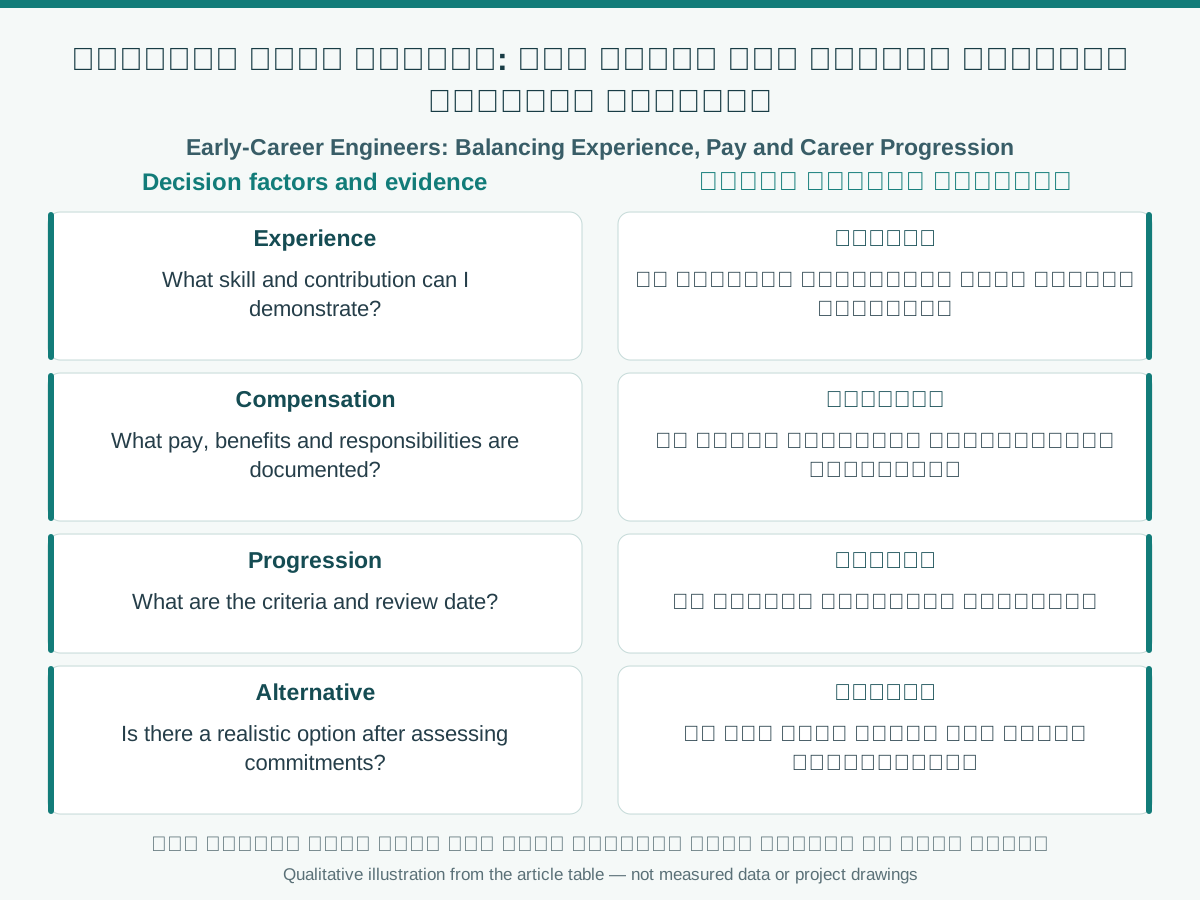
| Factor | Review question |
|---|---|
| Experience | What skill and contribution can I demonstrate? |
| Compensation | What pay, benefits and responsibilities are documented? |
| Progression | What are the criteria and review date? |
| Alternative | Is there a realistic option after assessing commitments? |
Decision pathway
- Document performance
- Discuss progression
- Compare options
- Make an informed decision
Scope and source
This is educational career guidance, not legal advice or a recommendation to resign.
Digital editorial expansion of the author's Knowledge Fragments, page 126. The previous source text is retained in the editorial record.
Topics and source excerpts
| Topic | Excerpt from article |
|---|---|
| The question facing early-career engineers | The article considers an engineer who assumed substantial responsibilities in a practice while financial expectations remained unmet. |
| Early years: learning without surrendering rights | Practice can provide experience in design, project administration, client communication, service pricing and teamwork. |
| Turn promises into measurable agreements | Keep a record of responsibilities, contributions, skills and outcomes that you are permitted to document without exposing client information. |
| When to explore alternatives | Compare learning, stability, compensation, workplace culture and personal commitments. |
| Decision pathway | Document performance |
| Scope and source | This is educational career guidance, not legal advice or a recommendation to resign. |
Source excerpts organized for comparison, not newly researched findings.
References and limitations
Review duties, compensation and rights under contract and law, documenting agreements without assuming unwritten contracts eliminate rights.
The following references support selected topics in the article.
HRSD Labor Relations