Transactions versus listings
The article emphasizes open data as a way to reduce information asymmetry. An asking price is the seller’s request; a recorded transaction represents a deal under the source definition. Neither alone establishes fair value for every property. Check timeliness, coverage, asset type, area, rights and condition, noting that agreement and registration dates may differ.
Buyer comparisons
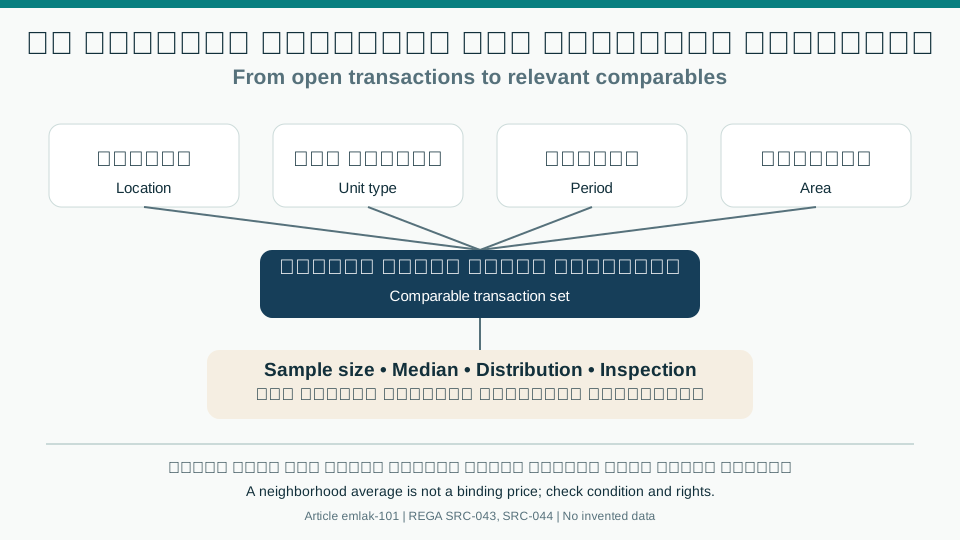
Select comparable transactions by neighborhood, period and unit type, using the correct price-per-square-metre denominator. Review sample size, median and distribution, excluding non-comparable records under a documented rule. Use a range in negotiation alongside property condition, inspection and professional valuation when needed, rather than treating the neighborhood average as a binding price.
Developer and investment analysis
Connect transaction data with rents, stock, delivery phases and costs where available. High transaction volume does not establish a shortage, and historic data cannot guarantee return forecasts. Preserve extraction date, field definitions and filters, checking usage and privacy terms. Evaluate policy effects through before-and-after data while accounting for other influences.
Decision review table
| Factor | Evidence or action |
|---|---|
| Source | Definition, coverage and date |
| Comparables | Matching type, location, period and area |
| Negotiation | Range alongside property inspection |
| Feasibility | Income, costs and scenarios |
A visual reading of the article topic
- 01Transactions versus listings
- 02Buyer comparisons
- 03Developer and investment analysis
- 04Decision review table
Practical workflow
- 01 Define the question
- 02 Extract data
- 03 Validate comparables
- 04 Document decision limits
Conceptual editorial diagram; not measured data.
Topics and source excerpts
| Topic | Excerpt from article |
|---|---|
| Transactions versus listings | The article emphasizes open data as a way to reduce information asymmetry. |
| Buyer comparisons | Select comparable transactions by neighborhood, period and unit type, using the correct price-per-square-metre denominator. |
| Developer and investment analysis | Connect transaction data with rents, stock, delivery phases and costs where available. |
| Practical workflow | 01 Define the question |
| Sources and limitations | Editorial development based on the author’s original Emlak article; previous text retained. |
Source excerpts organized for comparison, not newly researched findings.
Sources and limitations
Editorial development based on the author’s original Emlak article; previous text retained. Portal launch timing, data features, update frequency, coverage and cited regulatory programs require official verification. Access to every property’s history or live data is not asserted without evidence.
- REGA: Real Estate Indicators FAQ — Location, type and time filters and coverage limits; averages do not value a specific property.
- REGA: Real Estate Indicators Platform — Distinguishes transaction count, value, area, mean transaction value, outstanding loan balances and new individual residential finance; no numerical series or forecast adopted.