Carbon as an early design decision
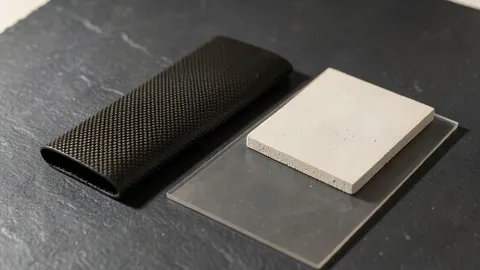
The original article connects conceptual design tools with material databases, citing Codesign and 2050 Materials as a historical example. The aim is to examine material and structural choices before design decisions become fixed.
What is being measured?
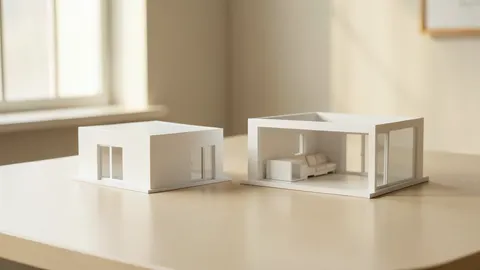
Distinguish embodied carbon from operational energy emissions. Embodied assessment may cover extraction, manufacturing, transport, construction, maintenance and end of life depending on scope. Compare equivalent functional units and study boundaries.
Illustrative calculation
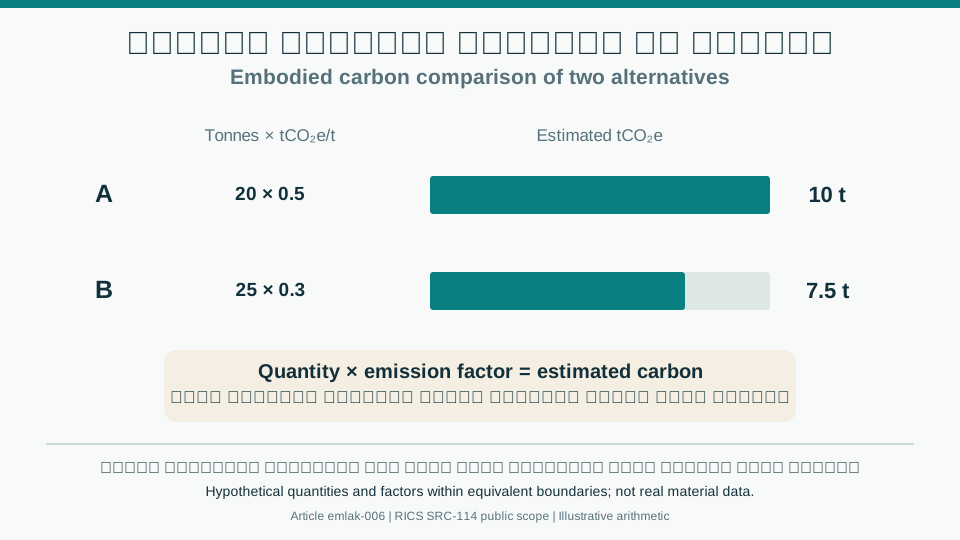
For method illustration only, assume two functionally equivalent alternatives: 20 tonnes of material at 0.5 tonnes CO2e per tonne versus 25 tonnes at 0.3. Estimated emissions are 10 versus 7.5 tonnes CO2e within the same hypothetical boundary. These are not real material factors or project results.
Define scope
Quantify
Compare
Update
From tool to verification
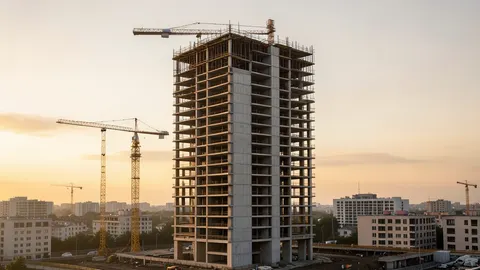
Check emission-factor provenance, dates, geographical relevance, quantities, durability, structural and fire performance. Tools support comparison but do not replace documented life-cycle assessment or technical review. Update estimates as design matures.
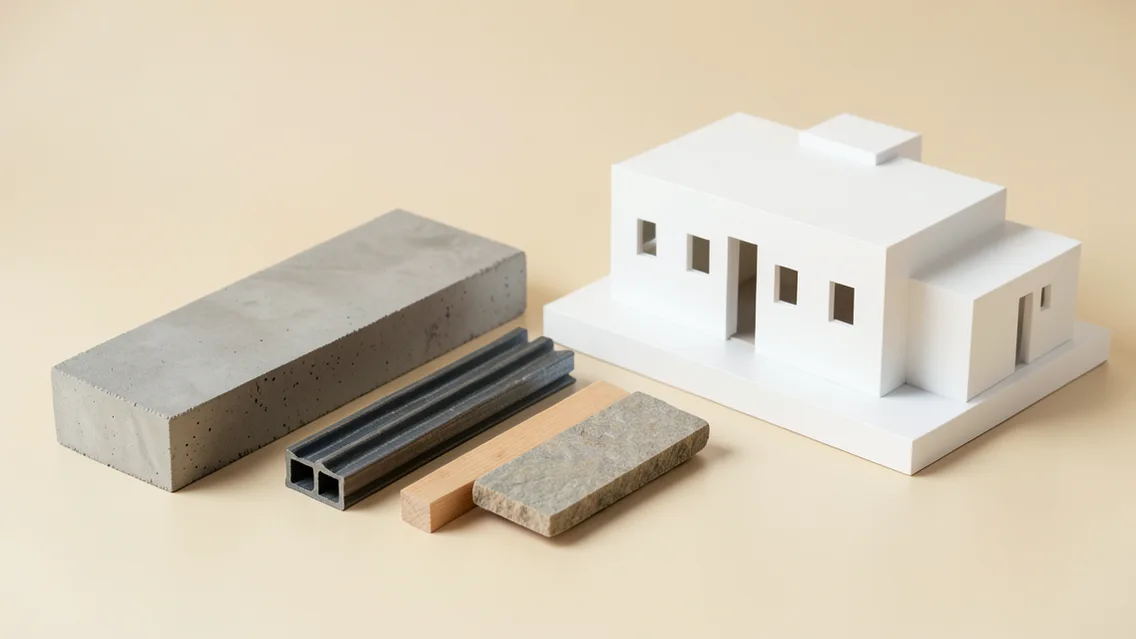
A visual reading of the article topic
- 01Carbon as an early design decision
- 02What is being measured?
- 03Illustrative calculation
- 04From tool to verification
Decision review table
| Factor | Evidence to check |
|---|---|
| Unit | Functional equivalence |
| Boundary | Included life-cycle stages |
| Data | Quantity, factor, source |
| Performance | Technical and environmental review |
Practical workflow
- Define scope
- Quantify
- Compare
- Update
Topics and source excerpts
| Topic | Excerpt from article |
|---|---|
| Carbon as an early design decision | The original article connects conceptual design tools with material databases, citing Codesign and 2050 Materials as a historical example. |
| What is being measured? | Distinguish embodied carbon from operational energy emissions. |
| Illustrative calculation | For method illustration only, assume two functionally equivalent alternatives: 20 tonnes of material at 0.5 tonnes CO2e per tonne versus 25 tonnes at 0.3. |
| From tool to verification | Check emission-factor provenance, dates, geographical relevance, quantities, durability, structural and fire performance. |
| Source and limitations | Editorial expansion of the author's Emlak contribution; the historical text is retained. |
Source excerpts organized for comparison, not newly researched findings.
Source and limitations
Editorial expansion of the author's Emlak contribution; the historical text is retained. The historical global emissions percentage and product capability claims need a specific report and product documentation before being presented as current.
RICS: Whole Life Carbon Assessment — Public scope of embodied, operational and user carbon; full standard not reviewed, no project compliance established.