Bridge types and load paths
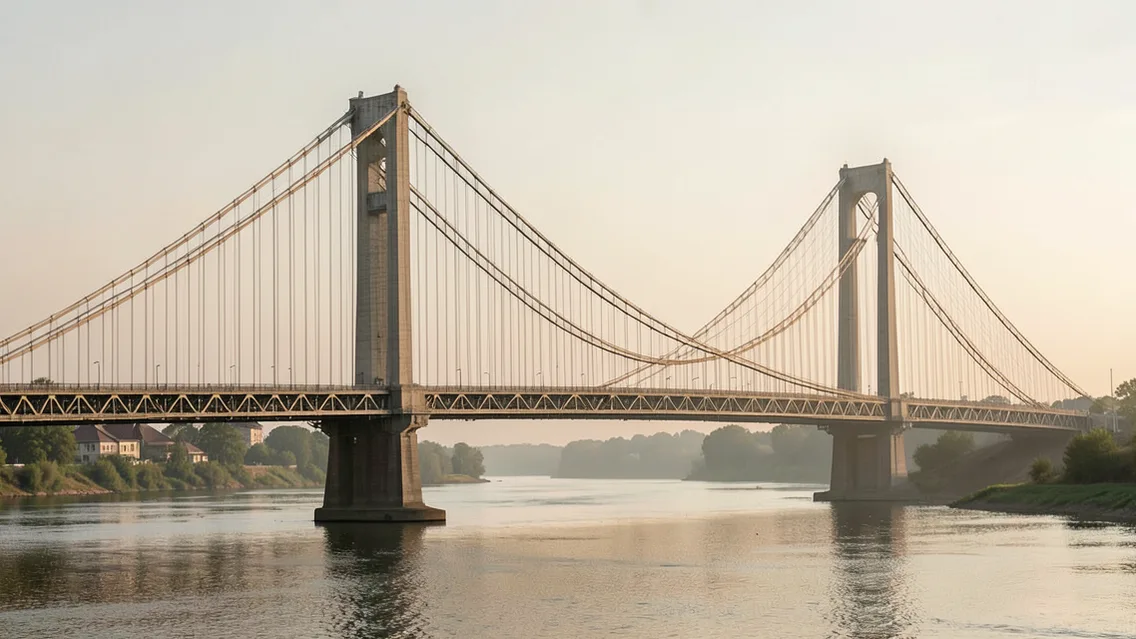
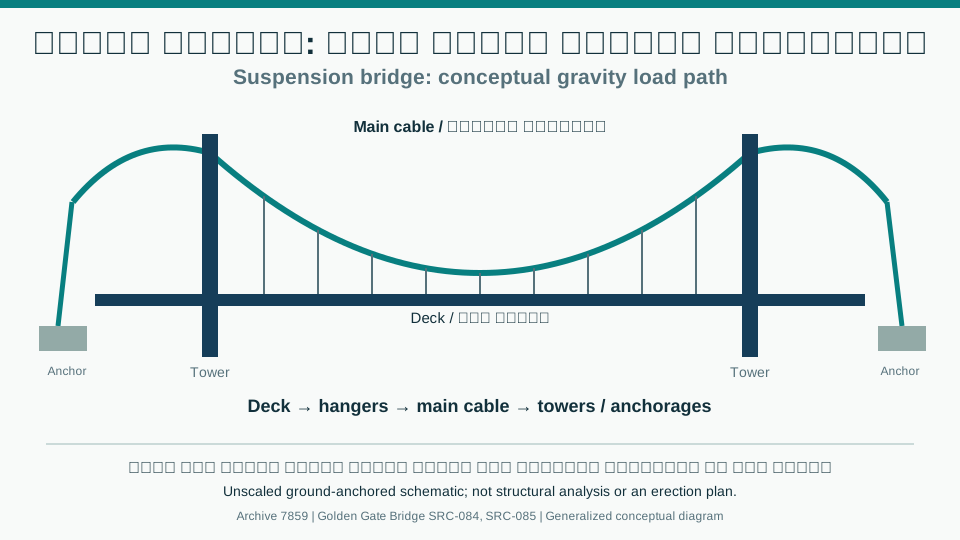
The source discusses suspension bridges with international examples. In a conventional suspension bridge, hangers support the deck and transfer forces to main cables, which transfer them to towers and anchorages according to the system. Cable-stayed bridges generally connect deck and towers directly through stays; distinguish these types when studying the Millau Viaduct and other examples. Self-anchored bridges also differ from ground-anchored systems.
Site and design before construction
Projects begin with span, navigation, geology, foundations, wind, seismic hazards, traffic and durability studies. Long-span bridges require dynamic assessment of loads, wind and temporary construction stages, plus collision and corrosion protection as appropriate. No fixed fraction of bridge length establishes tower positions or count; selection follows analysis, constraints and feasibility.
Construction stages and verification
Broad stages include foundations, towers and anchorages where required, installation of cables and hangers, and deck erection under an approved engineering plan. Sequence and methods differ by project; specialists review temporary forces, balance, lifting and safety. After installation, inspect components and verify testing, maintenance and monitoring plans. Professional design also applies to small pedestrian bridges; generic stages are not DIY construction instructions.
Comparison and verification table
| Factor | Evidence or action |
|---|---|
| Foundations and anchors | Geology, forces and durability |
| Towers and cables | Load paths and dynamic behavior |
| Deck | Loads, erection and temporary conditions |
| Operations | Inspection, corrosion, monitoring and maintenance |
A visual reading of the article topic
- 01Bridge types and load paths
- 02Site and design before construction
- 03Construction stages and verification
- 04Comparison and verification table
Practical workflow
- 01 Analyze site and span
- 02 Approve structural system and analysis
- 03 Plan erection and temporary stages
- 04 Verify testing and maintenance
Conceptual editorial diagram; not measured data.
Topics and source excerpts
| Topic | Excerpt from article |
|---|---|
| Bridge types and load paths | The source discusses suspension bridges with international examples. |
| Site and design before construction | Projects begin with span, navigation, geology, foundations, wind, seismic hazards, traffic and durability studies. |
| Construction stages and verification | Broad stages include foundations, towers and anchorages where required, installation of cables and hangers, and deck erection under an approved engineering… |
| Practical workflow | 01 Analyze site and span |
| Sources and limitations | Editorial adaptation based on the original WordPress archive; original source retained separately. |
Source excerpts organized for comparison, not newly researched findings.
Sources and limitations
Editorial adaptation based on the original WordPress archive; original source retained separately. Bridge examples, classifications, dimensions and construction methods in the 2021 text require technical and historical verification. This is not a bridge design, lifting plan or construction specification.
- Golden Gate Bridge: How the Bridge Spans the Golden Gate — Bridge-specific gravity load path through suspenders, cables and towers; not lateral-load or anchorage analysis.
- Golden Gate Bridge: Hanging the Roadway Deck — Documented example of balanced deck-section installation from towers; not a general erection plan.