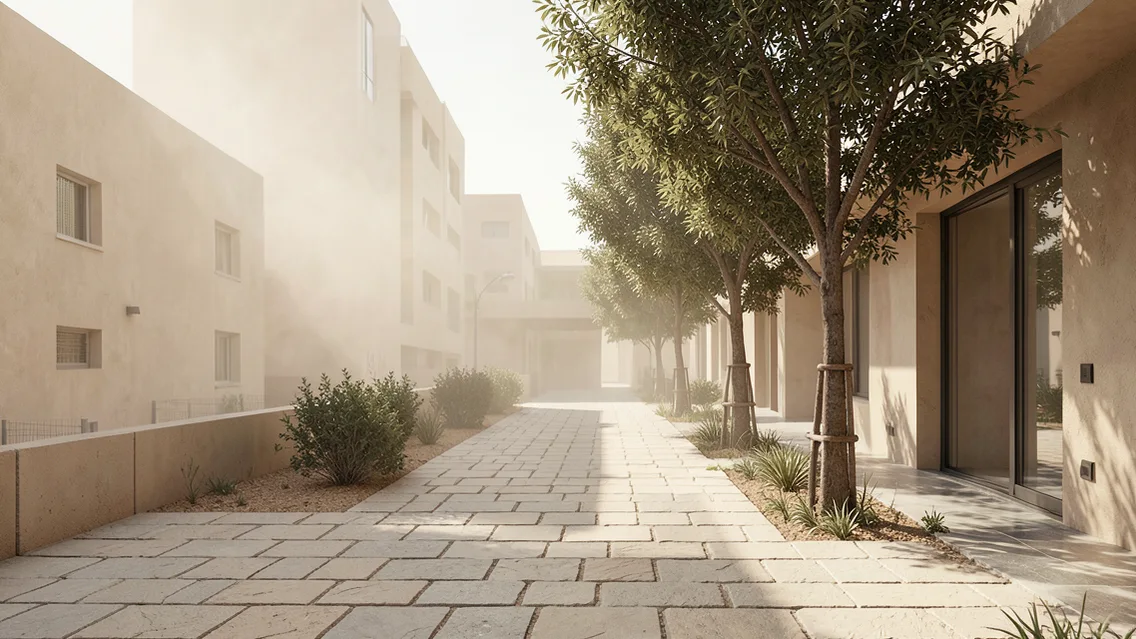
Greenhouse effect and warming
The article discusses rising concentrations of greenhouse gases such as carbon dioxide and methane. The natural greenhouse effect helps make Earth habitable; human-driven increases in greenhouse gases, especially through fossil-fuel combustion and land-use change, enhance heat retention and warm the climate. Ozone depletion differs from global warming, although some factors interact. Gas concentrations in parts per million are distinct from temperature changes in degrees Celsius.
Impacts and local risks
Climate change affects the probability and intensity of some events such as heatwaves and heavy precipitation, sea-level rise and ice loss, with variation across regions and time. Individual weather events cannot automatically be attributed to warming without analysis, and climate relationships alone do not establish causes of specific disease outbreaks. Design requires site hazard assessment for extreme heat, floods, dust and coastal exposure using suitable climate data and documented scenarios.
Mitigation and adaptation in architecture
Mitigation reduces emissions or increases carbon removal; adaptation reduces exposure and vulnerability to changing hazards. Building envelope, energy, materials and operations contribute to mitigation, while shading, drainage, thermal resilience and protection of systems can support adaptation according to location. Compare lifecycle alternatives and effects on safety, comfort and operating costs; no single technology addresses all risks.
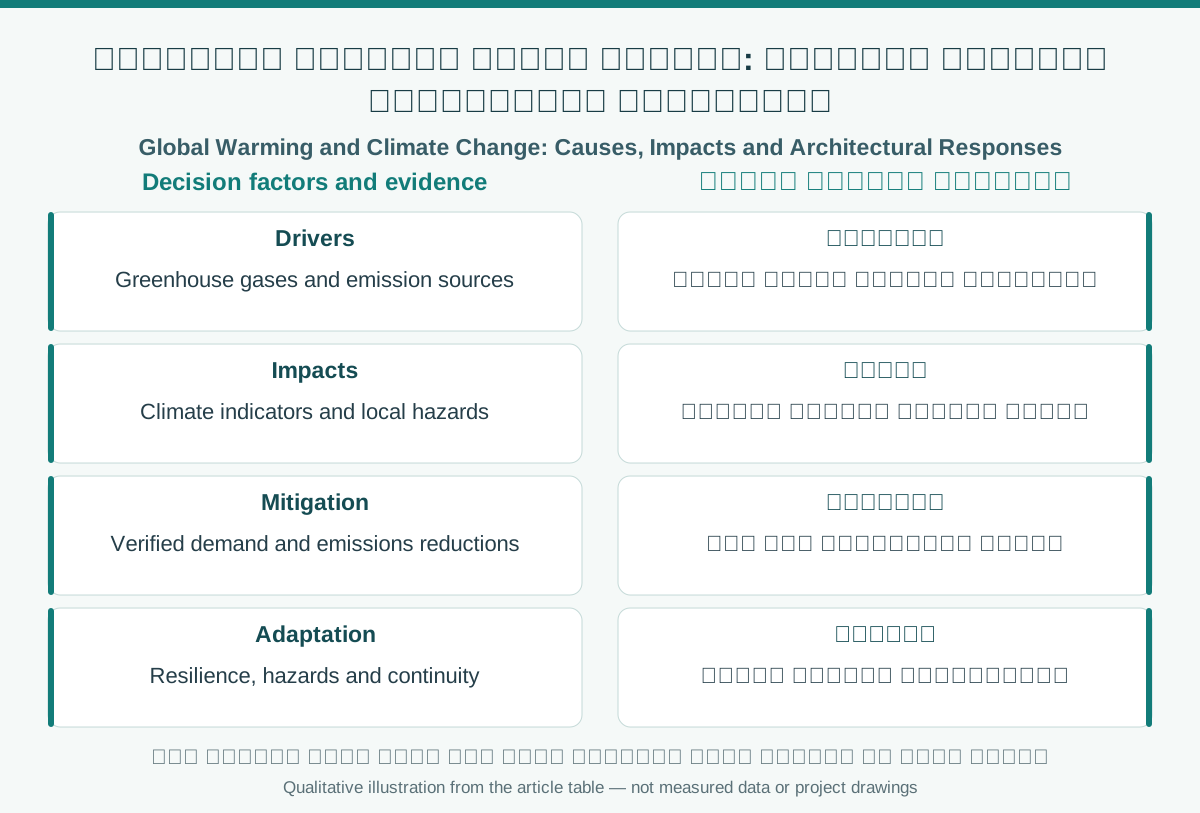
Comparison and verification table
| Factor | Evidence or action |
|---|---|
| Drivers | Greenhouse gases and emission sources |
| Impacts | Climate indicators and local hazards |
| Mitigation | Verified demand and emissions reductions |
| Adaptation | Resilience, hazards and continuity |
A visual reading of the article topic
- 01Greenhouse effect and warming
- 02Impacts and local risks
- 03Mitigation and adaptation in architecture
- 04Comparison and verification table
Practical workflow
- 01 Identify site hazards
- 02 Establish energy and emissions baseline
- 03 Combine mitigation and adaptation
- 04 Review results and scenarios
Conceptual editorial diagram; not measured data.
Sources and limitations
Editorial adaptation based on the original WordPress archive; original source retained separately. Historical numerical projections and references require verification against current scientific assessments and original sources before specific values are published. Disease claims and conflation of ozone depletion with warming are not repeated.
Topics and source excerpts
| Topic | Excerpt from article |
|---|---|
| Greenhouse effect and warming | The article discusses rising concentrations of greenhouse gases such as carbon dioxide and methane. |
| Impacts and local risks | Climate change affects the probability and intensity of some events such as heatwaves and heavy precipitation, sea-level rise and ice loss, with variation… |
| Mitigation and adaptation in architecture | Mitigation reduces emissions or increases carbon removal; adaptation reduces exposure and vulnerability to changing hazards. |
| Practical workflow | 01 Identify site hazards |
| Sources and limitations | Editorial adaptation based on the original WordPress archive; original source retained separately. |
| References and limitations | IPCC AR6 establishes human-caused global warming, principally through greenhouse gas emissions. |
Source excerpts organized for comparison, not newly researched findings.
References and limitations
IPCC AR6 establishes human-caused global warming, principally through greenhouse gas emissions. Distinguish emissions mitigation from adaptation to local hazards.
The following references support selected topics in the article.
IPCC AR6 Synthesis Report, Summary for Policymakers (2023)