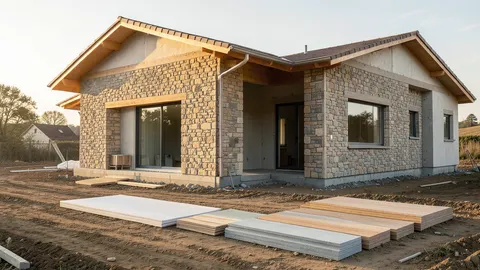
When is consultation useful?
The source presents architectural consultation as analysis before construction, not merely drawing a plan or choosing a facade. It may help before land purchase to test program fit, when defining household needs and budget, or before plan approval to assess options and conflicts. Early advice differs from comprehensive design, site supervision or structural inspection. Define the question and decision before engagement and involve other specialists for technical or regulatory constraints.
What to discuss with an architect
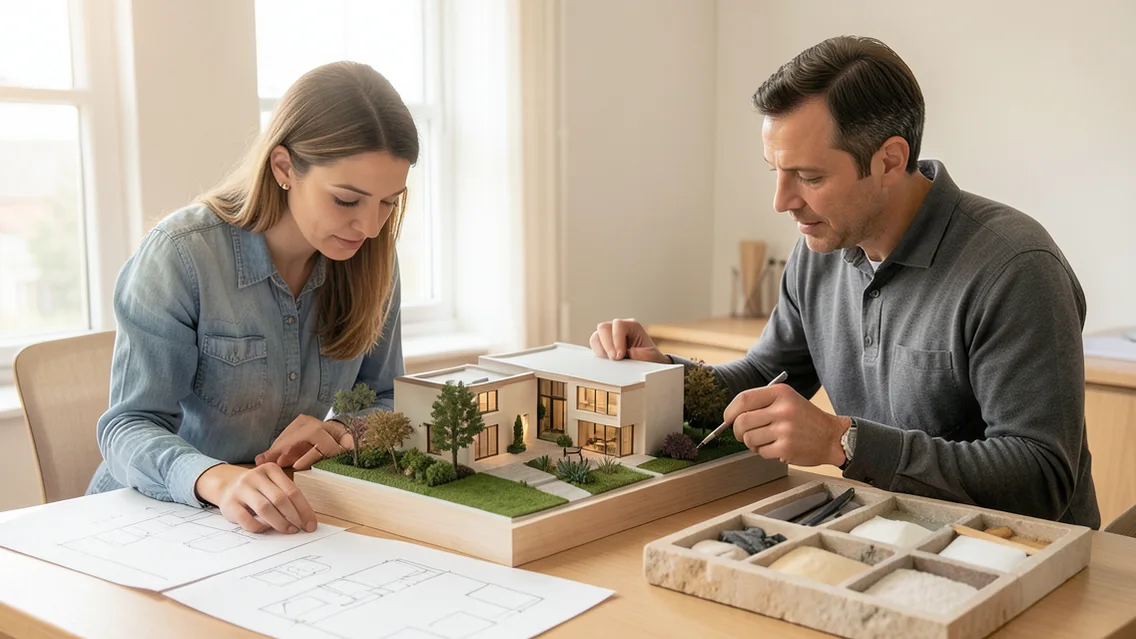
Gather land, boundaries, orientation, available rules and existing plans. Explain household routines, privacy, guests, home working, storage, parking, future needs and financial priorities. Examine functional relationships, daylight, ventilation, shading, access and care, and discuss floor area, options and expected cost scope. Record missing information and assumptions rather than interpreting preliminary estimates as final construction offers.
Deliverables, value and accountability
Depending on scope, outputs may include a brief, site or plan observations, option comparison, risk list and further checks. Finding conflicts early can reduce potential rework but does not guarantee savings or prevent every defect. The owner selects a direction and commissions detailed design, specialist studies or budget review as needed. Document decisions, constraints and next steps; do not build from advisory sketches not approved for construction.
Comparison and verification table
| Factor | Evidence or action |
|---|---|
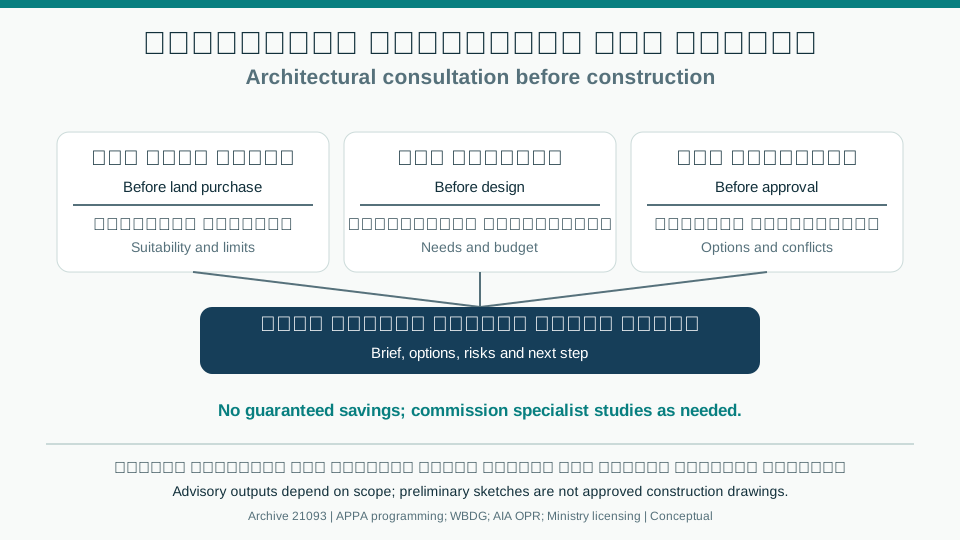
| Before land purchase | Suitability, restrictions and site |
| Before design | Needs, brief and budget |
| Before approval | Options, conflicts and review |
| Deliverables | Brief, decisions and next step |
A visual reading of the article topic
- 01When is consultation useful?
- 02What to discuss with an architect
- 03Deliverables, value and accountability
- 04Comparison and verification table
Practical workflow
- 01 Define decision and consultation
- 02 Provide documents and family needs
- 03 Discuss options, cost and risks
- 04 Record recommendations and next step
Conceptual editorial diagram; not measured data.
Topics and source excerpts
| Topic | Excerpt from article |
|---|---|
| When is consultation useful? | The source presents architectural consultation as analysis before construction, not merely drawing a plan or choosing a facade. |
| What to discuss with an architect | Gather land, boundaries, orientation, available rules and existing plans. |
| Deliverables, value and accountability | Depending on scope, outputs may include a brief, site or plan observations, option comparison, risk list and further checks. |
| Practical workflow | 01 Define decision and consultation |
| Sources and limitations | Editorial adaptation based on the original WordPress archive; original source retained separately. |
Source excerpts organized for comparison, not newly researched findings.
Sources and limitations
Editorial adaptation based on the original WordPress archive; original source retained separately. Time and cost savings depend on information and execution; general advice does not replace approved design, inspections or required permits.
- APPA: Programming — Readable alternative on early programming, users, costs and schedules in institutional facilities; no mandatory residential areas or savings rates.
- WBDG: Meet Performance Objectives — Stakeholder needs, documented performance measures and staged reviews; no quantified savings.
- AIA: A Problem Well Stated — Owner Project Requirements — Practitioner guidance on brief, site, function, performance and cost; not code approval or endorsement of every practice.
- Ministry of Municipalities and Housing: Licensing documentation — Approved engineering documents, survey and soil study among service requirements; check project applicability.