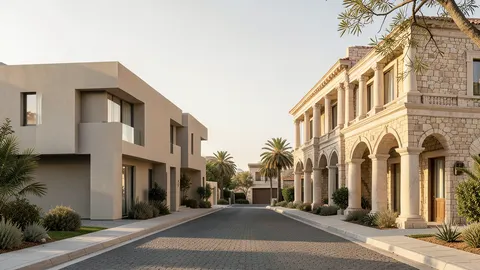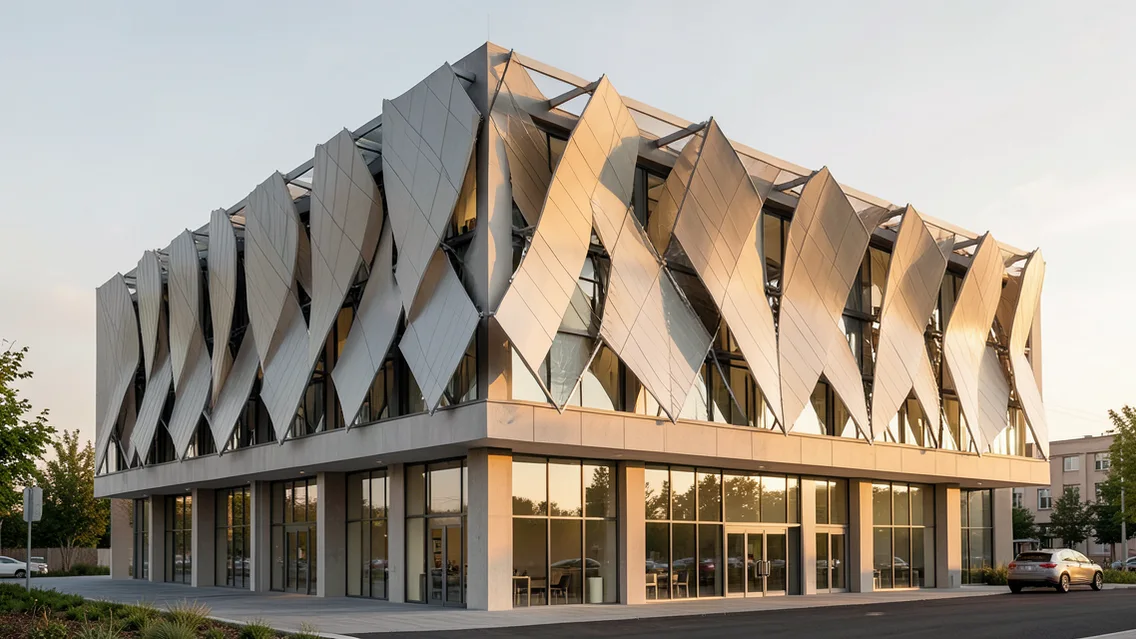
Between fixed and adaptable elements
The source starts from changing environments and human needs while some building components remain relatively stable. Adjustable windows, shades, partitions and vents can respond to light, heat, privacy and use. Interactive architecture is broader than mechanical movement; it can involve digital response, changing material properties or direct user input. The program identifies what should change and what must remain stable.
Sensing and response loop
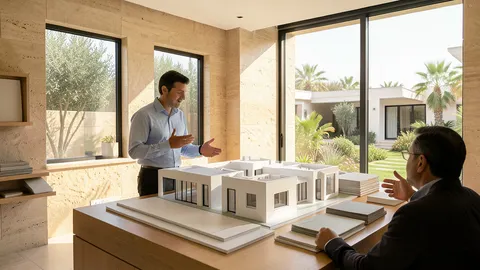
Sensors may measure temperature, humidity, solar radiation or occupancy and feed control logic that adjusts shading or lighting. Define control objectives, operating range, response limits and conflict prevention. Consider privacy and safe manual override; more sensors do not automatically improve experience.
Evaluate impact and reliability
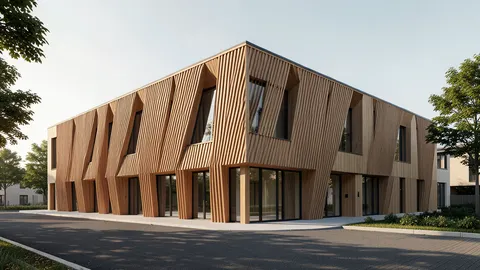
Compare interactive systems with simpler passive alternatives on energy, comfort, accessibility, cost and life cycle. Examine moving-part hazards, power loss, sensor failure, wind, dust, fire and egress. Test normal and failure modes, defining safe states, maintenance and component access. Movement alone does not establish sustainability or experience quality.
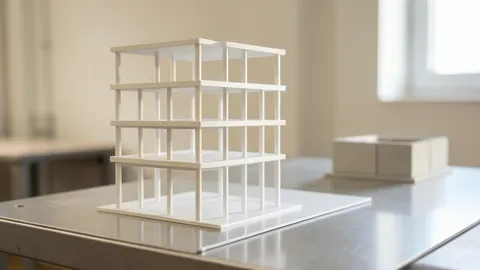
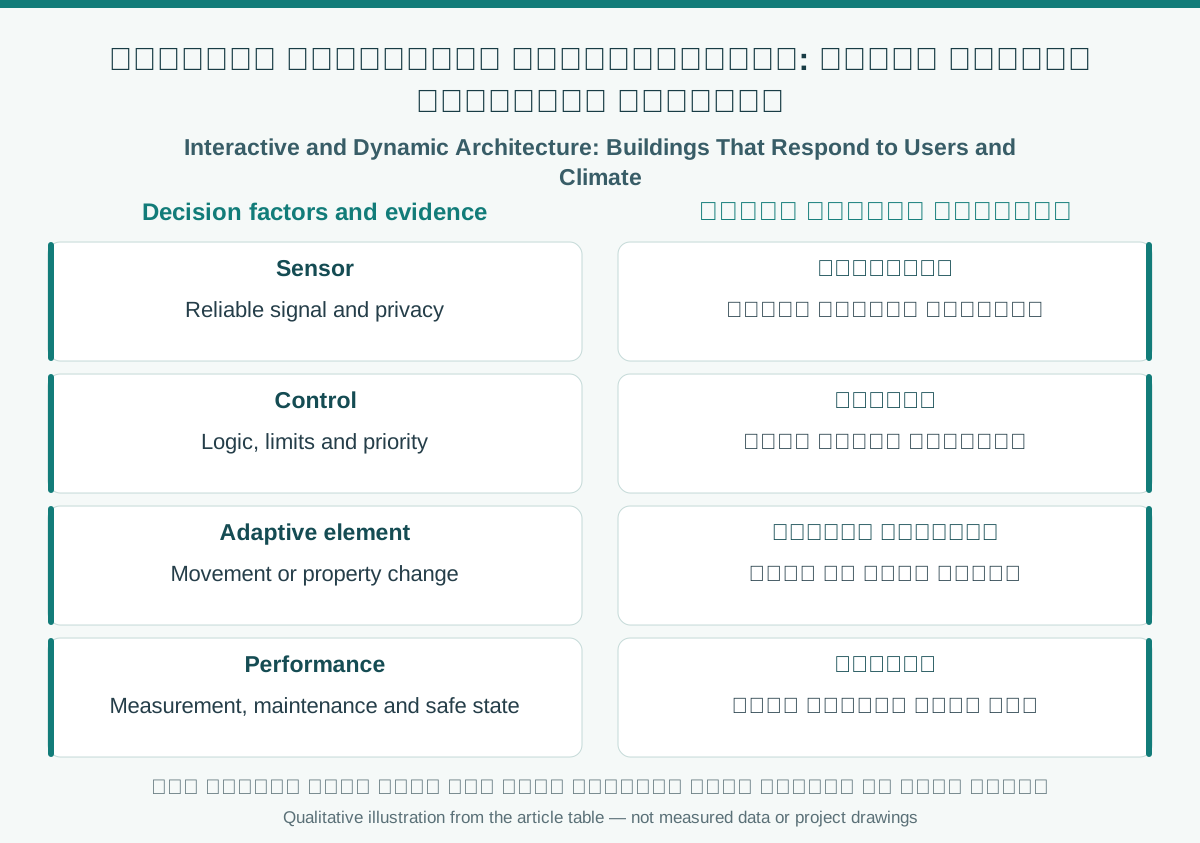
Comparison and verification table
| Factor | Evidence or action |
|---|---|
| Sensor | Reliable signal and privacy |
| Control | Logic, limits and priority |
| Adaptive element | Movement or property change |
| Performance | Measurement, maintenance and safe state |
A visual reading of the article topic
- 01Between fixed and adaptable elements
- 02Sensing and response loop
- 03Evaluate impact and reliability
- 04Comparison and verification table
Practical workflow
- 01 Define adaptation need
- 02 Select sensing and response
- 03 Test failures and safety
- 04 Monitor performance
Conceptual editorial diagram; not measured data.
Sources and limitations
Editorial adaptation based on the original WordPress archive; original source retained separately. Energy and experiential benefits in the source are conditional goals; savings require appropriate simulation or measurement.
Topics and source excerpts
| Topic | Excerpt from article |
|---|---|
| Between fixed and adaptable elements | The source starts from changing environments and human needs while some building components remain relatively stable. |
| Sensing and response loop | Sensors may measure temperature, humidity, solar radiation or occupancy and feed control logic that adjusts shading or lighting. |
| Evaluate impact and reliability | Compare interactive systems with simpler passive alternatives on energy, comfort, accessibility, cost and life cycle. |
| Practical workflow | 01 Define adaptation need |
| Sources and limitations | Editorial adaptation based on the original WordPress archive; original source retained separately. |
| References and limitations | Dynamic controls and shading can be modeled using documented inputs and states. |
Source excerpts organized for comparison, not newly researched findings.
References and limitations
Dynamic controls and shading can be modeled using documented inputs and states. Movement safety, failure modes and maintenance remain separate requirements from energy outcomes.
The following references support selected topics in the article.
- DOE About Building Energy Modeling
- DOE Windows Projects