Porcelain within ceramic tiles
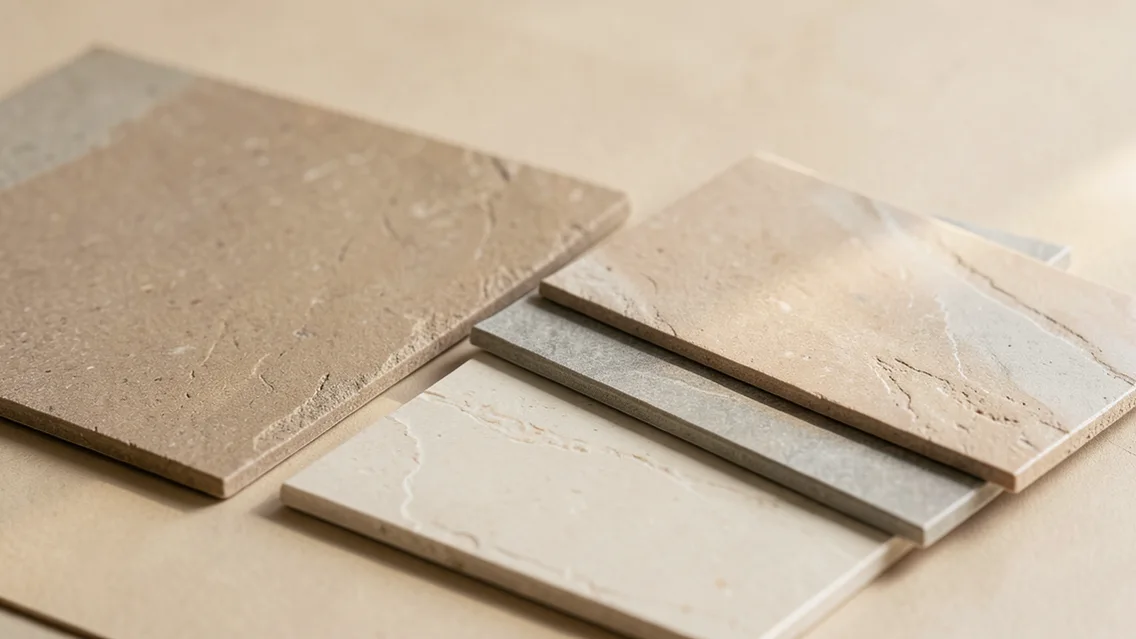
The article compares ceramic and porcelain as named in the market. Porcelain is a ceramic tile category generally with low water absorption relative to other groups, classified by applicable standards and test results rather than gloss or country of origin. Ceramic tiles are typically formed and fired from clay and mineral materials; cement is not a universal essential component. Products may be glazed or unglazed depending on type.
Performance by space
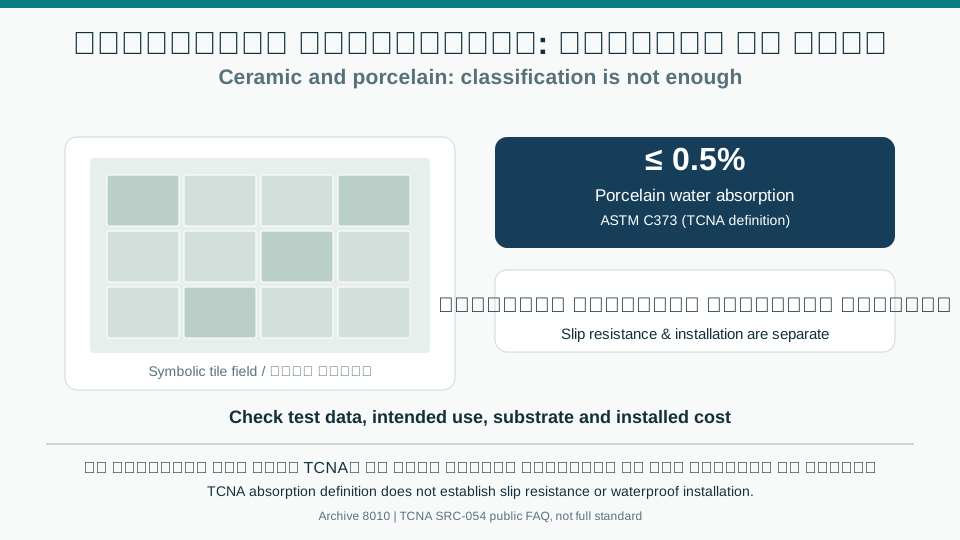
Neither ceramic nor porcelain labeling proves slip resistance; it depends on finish, contaminants, wet use and test method. For floors, assess wear, loading and slip resistance by use; for walls and façades, review weight, support and installation systems. Bathrooms and kitchens need tiles suited to exposure and cleaning plus waterproofing where required. Low absorption does not make joints or the installation automatically watertight.
Installation cost and quality
Compare material price with substrate preparation, adhesives, joints, waste, cutting and labor. Large or low-absorption tiles may require suitable tools and installation materials; follow system specifications and verify flatness, coverage and joints with specialists. Review samples for color, texture and batch variation, selecting by demonstrated performance and total cost rather than marketing reputation.
Comparison and verification table
| Factor | Evidence or action |
|---|---|
| Water absorption | Product classification and test |
| Slip resistance | Finish, test method and use |
| Installation | Substrate, adhesive, joints and loads |
| Cost | Price, installation, maintenance and waste |
A visual reading of the article topic
- 01Porcelain within ceramic tiles
- 02Performance by space
- 03Installation cost and quality
- 04Comparison and verification table
Practical workflow
- 01 Define application
- 02 Review tested product properties
- 03 Compare sample and installed cost
- 04 Verify workmanship
Conceptual editorial diagram; not measured data.
Topics and source excerpts
| Topic | Excerpt from article |
|---|---|
| Porcelain within ceramic tiles | The article compares ceramic and porcelain as named in the market. |
| Performance by space | Neither ceramic nor porcelain labeling proves slip resistance; it depends on finish, contaminants, wet use and test method. |
| Installation cost and quality | Compare material price with substrate preparation, adhesives, joints, waste, cutting and labor. |
| Practical workflow | 01 Define application |
| Sources and limitations | Editorial adaptation based on the original WordPress archive; original source retained separately. |
Source excerpts organized for comparison, not newly researched findings.
Sources and limitations
Editorial adaptation based on the original WordPress archive; original source retained separately. Country-of-origin, price, slip and fire claims in the 2021 text require product and standard verification; material labels alone do not establish suitability.
TCNA: Porcelain vs. Non-Porcelain — Definition by water absorption of at most 0.5% under ASTM C373; does not establish slip resistance or suitability of a specific product.