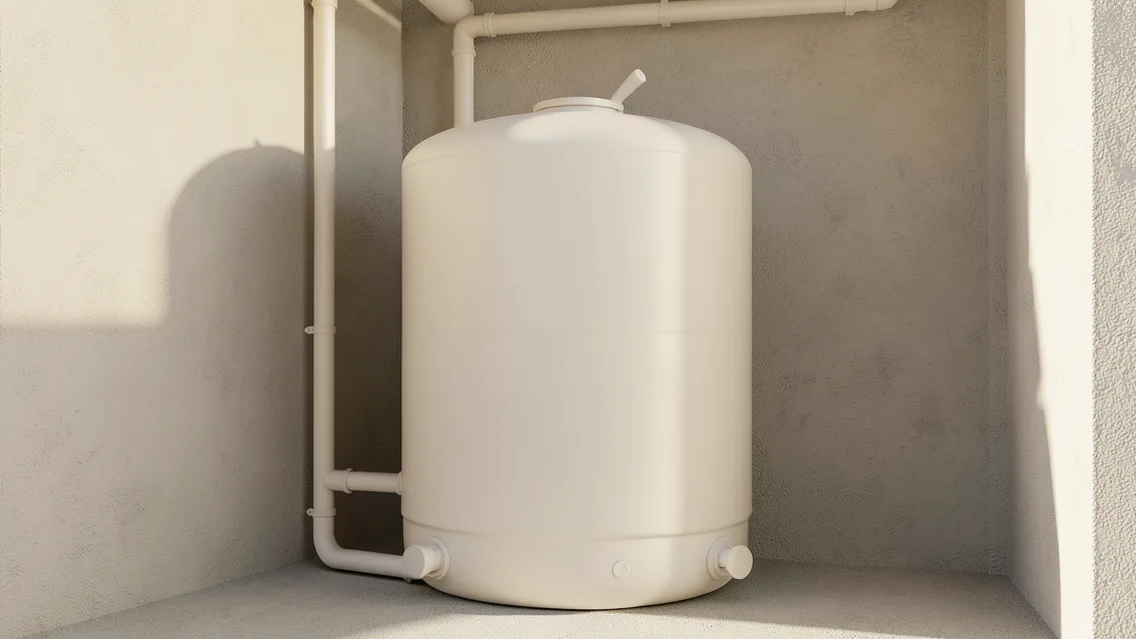
Capacity and intended use
The source discusses domestic tanks for routine and emergency storage. Size capacity from actual or expected demand, occupants, supply frequency and outage duration to be covered, with non-potable uses separated where needed. One size does not suit every household, and excessive storage may increase water residence time. Review space, drainage, maintenance access and loading, especially for rooftop or buried tanks.
Materials and details
Tanks can use polymers, steel, concrete or glass-fiber composites depending on use and product. They differ in weight, corrosion, heat and UV exposure, loading and repairability. Material alone does not guarantee potable-water suitability; verify approved contact surfaces, liners, fittings and suitable product tests. Coordinate foundation, support, water loads, wind and flotation as needed; provide secure covers, protected ventilation, contamination prevention and backflow control under the design.
Water safety, inspection and maintenance
Set inspection, cleaning and disinfection plans according to source water, storage conditions and relevant authority and manufacturer instructions. Check leaks, deposits, covers, ventilation, pipes and unusual odor or color, and seek laboratory testing where contamination is suspected. Do not use potentially unsafe water for drinking until appropriately verified. Some tank entry is confined-space work requiring trained teams and safety and rescue procedures; do not treat contamination with a generic chemical recipe or unapproved dose. Compare full cost including installation, inspection, maintenance and expected life.
Comparison and verification table
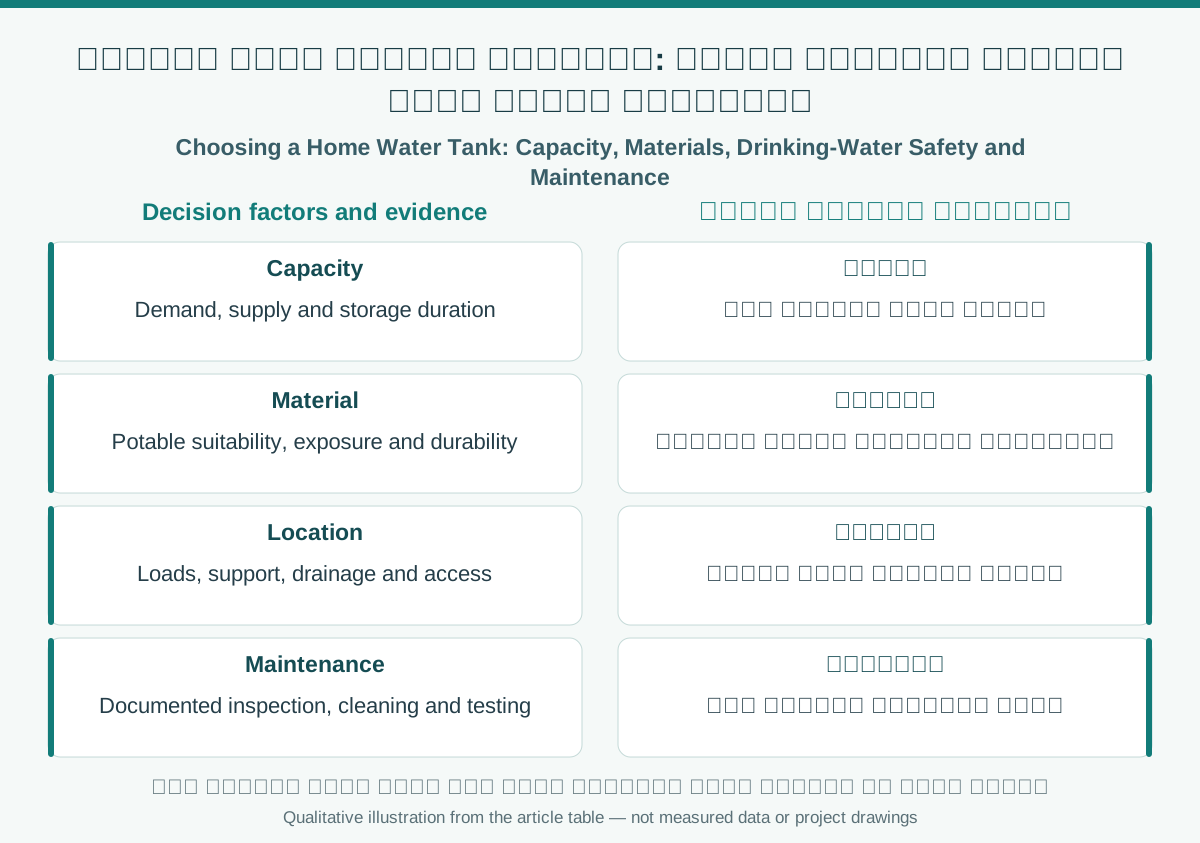
| Factor | Evidence or action |
|---|---|
| Capacity | Demand, supply and storage duration |
| Material | Potable suitability, exposure and durability |
| Location | Loads, support, drainage and access |
| Maintenance | Documented inspection, cleaning and testing |
A visual reading of the article topic
- 01Capacity and intended use
- 02Materials and details
- 03Water safety, inspection and maintenance
- 04Comparison and verification table
Practical workflow
- 01 Define use and demand
- 02 Compare systems and location
- 03 Verify material and installation safety
- 04 Approve inspection and maintenance plan
Conceptual editorial diagram; not measured data.
Sources and limitations
Editorial adaptation based on the original WordPress archive; original source retained separately. Historical tank prices, assumed household capacity and cleaning intervals are not universal recommendations; establish requirements for the actual use, jurisdiction and design.
Topics and source excerpts
| Topic | Excerpt from article |
|---|---|
| Capacity and intended use | The source discusses domestic tanks for routine and emergency storage. |
| Materials and details | Tanks can use polymers, steel, concrete or glass-fiber composites depending on use and product. |
| Water safety, inspection and maintenance | Set inspection, cleaning and disinfection plans according to source water, storage conditions and relevant authority and manufacturer instructions. |
| Practical workflow | 01 Define use and demand |
| Sources and limitations | Editorial adaptation based on the original WordPress archive; original source retained separately. |
| References and limitations | Protect potable water against recontamination and verify tank contact materials. |
Source excerpts organized for comparison, not newly researched findings.
References and limitations
Protect potable water against recontamination and verify tank contact materials. A chemical-health-effects certificate does not establish all tank or installation properties. Follow competent authority guidance for maintenance and disinfection.
The following references support selected topics in the article.
- Saudi Plumbing Code SBC 701 (2024)
- NSF/ANSI 61: Drinking Water System Components – Health Effects
- CDC Safe Water Storage (2024)
- OSHA 1910.146 Appendix E: Sewer System Entry