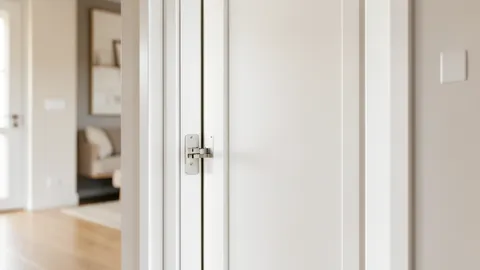
What distinguishes uPVC?
uPVC denotes unplasticized polyvinyl chloride and is used in rigid door and window profiles with varied properties. Door assemblies may include multi-chamber profiles, reinforcement, glazing or infill, seals and hardware. Performance depends on assembly construction and manufacturing; the material label does not prevent all moisture or wear problems. Establish intended function and location before selecting profiles and opening type.
Insulation, exposure and security
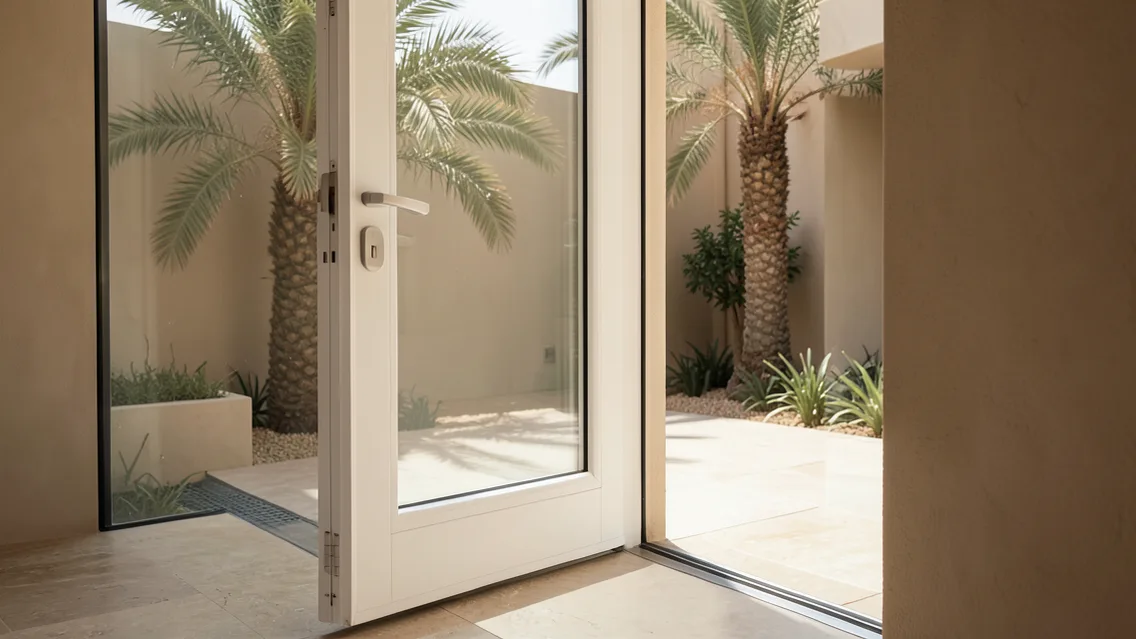
Thermal and acoustic performance depends on frame, infill, glazing, seals, installation and leakage; obtain whole-assembly ratings or tests where required. In hot and coastal climates assess UV, thermal movement, moisture and metal hardware corrosion, plus wind loading and exterior anchorage. Multipoint locking alone does not establish an assembly's security level, and smart-lock compatibility or fire performance requires documentation.
Cost, maintenance and supplier selection
Compare uPVC with alternatives on equivalent function, dimensions, infill or glazing, mounting, hardware and warranties. Whole-life cost includes surface cleaning, seals, hinges, locks and component replacement. Test operation, closure and leakage according to project requirements, documenting warranty and exposure limits and approved cleaning products. Cost or energy savings cannot be inferred from material name alone.
Comparison and verification table
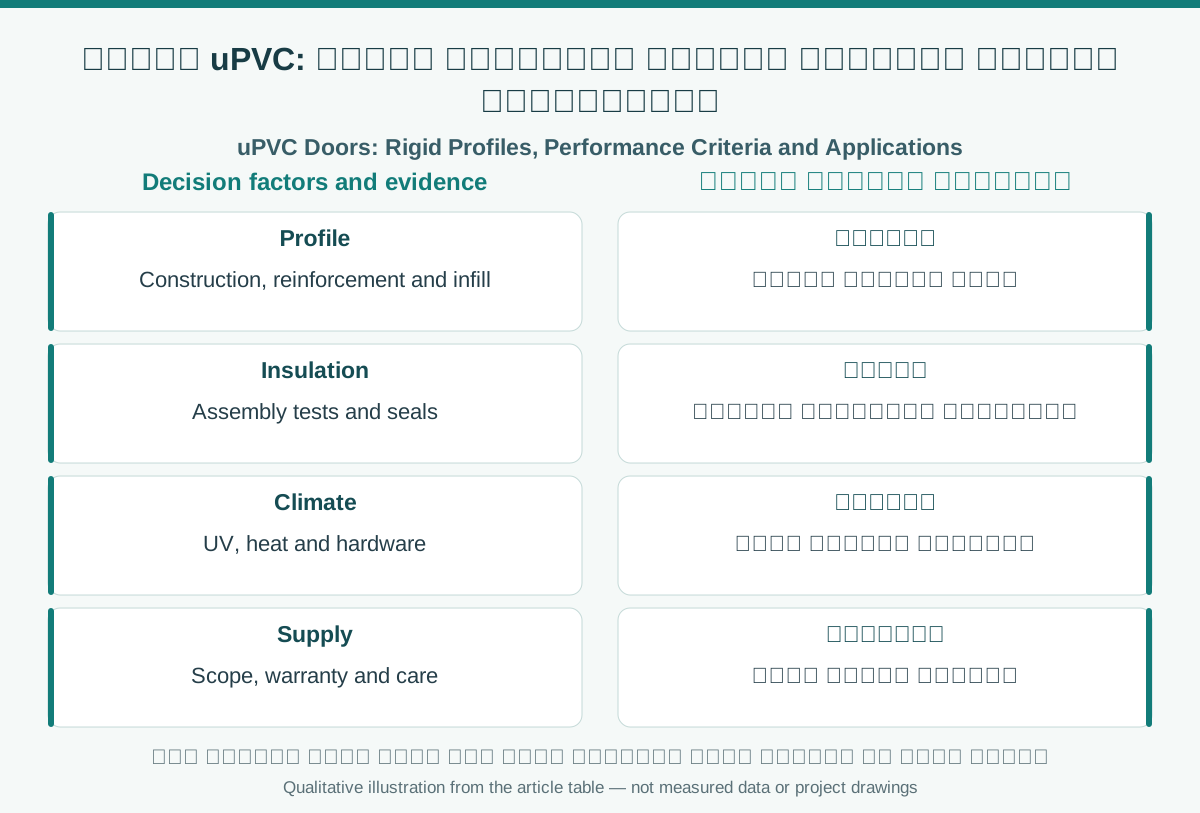
| Factor | Evidence or action |
|---|---|
| Profile | Construction, reinforcement and infill |
| Insulation | Assembly tests and seals |
| Climate | UV, heat and hardware |
| Supply | Scope, warranty and care |
A visual reading of the article topic
- 01What distinguishes uPVC?
- 02Insulation, exposure and security
- 03Cost, maintenance and supplier selection
- 04Comparison and verification table
Practical workflow
- 01 Define use and exposure
- 02 Review system data
- 03 Compare equivalent offers
- 04 Inspect installation and operation
Conceptual editorial diagram; not measured data.
Sources and limitations
Editorial adaptation based on the original WordPress archive; original source retained separately. Historical claims of superior insulation, water resistance and negligible maintenance are not guaranteed for every product; verify the specific assembly.
Topics and source excerpts
| Topic | Excerpt from article |
|---|---|
| What distinguishes uPVC? | uPVC denotes unplasticized polyvinyl chloride and is used in rigid door and window profiles with varied properties. |
| Insulation, exposure and security | Thermal and acoustic performance depends on frame, infill, glazing, seals, installation and leakage; obtain whole-assembly ratings or tests where required. |
| Cost, maintenance and supplier selection | Compare uPVC with alternatives on equivalent function, dimensions, infill or glazing, mounting, hardware and warranties. |
| Practical workflow | 01 Define use and exposure |
| Sources and limitations | Editorial adaptation based on the original WordPress archive; original source retained separately. |
| References and limitations | Evaluate uPVC doors by frame, infill or glazing, seals, hardware and assembly data. |
Source excerpts organized for comparison, not newly researched findings.
References and limitations
Evaluate uPVC doors by frame, infill or glazing, seals, hardware and assembly data. The material name alone does not establish fire or required insulation performance.
The following references support selected topics in the article.
- US DOE FEMP – Purchasing Energy-Efficient Residential Windows, Doors, and Skylights
- UL Solutions – Doors, Windows and Related Hardware Application Guide
- Saudi Code for Energy Conservation – Residential Building (SBC 602), 2024 catalogue
- US EPA – Sustainable Materials Management Basics