Types of façade change
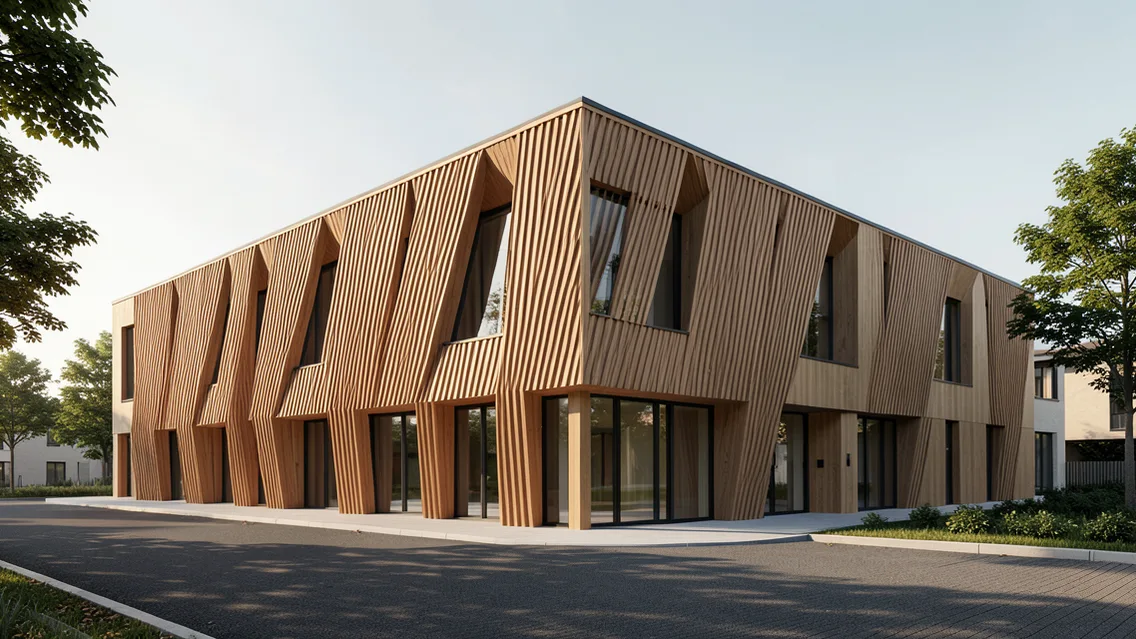
The article categorizes façades changing through visual effects, wind, user control, seasonal planting or response to light. Not every visually changing façade is kinetic, and not every moving façade is intelligent. Define the objective—shade, glare control, privacy, architectural expression or daylight regulation—before selecting a mechanism.
Performance versus complexity
Moving façades require reviews of loads, wind, anchorage, safe movement, component conflicts and maintenance access, including a safe state during power or sensor failure. Compare energy, daylight and comfort with documented simulations using an optimized static façade as a baseline; control complexity does not automatically deliver greater savings.
Prototypes, operation and project lessons
The source cites architectural examples including Al Bahr Towers, optical façades and the Tatlin Tower proposal. Distinguish completed projects from unbuilt concepts and design estimates from measured performance. Test façade and control mock-ups, establish maintenance and replacement strategies, and track post-occupancy metrics. Compare life-cycle costs before scaling the technology.
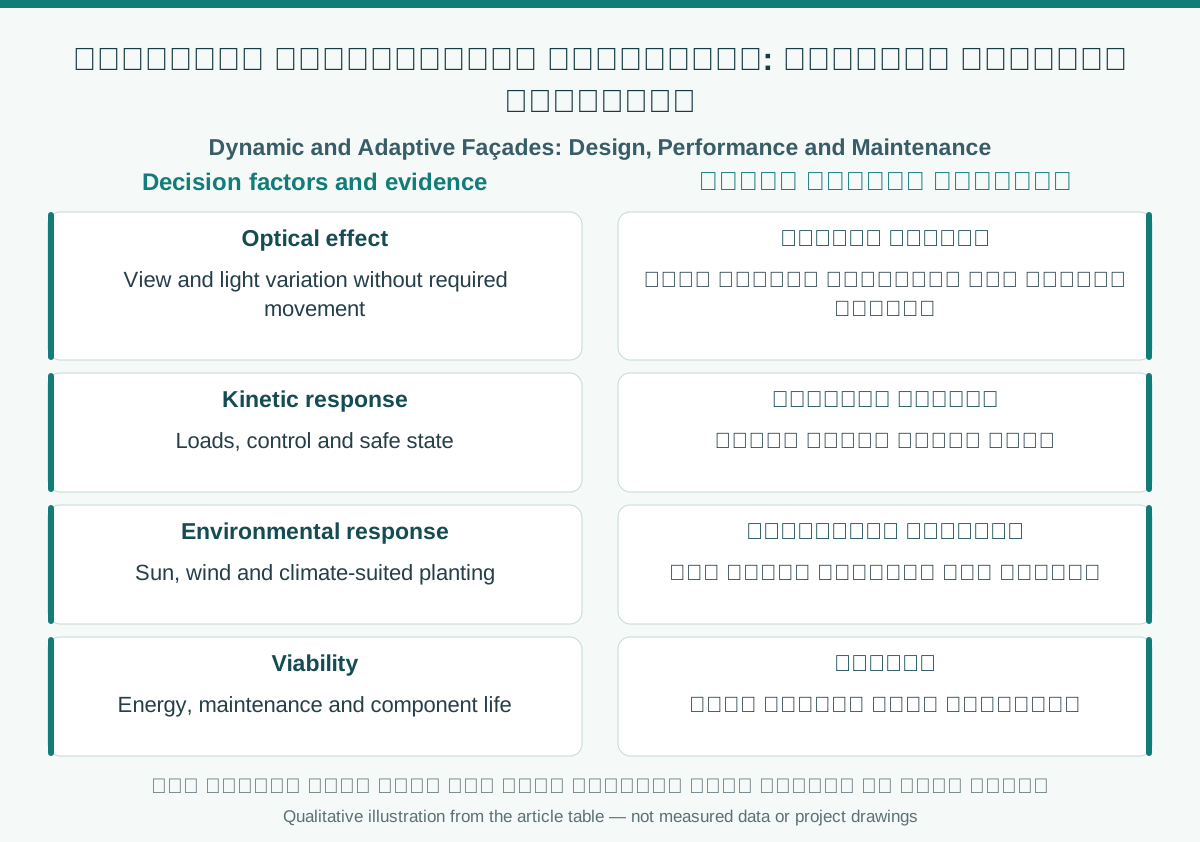
Decision review table
| Factor | Evidence or action |
|---|---|
| Optical effect | View and light variation without required movement |
| Kinetic response | Loads, control and safe state |
| Environmental response | Sun, wind and climate-suited planting |
| Viability | Energy, maintenance and component life |
A visual reading of the article topic
- 01Types of façade change
- 02Performance versus complexity
- 03Prototypes, operation and project lessons
- 04Decision review table
Practical workflow
- 01 Define façade objective
- 02 Compare with static baseline
- 03 Test mock-up and safety
- 04 Review occupied performance
Conceptual editorial diagram; not measured data.
Sources and limitations
Editorial adaptation based on the original WordPress archive; original source retained separately. Original project examples, status and energy figures require documentation. No specific savings are attributed without a measurement method.
Topics and source excerpts
| Topic | Excerpt from article |
|---|---|
| Types of façade change | The article categorizes façades changing through visual effects, wind, user control, seasonal planting or response to light. |
| Performance versus complexity | Moving façades require reviews of loads, wind, anchorage, safe movement, component conflicts and maintenance access, including a safe state during power or… |
| Prototypes, operation and project lessons | The source cites architectural examples including Al Bahr Towers, optical façades and the Tatlin Tower proposal. |
| Practical workflow | 01 Define façade objective |
| Sources and limitations | Editorial adaptation based on the original WordPress archive; original source retained separately. |
| References and limitations | Dynamic glazing is a documented research and development area; compare adaptive facades with a fixed baseline using modeling and reliability assessment. |
Source excerpts organized for comparison, not newly researched findings.
References and limitations
Dynamic glazing is a documented research and development area; compare adaptive facades with a fixed baseline using modeling and reliability assessment.
The following references support selected topics in the article.
- DOE Windows Projects
- DOE About Building Energy Modeling