Site and plant selection
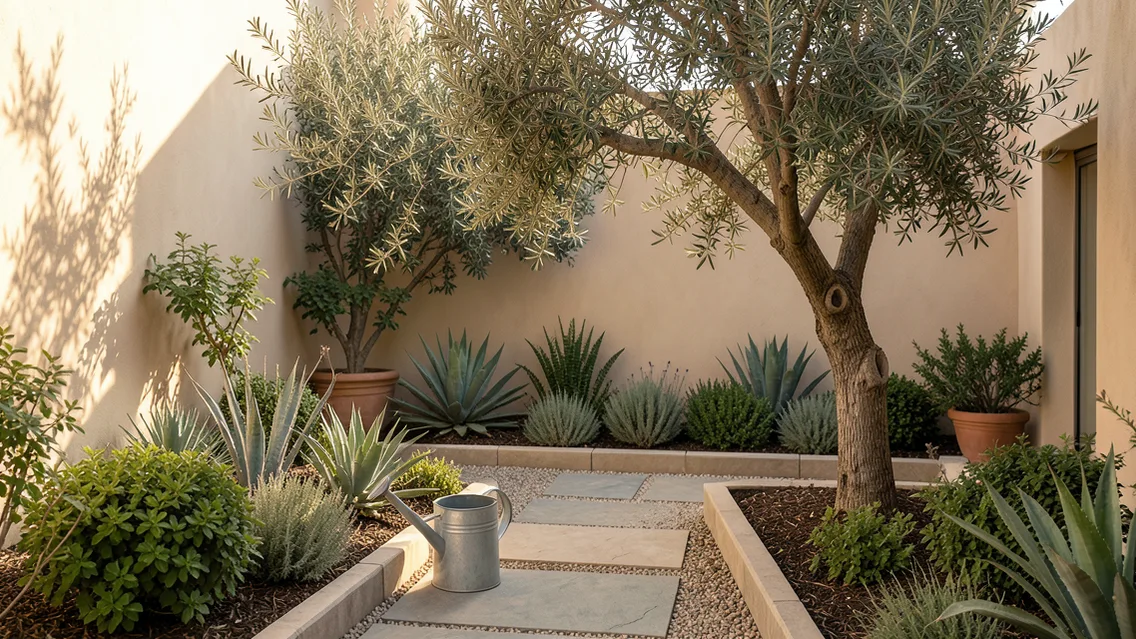
Assess sun and shade, surface heat, wind, soil and root space. Select plants suited to climate, exposure and maintenance capacity, considering mature size and spacing. In hot, dry climates group plants by water needs and limit water-intensive areas. Inspect plants before purchase for visible disease or pests.
Irrigation, soil and fertilizing
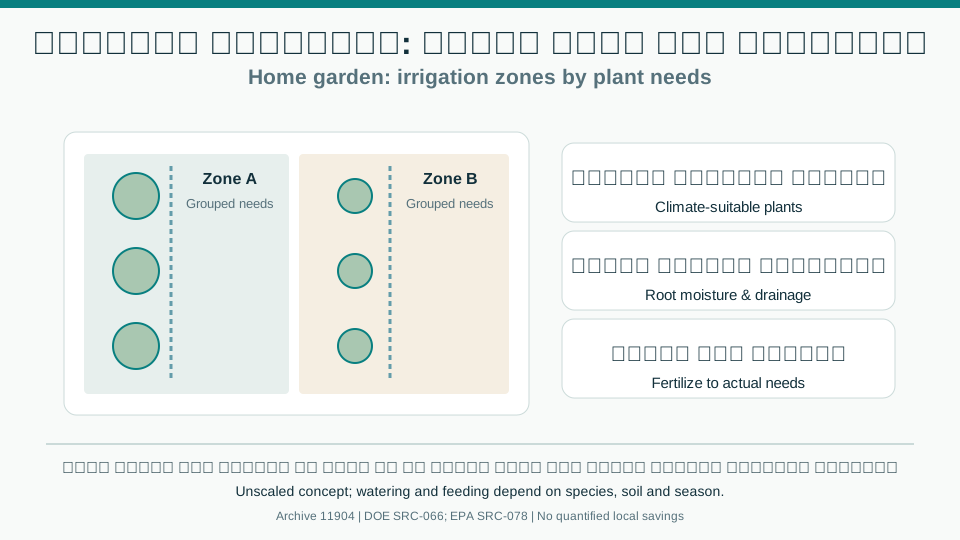
Watering frequency varies by species, age, soil, season and irrigation system; check root-zone moisture instead of following a fixed schedule. Suitable root-directed irrigation and organic mulch can reduce losses; keep mulch away from stem bases. Review aeration, drainage and salinity. Fertilize according to plant needs, soil tests and product directions; excess can damage roots or increase salinity and pollution.
Preventive care and harvest
Remove unwanted weeds and diseased debris and monitor stress and pests regularly. Pruning timing and method depend on species, flowering and purpose; winter is not suitable for every plant. Use clean tools and avoid over-pruning. For edible crops, assess water and soil hygiene and crop-appropriate practices, and use pest-control products only according to labels and crop suitability. Adapt maintenance to seasonal changes and observation.
Comparison and verification table
| Factor | Evidence or action |
|---|---|
| Plant selection | Climate, light and mature size |
| Irrigation | Root moisture and drainage |
| Fertilizing | Need, testing and directions |
| Maintenance | Monitoring, pruning and hygiene |
A visual reading of the article topic
- 01Site and plant selection
- 02Irrigation, soil and fertilizing
- 03Preventive care and harvest
- 04Comparison and verification table
Practical workflow
- 01 Assess garden site
- 02 Select suitable plants
- 03 Adjust water and soil
- 04 Review health seasonally
Conceptual editorial diagram; not measured data.
Topics and source excerpts
| Topic | Excerpt from article |
|---|---|
| Site and plant selection | Assess sun and shade, surface heat, wind, soil and root space. |
| Irrigation, soil and fertilizing | Watering frequency varies by species, age, soil, season and irrigation system; check root-zone moisture instead of following a fixed schedule. |
| Preventive care and harvest | Remove unwanted weeds and diseased debris and monitor stress and pests regularly. |
| Practical workflow | 01 Assess garden site |
| Sources and limitations | Editorial adaptation based on the original WordPress archive; original source retained separately. |
Source excerpts organized for comparison, not newly researched findings.
Sources and limitations
Editorial adaptation based on the original WordPress archive; original source retained separately. Pruning and fertilizing schedules differ by species and region; no universal irrigation or feeding recipe is adopted.
- US Department of Energy: Water-Efficient Landscaping — Climate-appropriate plants and demand-matched irrigation; no quantified local savings.
- EPA WaterSense: Landscaping Tips — Site- and climate-appropriate plants, mulch and irrigation zones; no specific Saudi water savings inferred.