Security begins with the door assembly
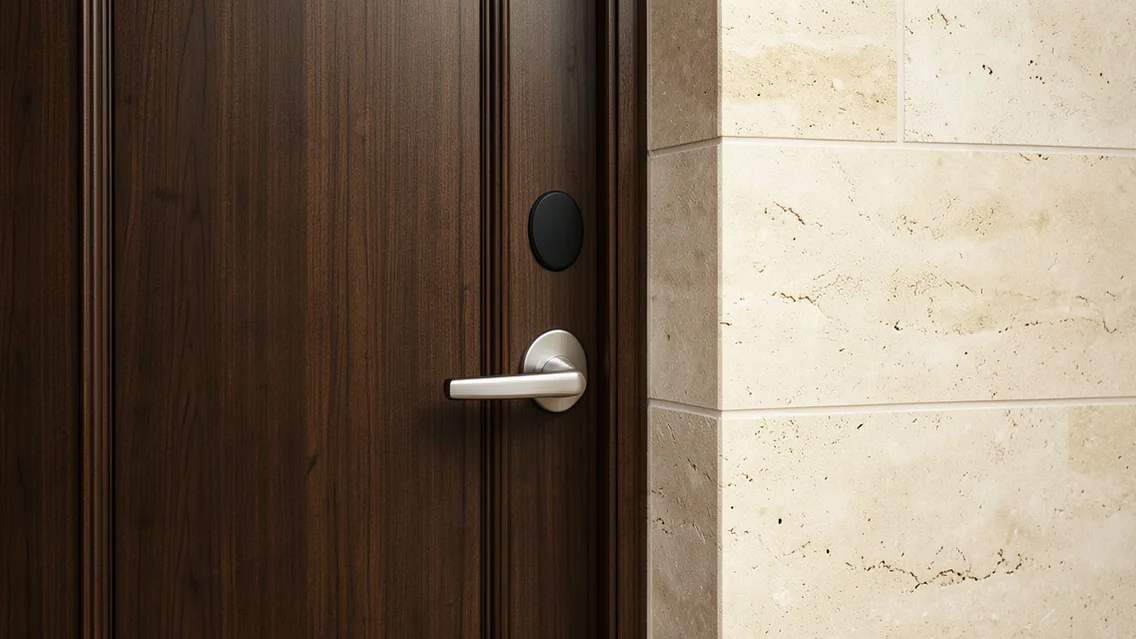
The source discusses digital locks, fingerprints, facial recognition, cameras, alerts and tamper resistance. Distinguish the door, frame, hinges, anchorage and mechanical locking from electronic authentication. Technology may improve convenience and access management but cannot compensate for weak construction or installation. Residential, office, hotel and public buildings differ by occupancy, risk, egress and fire requirements. Define required protection before choosing authentication.
Authentication and permissions
Systems may use codes, cards, apps, fingerprints or other authentication. Compare usability, temporary permissions, revocation, logs and authorized recovery. Biometric systems require special attention to template storage, retention, alternatives and error handling. Cameras and audio require visitor and resident privacy protection without monitoring private areas or collecting unnecessary data. No single authentication method guarantees the highest security in every context.
Failure, operations and maintenance
Review authorized access during battery, power or network failure and verify safe egress under applicable occupancy and fire requirements without relying on cloud services. Assign account administration, use secure settings, supported updates and limited permissions. Compare door-assembly testing, building compatibility, support, warranties and long-term maintenance. Qualified specialists approve installation and integration and test normal and failure modes before handover.
Comparison and verification table
| Factor | Evidence or action |
|---|---|
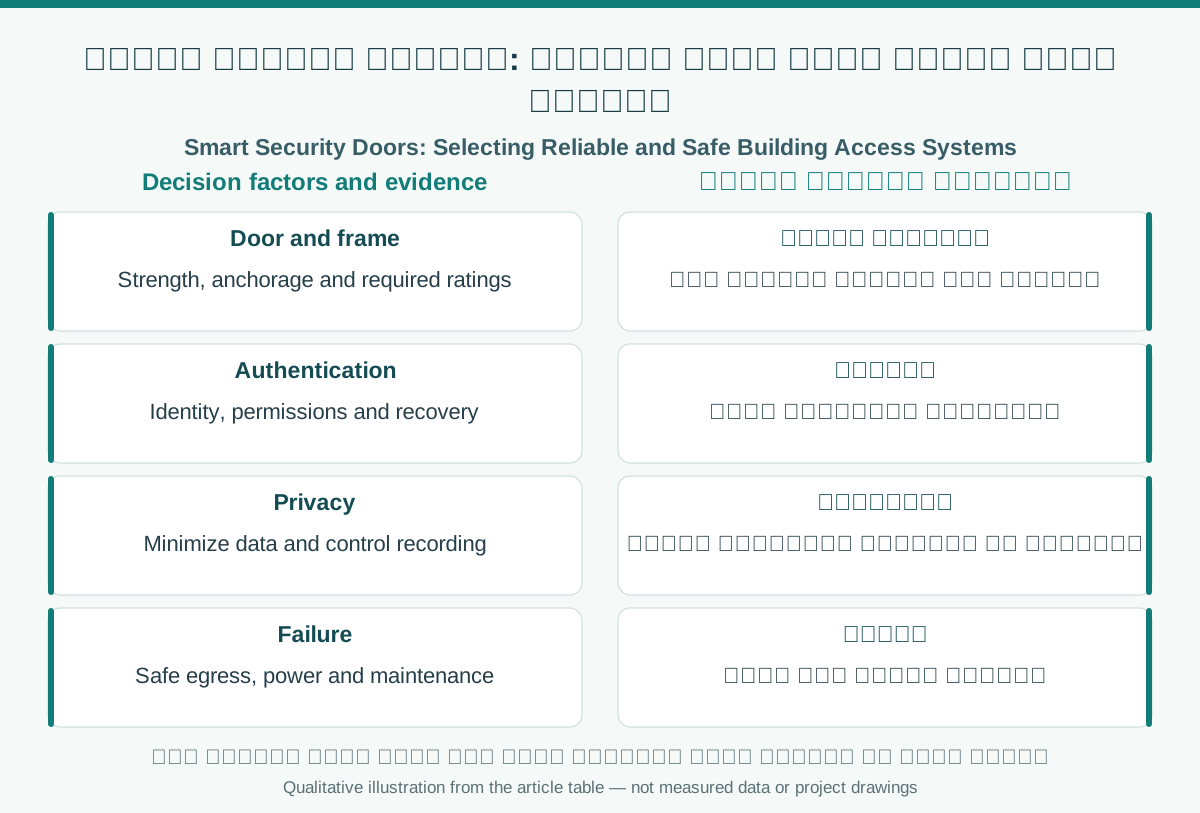
| Door and frame | Strength, anchorage and required ratings |
| Authentication | Identity, permissions and recovery |
| Privacy | Minimize data and control recording |
| Failure | Safe egress, power and maintenance |
A visual reading of the article topic
- 01Security begins with the door assembly
- 02Authentication and permissions
- 03Failure, operations and maintenance
- 04Comparison and verification table
Practical workflow
- 01 Define use and risk
- 02 Review assembly and access rights
- 03 Test compatibility and failures
- 04 Approve installation and maintenance
Conceptual editorial diagram; not measured data.
Sources and limitations
Editorial adaptation based on the original WordPress archive; original source retained separately. Historical model names and attributed features need current manufacturer verification; they are not purchasing recommendations or proof of security or fire ratings.
Topics and source excerpts
| Topic | Excerpt from article |
|---|---|
| Security begins with the door assembly | The source discusses digital locks, fingerprints, facial recognition, cameras, alerts and tamper resistance. |
| Authentication and permissions | Systems may use codes, cards, apps, fingerprints or other authentication. |
| Failure, operations and maintenance | Review authorized access during battery, power or network failure and verify safe egress under applicable occupancy and fire requirements without relying o… |
| Practical workflow | 01 Define use and risk |
| Sources and limitations | Editorial adaptation based on the original WordPress archive; original source retained separately. |
| References and limitations | Select smart locks without compromising egress or fire requirements; review access rights, updates and data security at system level. |
Source excerpts organized for comparison, not newly researched findings.
References and limitations
Select smart locks without compromising egress or fire requirements; review access rights, updates and data security at system level. Determine camera and data obligations for the actual use.
The following references support selected topics in the article.
- Saudi General Building Code SBC 201 (2024)
- Saudi Fire Protection Code SBC 801 (2024)
- NIST IR 8425 Consumer IoT Product Core Baseline (2022)
- FTC Securing Your Internet-Connected Devices at Home
- Saudi Law on Use of Security Surveillance Cameras (2022), arts 1, 6