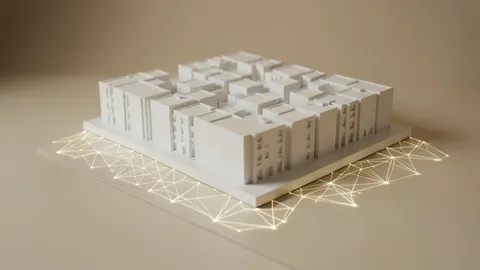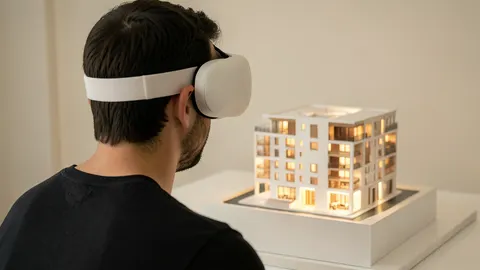
Technology across the property life cycle
The source discusses VR, virtual worlds, smart homes, automated valuation, 3D printing and aerial imagery. Technology can reduce some search costs and improve presentation, information coordination and operations, but value depends on data quality and fit to customer or investor decisions. Define the problem and success metric first, such as search time, information quality or maintenance cost, rather than assuming every new tool adds value.
Digital presentation and valuation
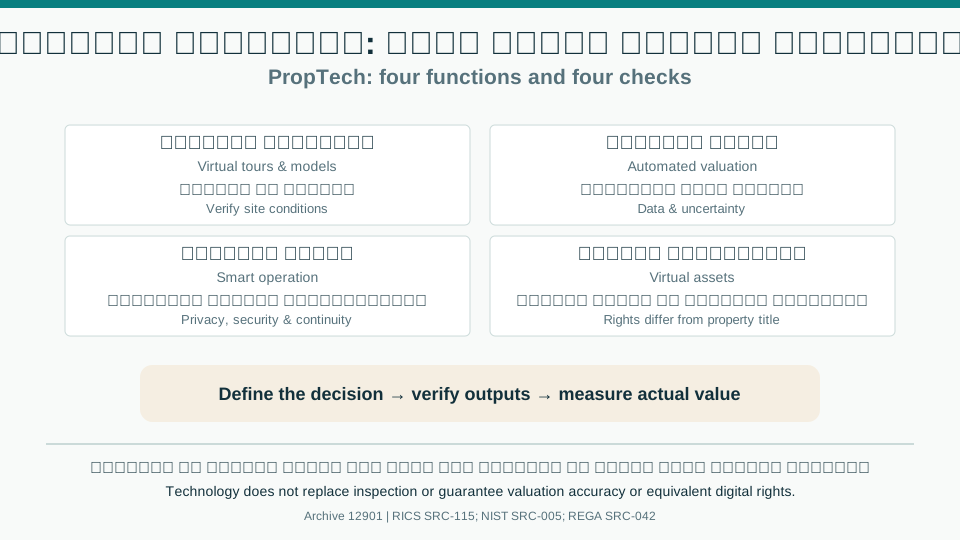
360-degree imagery, virtual tours and 3D-printed models can show layout and context; aerial imagery may explain access and surroundings subject to permissions and privacy. These media do not replace site verification, documentation or condition inspection. Automated valuation models estimate values using transaction data, property attributes and modeling, affected by coverage, age, location and condition. Present uncertainty or ranges where possible; estimates are not necessarily accredited valuations for lending or disputes.
Smart homes and virtual assets
Smart-home systems may support lighting, HVAC, access and consumption monitoring, but account security, updates, resident privacy and offline operation need review. A digital token or virtual-world plot differs from a real-property title; do not assume equivalent legal protection, liquidity or value. Compare property technologies by data sources, cost, verifiability, compliance, integration and service continuity, and review data and rights terms before contracting.
Comparison and verification table
| Factor | Evidence or action |
|---|---|
| Presentation | Tour, model and imagery with verification |
| Automated valuation | Data and uncertainty |
| Smart operation | Security, privacy and continuity |
| Virtual assets | Rights and risks differ from real property |
A visual reading of the article topic
- 01Technology across the property life cycle
- 02Digital presentation and valuation
- 03Smart homes and virtual assets
- 04Comparison and verification table
Practical workflow
- 01 Define property decision
- 02 Select tool and data
- 03 Verify outputs and rights
- 04 Measure actual value
Conceptual editorial diagram; not measured data.
Topics and source excerpts
| Topic | Excerpt from article |
|---|---|
| Technology across the property life cycle | The source discusses VR, virtual worlds, smart homes, automated valuation, 3D printing and aerial imagery. |
| Digital presentation and valuation | 360-degree imagery, virtual tours and 3D-printed models can show layout and context; aerial imagery may explain access and surroundings subject to permissi… |
| Smart homes and virtual assets | Smart-home systems may support lighting, HVAC, access and consumption monitoring, but account security, updates, resident privacy and offline operation nee… |
| Practical workflow | 01 Define property decision |
| Sources and limitations | Editorial adaptation based on the original WordPress archive; original source retained separately. |
Source excerpts organized for comparison, not newly researched findings.
Sources and limitations
Editorial adaptation based on the original WordPress archive; original source retained separately. Historical metaverse prices and valuation-performance predictions are not verified current market indicators; investment or regulatory decisions require current independent evidence.
- RICS: Automated Valuation Models — Degrees of automation, data and human involvement; not evidence of accuracy for a particular property.
- NIST IR 8425: Consumer IoT cybersecurity — Whole-product cybersecurity outcomes; not certification of an individual device.
- REGA: Real Estate Marketing and Advertising Regulation — Articles 5–7 on accuracy, disclosure and licensing within activity scope, subject to exceptions including Article 9.