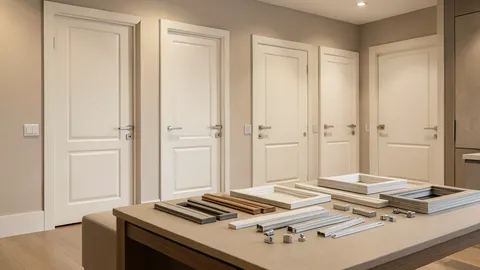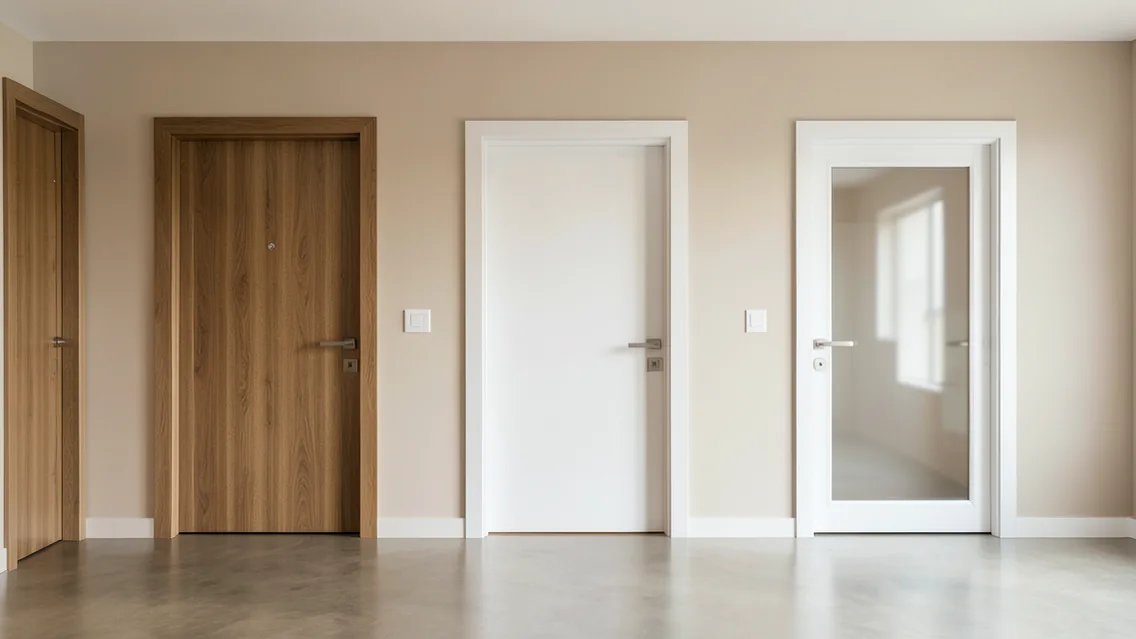
Distinguish materials and systems
The source presents WPC as a wood-polymer composite, PVC as a polymer used in diverse products and uPVC as its unplasticized form. Formulations, leaves, frames, infills, reinforcement and seals differ. Ranking these labels from strongest to weakest is not a universal engineering rule. First define interior or exterior use, traffic, moisture, insulation, security and any fire rating, then compare functionally equivalent assemblies.
Suitability for the Saudi climate
Building conditions vary across hot-dry and humid coastal settings, sun and dust exposure. For exterior doors check UV, heat, dimensional movement, wind, water and hardware corrosion, obtaining evidence of exterior suitability. In bathrooms and kitchens review edges, cleaning, ventilation and use. WPC may require exposure protection or experience color changes, and plastic systems may require movement and fixing provisions; the specific product determines these details.
Commercial comparison and maintenance
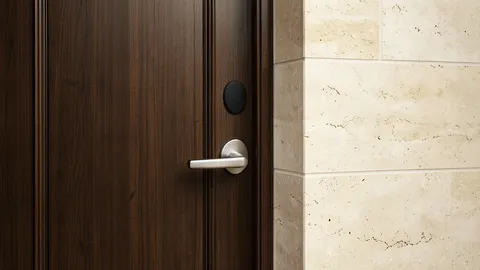
Obtain quotes covering leaf, frame, hardware, fixing, delivery and warranty; compare samples, tests, operating cycles and spare parts. Care includes cleaning, inspecting edges, seals, hinges and locks and using approved products. Moisture or pest resistance does not make a door maintenance-free, and neither the cheapest nor most expensive is necessarily best. Review supplier and installation quality, support duration and acceptance testing.
Comparison and verification table
| Factor | Evidence or action |
|---|---|
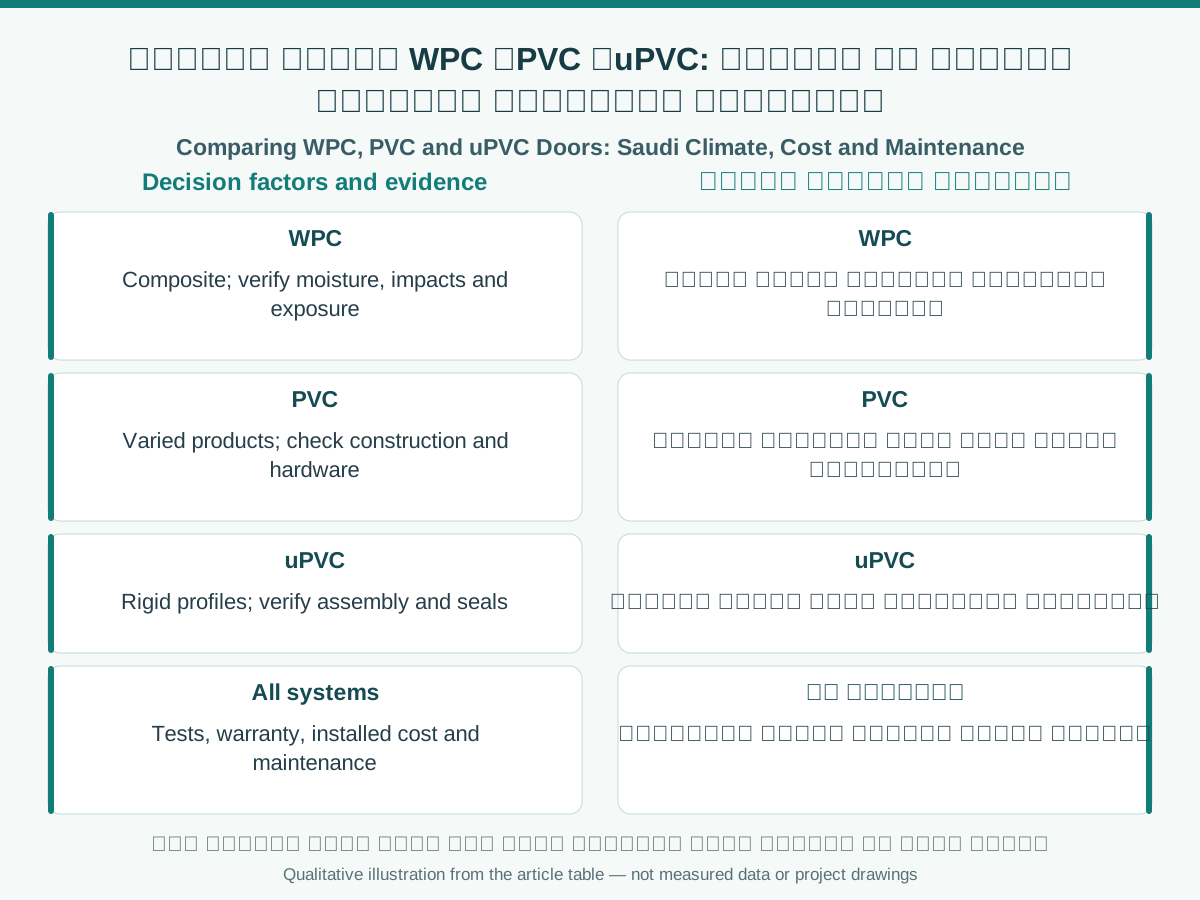
| WPC | Composite; verify moisture, impacts and exposure |
| PVC | Varied products; check construction and hardware |
| uPVC | Rigid profiles; verify assembly and seals |
| All systems | Tests, warranty, installed cost and maintenance |
A visual reading of the article topic
- 01Distinguish materials and systems
- 02Suitability for the Saudi climate
- 03Commercial comparison and maintenance
- 04Comparison and verification table
Practical workflow
- 01 Define use and climate
- 02 Compare equivalent-performing systems
- 03 Review quotes, samples and warranty
- 04 Inspect installation and care plan
Conceptual editorial diagram; not measured data.
Sources and limitations
Editorial adaptation based on the original WordPress archive; original source retained separately. Historical superiority, price or supplier claims are not universal; they require current model- and application-specific evidence.
Topics and source excerpts
| Topic | Excerpt from article |
|---|---|
| Distinguish materials and systems | The source presents WPC as a wood-polymer composite, PVC as a polymer used in diverse products and uPVC as its unplasticized form. |
| Suitability for the Saudi climate | Building conditions vary across hot-dry and humid coastal settings, sun and dust exposure. |
| Commercial comparison and maintenance | Obtain quotes covering leaf, frame, hardware, fixing, delivery and warranty; compare samples, tests, operating cycles and spare parts. |
| Practical workflow | 01 Define use and climate |
| Sources and limitations | Editorial adaptation based on the original WordPress archive; original source retained separately. |
| References and limitations | Available evidence does not establish a universal ranking among the three labels. |
Source excerpts organized for comparison, not newly researched findings.
References and limitations
Available evidence does not establish a universal ranking among the three labels. Composite behavior varies by formulation and exposure, while door performance depends on the full assembly and hardware. Compare equivalent-use systems against evidence.
The following references support selected topics in the article.
- Segerholm, Ibach & Wålinder (2012) – Moisture Sorption in Artificially aged wood-plastic composites
- Chen et al. (2016) – Weathering characteristics of wood plastic composites reinforced with extracted or delignified wood flour
- US DOE FEMP – Purchasing Energy-Efficient Residential Windows, Doors, and Skylights
- UL Solutions – Doors, Windows and Related Hardware Application Guide
- US EPA – Sustainable Materials Management Basics