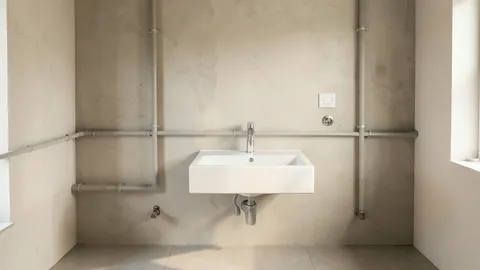
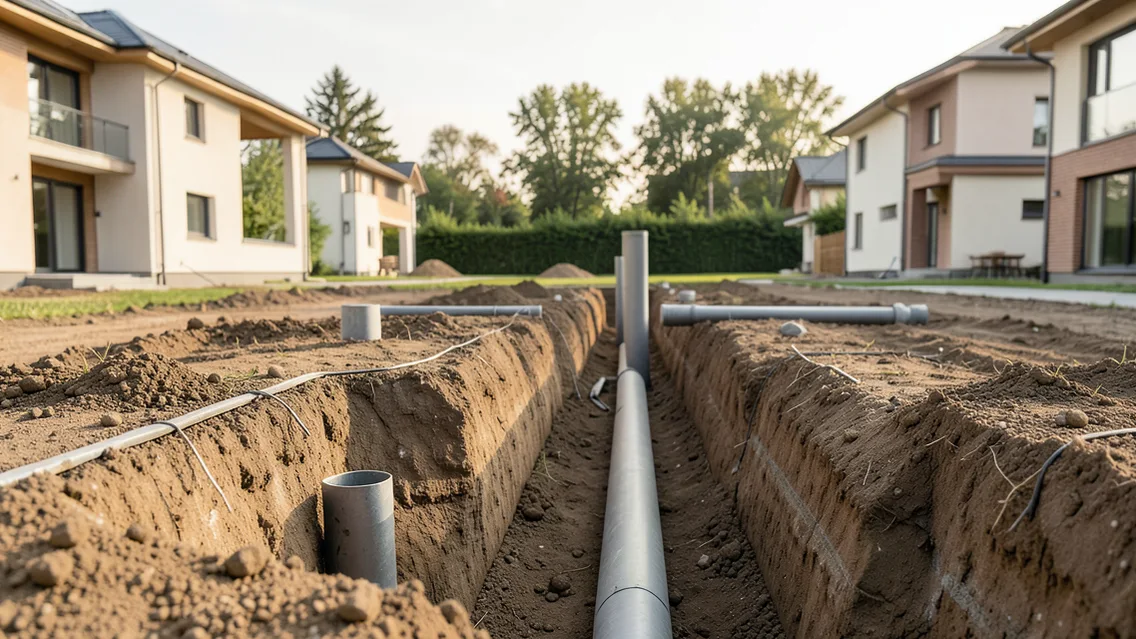
Distinguish networks and coordinate the site
The source covers external and internal rough-in. Site networks include supply, sanitary drainage and stormwater, with each system and authorized discharge destination clearly distinguished. Designers establish connection points, levels, loads, requirements and existing utility crossings. Do not assume stormwater or sewage may discharge into wells or another network without authorization.
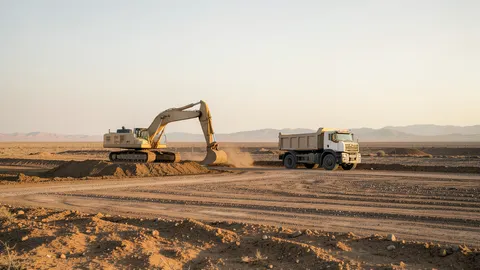
Routing and structural details
Pipe selection, bedding, burial depth and protection depend on soil, traffic, loading, groundwater and system type. Coordinate foundation and beam penetrations with structural engineers before casting; do not create or place openings using generic article dimensions. Drain sizes, slopes, inspection chambers and cleaning access follow calculations, maintenance needs and specifications. Protect supply from contamination, leakage and cross-connections.
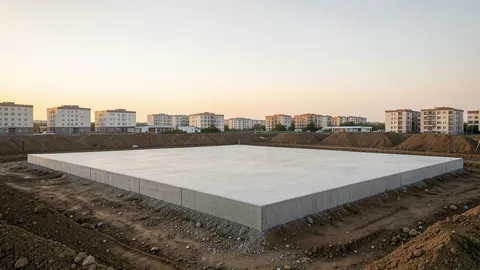
Inspection, backfill and handover
Before backfill, review invert levels, joints, support, penetrations, chambers and access; complete specified tests under approved plans with suitable equipment. Backfill follows project-specific materials, compaction and protection requirements rather than one rule for every soil and pipe. Record as-built plans, utility locations, test results and connection approvals. Excavation and confined spaces require specialist safety controls; do not enter an unsafe excavation or sewer chamber based on generic guidance.
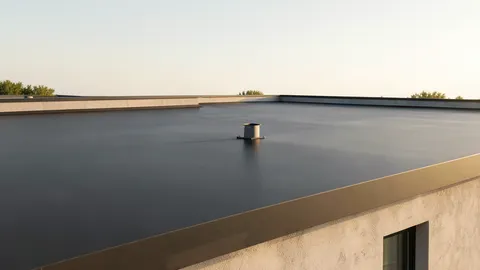
Comparison and verification table
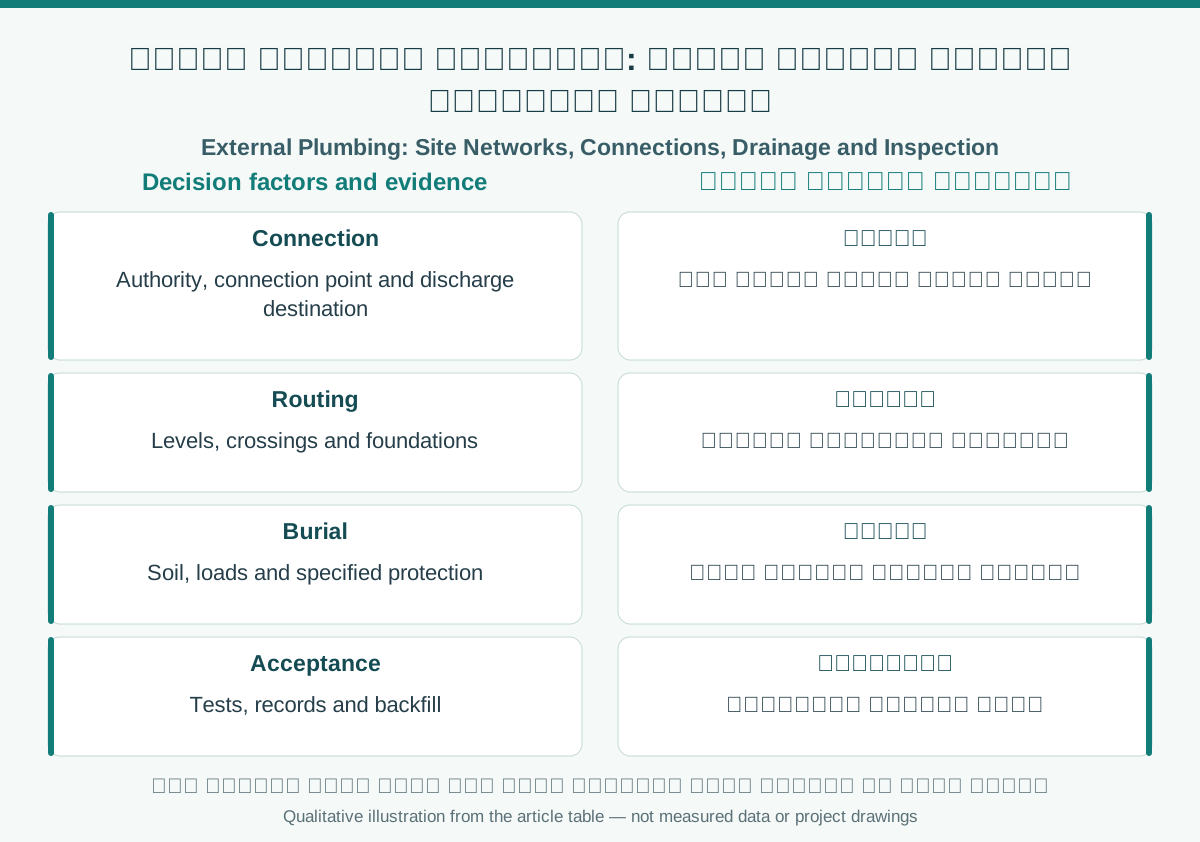
| Factor | Evidence or action |
|---|---|
| Connection | Authority, connection point and discharge destination |
| Routing | Levels, crossings and foundations |
| Burial | Soil, loads and specified protection |
| Acceptance | Tests, records and backfill |
A visual reading of the article topic
- 01Distinguish networks and coordinate the site
- 02Routing and structural details
- 03Inspection, backfill and handover
- 04Comparison and verification table
Practical workflow
- 01 Define networks and connections
- 02 Coordinate routes across disciplines
- 03 Inspect before backfill
- 04 Document acceptance and operation
Conceptual editorial diagram; not measured data.
Sources and limitations
Editorial adaptation based on the original WordPress archive; original source retained separately. Historical pipe sizes, slopes, chamber dimensions, tests and burial details require project and code verification. This is not a network design, excavation plan or structural penetration procedure.
Topics and source excerpts
| Topic | Excerpt from article |
|---|---|
| Distinguish networks and coordinate the site | The source covers external and internal rough-in. |
| Routing and structural details | Pipe selection, bedding, burial depth and protection depend on soil, traffic, loading, groundwater and system type. |
| Inspection, backfill and handover | Before backfill, review invert levels, joints, support, penetrations, chambers and access; complete specified tests under approved plans with suitable equi… |
| Practical workflow | 01 Define networks and connections |
| Sources and limitations | Editorial adaptation based on the original WordPress archive; original source retained separately. |
| References and limitations | Distinguish supply, sanitary and storm networks and gravity from pumped force mains. |
Source excerpts organized for comparison, not newly researched findings.
References and limitations
Distinguish supply, sanitary and storm networks and gravity from pumped force mains. Qualified design determines routes, levels, materials, discharge and verification for site conditions.
The following references support selected topics in the article.
- Saudi Plumbing Code SBC 701 (2024)
- EPA Report on Condition Assessment Technology of Wastewater Collection Systems
- EPA Wastewater Technology Fact Sheet: Sewers, Force Main (2000)