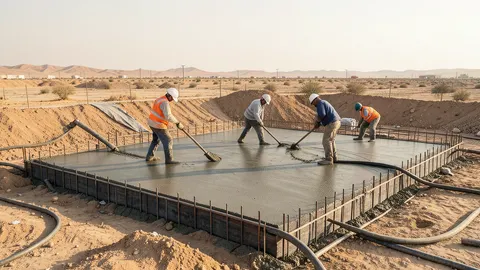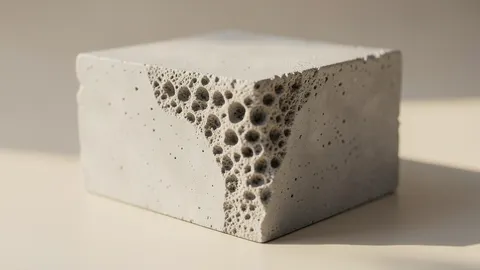
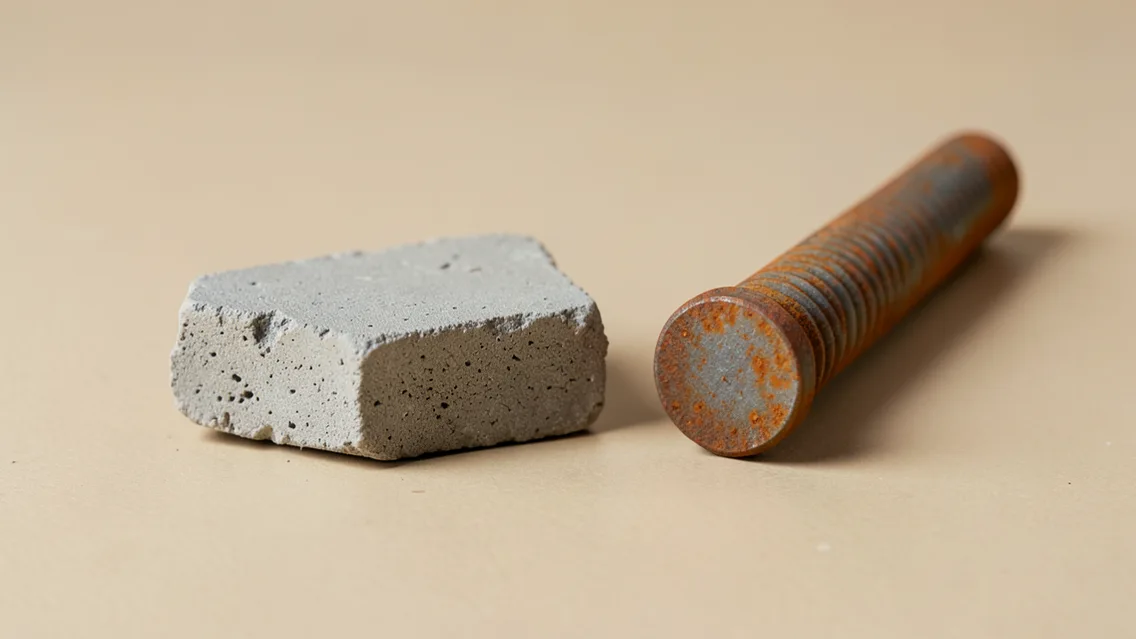
How does reinforcement corrosion begin?
The source discusses concrete protection and moisture and salts. Sound concrete alkalinity helps passivate steel; carbonation can lower alkalinity and chlorides can disrupt protection. Corrosion depends on moisture, oxygen, materials and exposure. Expanding corrosion products may crack or spall cover and reduce steel area or bond. Crack appearance is not universally proportional to corrosion extent; diagnosis requires multiple lines of evidence.
Prevention through design and execution
Durability begins with exposure classification, suitable mix, cover, crack-control detailing, curing and workmanship under design. Selected systems may include corrosion-resistant reinforcement, approved coatings, inhibitors, surface protection or cathodic protection after assessment. Cathodic protection is not simply coating steel with another metal; specialists choose systems and verify compatibility, continuity and bond. Do not apply grease or unapproved coatings that could compromise concrete bond.
Inspection and repair strategy
Visible rust, spalling or cracks along reinforcement require assessment of member condition, cover, carbonation depth, chlorides and steel loss as appropriate. Potential or resistivity measurements may support corrosion assessment but alone cannot quantify section loss. Restrict access and seek urgent assessment if material falls or load-bearing damage appears. Engineers determine local or broader repairs and strengthening where needed, verifying causes and recurrence risks; do not remove concrete or treat steel to a generic article depth.
Comparison and verification table
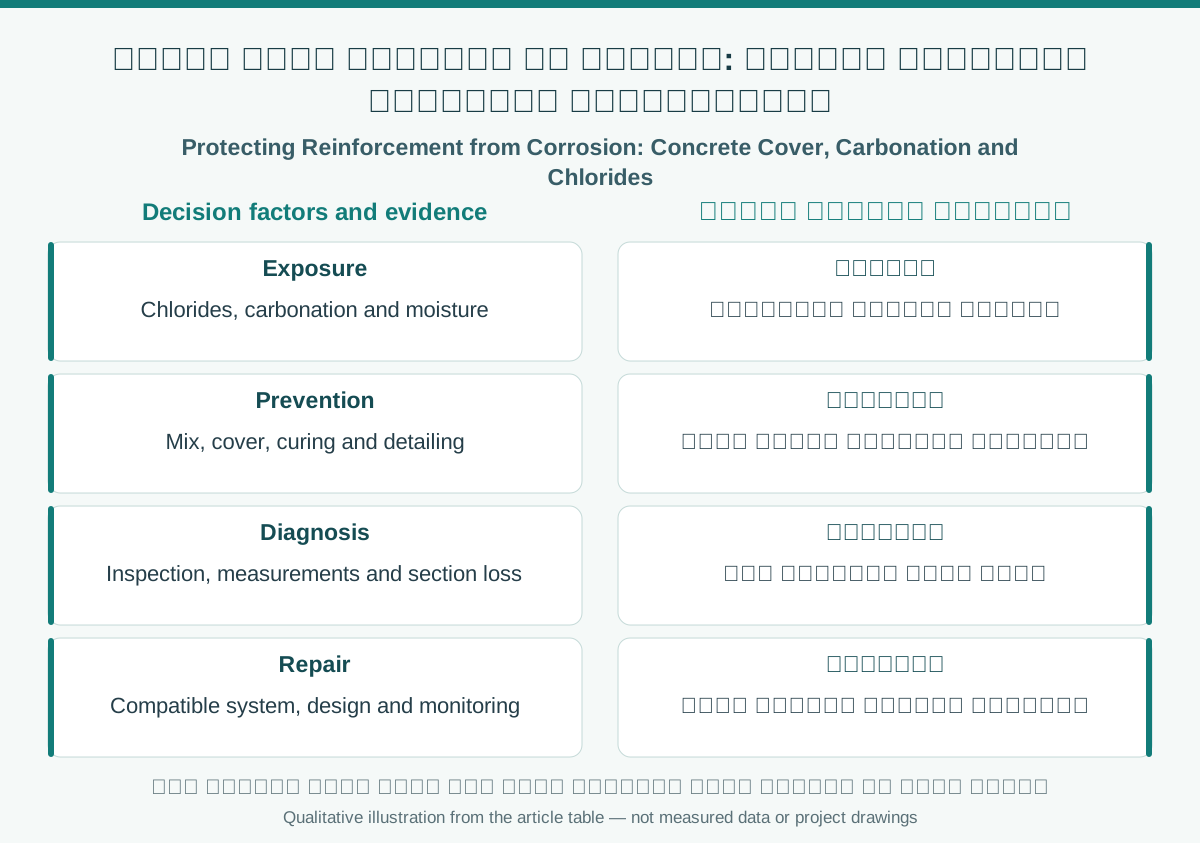
| Factor | Evidence or action |
|---|---|
| Exposure | Chlorides, carbonation and moisture |
| Prevention | Mix, cover, curing and detailing |
| Diagnosis | Inspection, measurements and section loss |
| Repair | Compatible system, design and monitoring |
A visual reading of the article topic
- 01How does reinforcement corrosion begin?
- 02Prevention through design and execution
- 03Inspection and repair strategy
- 04Comparison and verification table
Practical workflow
- 01 Define exposure
- 02 Assess concrete and reinforcement
- 03 Approve prevention or repair
- 04 Monitor performance and durability
Conceptual editorial diagram; not measured data.
Sources and limitations
Editorial adaptation based on the original WordPress archive; original source retained separately. Historical coating methods, removal depths and chemicals require technical review and are not adopted as repair recipes. This is not cathodic protection design or a structural safety report.
Topics and source excerpts
| Topic | Excerpt from article |
|---|---|
| How does reinforcement corrosion begin? | The source discusses concrete protection and moisture and salts. |
| Prevention through design and execution | Durability begins with exposure classification, suitable mix, cover, crack-control detailing, curing and workmanship under design. |
| Inspection and repair strategy | Visible rust, spalling or cracks along reinforcement require assessment of member condition, cover, carbonation depth, chlorides and steel loss as appropri… |
| Practical workflow | 01 Define exposure |
| Sources and limitations | Editorial adaptation based on the original WordPress archive; original source retained separately. |
| References and limitations | ACI references explain alkalinity-based reinforcement protection and how chloride ingress and carbonation can compromise it. |
Source excerpts organized for comparison, not newly researched findings.
References and limitations
ACI references explain alkalinity-based reinforcement protection and how chloride ingress and carbonation can compromise it. Cover, exposure and moisture matter; condition assessment guides protection and repair.
The following references support selected topics in the article.
- ACI FAQ – Epoxy-coated reinforcement
- Parrott (1994), Design for Avoiding Damage Due to Carbonation-Induced Corrosion
- ACI FAQ – What steps are taken in the repair of concrete structures?
- Saudi Code for Concrete Structures SBC 304 (2024)