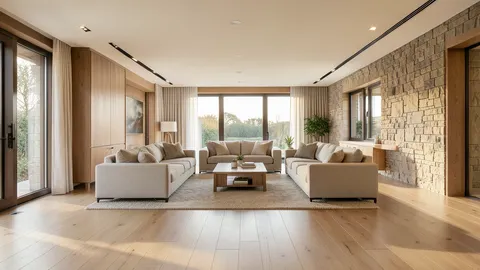
Define requirements before drawing
Architectural programming establishes project goals, users, activities, areas, relationships and constraints. Developers begin with target households, lifestyles and budgets, then balance commercial value with functional needs. A program is more than an area schedule: it establishes the basis for comparing design alternatives.
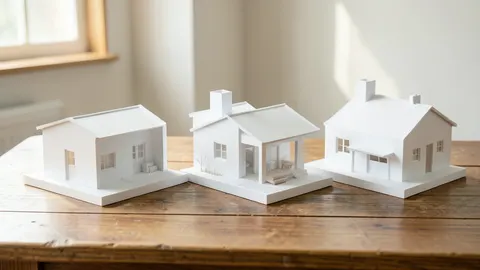
Energy and sustainability
The original article emphasizes orientation, daylight, materials and energy efficiency. Programming establishes performance targets; engineering simulation tests insulation, glazing, shading and cooling across comparable alternatives. Savings cannot be attributed to programming alone: climate, construction, operation and occupant behavior influence outcomes.
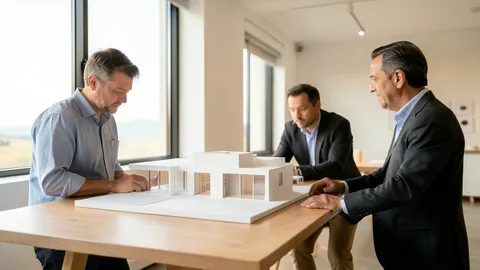
Quality of life and development feasibility
Turn privacy, comfort, accessibility and shared facilities into reviewable criteria, then check drawings and models against them. After occupancy, resident satisfaction, energy use and maintenance complaints can test assumptions. Relate decisions to life-cycle costs rather than construction cost alone.
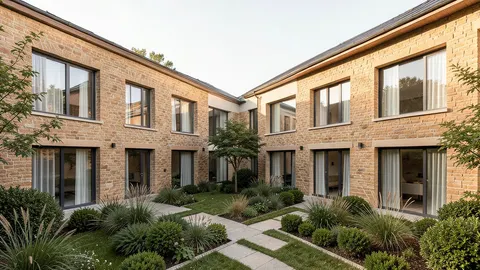
Decision review table
| Factor | Evidence or action |
|---|---|
| Household needs | Interviews and use scenarios |
| Energy | Comparable simulations |
| Quality of life | Privacy, comfort and access review |
| Cost | Budget and life-cycle costs |
A visual reading of the article topic
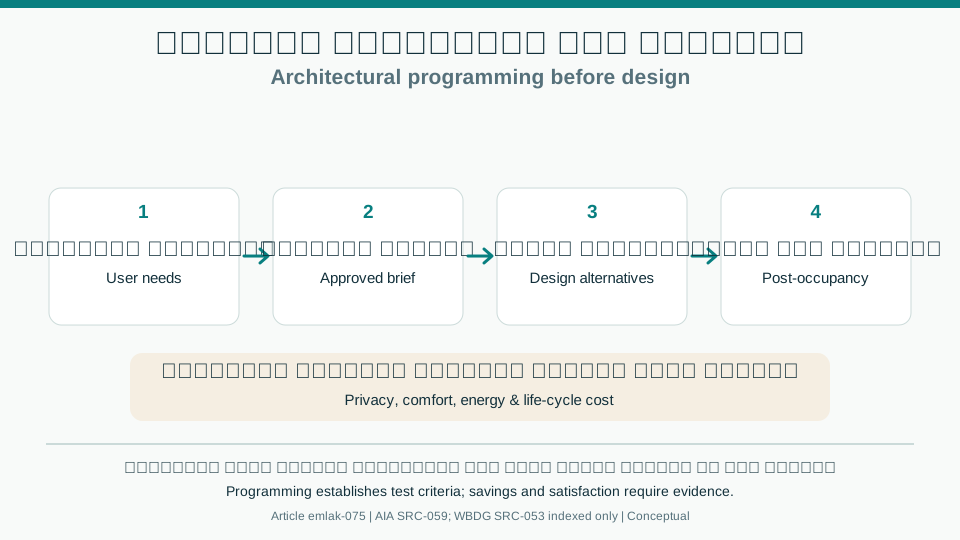
- 01Define requirements before drawing
- 02Energy and sustainability
- 03Quality of life and development feasibility
- 04Decision review table
Practical workflow
- 01 Understand users
- 02 Approve requirements
- 03 Compare alternatives
- 04 Evaluate after occupancy
Conceptual editorial diagram; not measured data.
Topics and source excerpts
| Topic | Excerpt from article |
|---|---|
| Define requirements before drawing | Architectural programming establishes project goals, users, activities, areas, relationships and constraints. |
| Energy and sustainability | The original article emphasizes orientation, daylight, materials and energy efficiency. |
| Quality of life and development feasibility | Turn privacy, comfort, accessibility and shared facilities into reviewable criteria, then check drawings and models against them. |
| Practical workflow | 01 Understand users |
| Sources and limitations | Editorial development based on the author's original Emlak article; previous text retained. |
Source excerpts organized for comparison, not newly researched findings.
Sources and limitations
Editorial development based on the author's original Emlak article; previous text retained. Original percentages concerning energy, carbon, the economy and resident satisfaction require identification of the studies, methods and periods before reuse.
- WBDG: Architectural Programming — Indexed corroboration of goals, functions, activities, costs and timing; staging link stability unconfirmed, prefer complementary readable sources.
- AIA: A Problem Well Stated — Owner Project Requirements — Practitioner guidance on brief, site, function, performance and cost; not code approval or a guarantee of project outcomes.