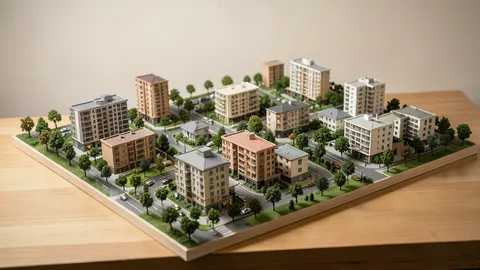
Markets differ by location
The source discusses uneven growth, demand and slowdowns. A national index decline does not imply weakness everywhere, and high activity does not establish superior returns. Compare assets, periods and market size, separating prices, transaction volumes and occupancy.
Local demand drivers
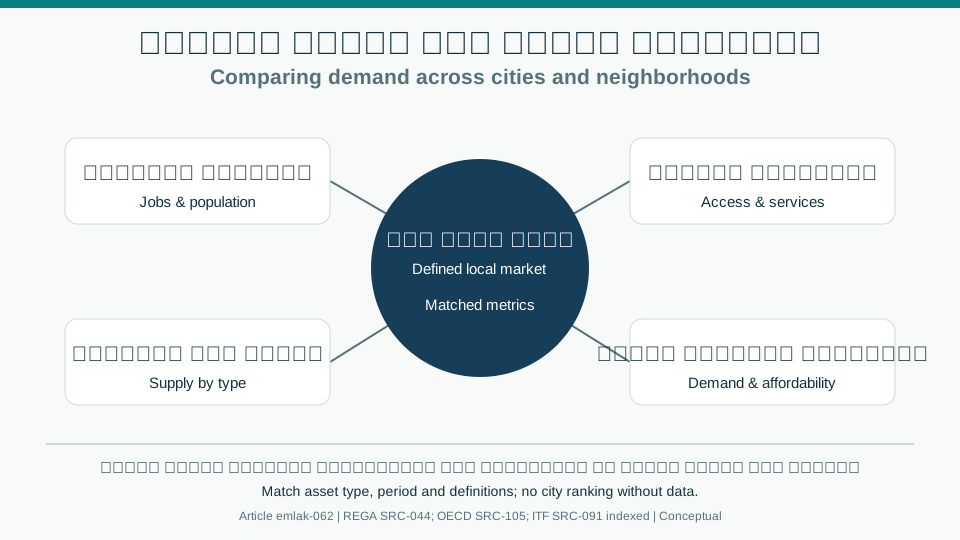
Jobs, residents, universities, transport and services may influence attractiveness, but each effect requires evidence. Review actual employment, operating infrastructure, travel times, competing supply and household affordability. Do not generalize remote-work or relocation preferences without representative evidence.
Professional comparison
Choose cities or districts, standardize property, period, price and transaction definitions, and extract official indicators. Slowdowns may reflect credit constraints, oversupply in one product or sample changes, not inevitable correction. Test the product through actual reservations, collections and occupancy before generalizing.
Decision review table
| Factor | Information or evidence |
|---|---|
| Population and jobs | Dated local data |
| Access | Operating networks and travel time |
| Supply | By type and price |
| Demand | Transactions, occupancy, affordability |
A visual reading of the article topic
- 01Markets differ by location
- 02Local demand drivers
- 03Professional comparison
- 04Decision review table
Practical workflow
- Define place and segment
- Standardize metrics
- Validate demand
- Review local differences
Sources and limitations
Topics and source excerpts
| Topic | Excerpt from article |
|---|---|
| Markets differ by location | The source discusses uneven growth, demand and slowdowns. |
| Local demand drivers | Jobs, residents, universities, transport and services may influence attractiveness, but each effect requires evidence. |
| Professional comparison | Choose cities or districts, standardize property, period, price and transaction definitions, and extract official indicators. |
| Practical workflow | Define place and segment |
| Sources and limitations | Editorial expansion of the author's Emlak contribution; previous text retained. |
Source excerpts organized for comparison, not newly researched findings.
Editorial expansion of the author's Emlak contribution; previous text retained. This edition does not rank cities or assert individual growth without verified series.
- REGA: Real Estate Indicators FAQ — Location, type and time filters and coverage limits; averages do not value a specific property.
- ITF: What is the Urban Access Framework? — Indexed text distinguishing time-and-mode accessibility from distance-based proximity; European study, not Saudi price premiums or outcomes.
- OECD: Benchmarking Accessibility in Cities — Readable abstract supports the distinction between accessibility and proximity across travel modes; not local outcomes or causal price effects.