
Location intelligence and demand
The article proposes using geographic, demographic and transport data for site selection. Define the segment, product and decision before collecting variables, and examine actual travel time, competitors, restrictions and services. Online search data indicate interest rather than confirmed demand; combine them with contracts, occupancy and user budgets where available, avoiding opaque automated site rankings.
Forecasting and maintenance
Models may estimate demand or fault likelihood from previous data. Test demand forecasts on a later held-out period against a simple statistical baseline. For maintenance, monitor correct and missed alerts, response times and costs; alerts are insufficient without response capacity. Models should not replace technical inspection or necessary maintenance.
Governance and analytical culture
Data-based decisions need shared definitions, dated sources, access controls and privacy safeguards. Avoid collecting detailed resident data merely because sensors allow it; minimize data and define purpose. Assign each model an owner and a stop or retraining rule when conditions change, documenting whether recommendations improved actual decisions compared with prior expertise and methods.
Decision review table
| Factor | Evidence or action |
|---|---|
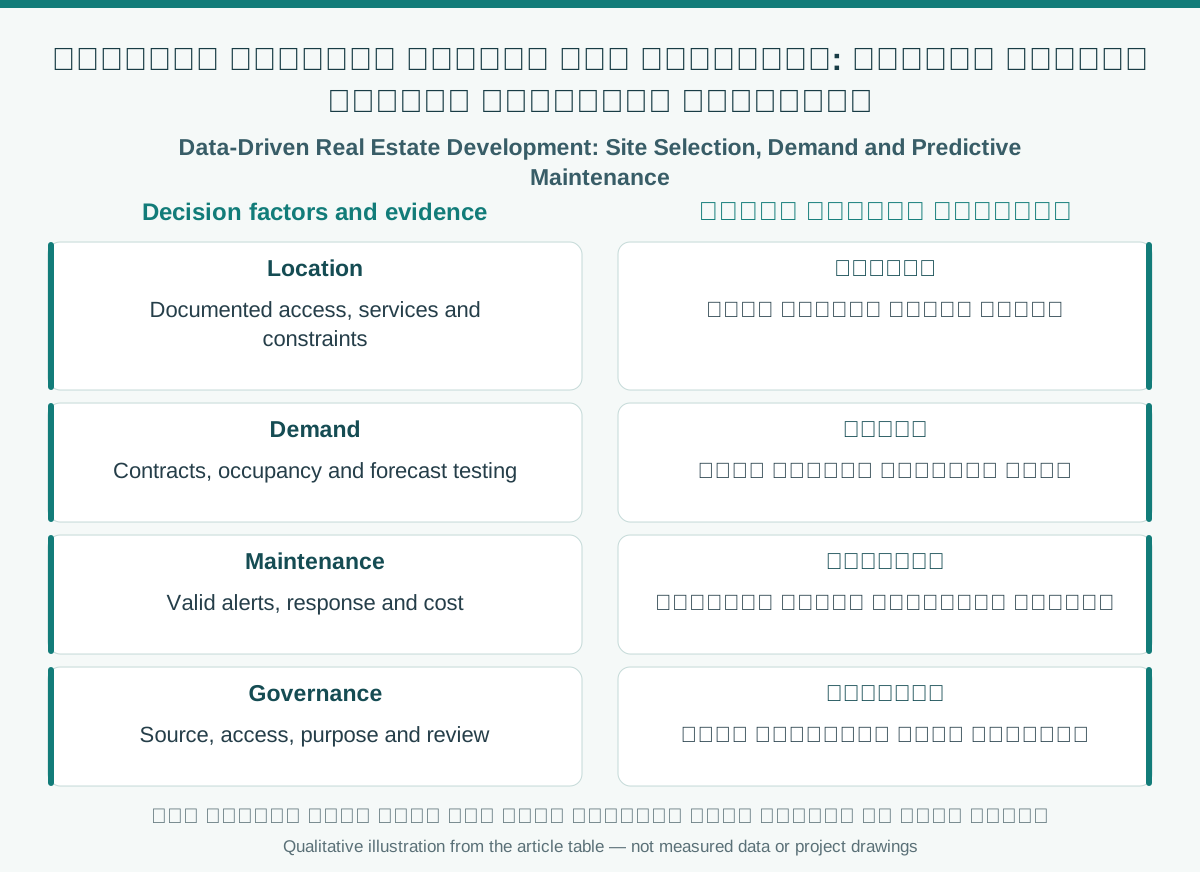
| Location | Documented access, services and constraints |
| Demand | Contracts, occupancy and forecast testing |
| Maintenance | Valid alerts, response and cost |
| Governance | Source, access, purpose and review |
A visual reading of the article topic
- 01Location intelligence and demand
- 02Forecasting and maintenance
- 03Governance and analytical culture
- 04Decision review table
Practical workflow
- 01 Define decision
- 02 Collect suitable data
- 03 Validate model
- 04 Measure decision impact
Conceptual editorial diagram; not measured data.
Sources and limitations
Editorial development based on the original Emlak source; previous text retained. Claims about digital infrastructure and legislation across Arab countries require country-specific dated sources; specific accuracy or savings require testing.
Topics and source excerpts
| Topic | Excerpt from article |
|---|---|
| Location intelligence and demand | The article proposes using geographic, demographic and transport data for site selection. |
| Forecasting and maintenance | Models may estimate demand or fault likelihood from previous data. |
| Governance and analytical culture | Data-based decisions need shared definitions, dated sources, access controls and privacy safeguards. |
| Practical workflow | 01 Define decision |
| Sources and limitations | Editorial development based on the original Emlak source; previous text retained. |
| References and limitations | Document site and model inputs and test forecasts and alerts against actual outcomes and operating constraints. |
Source excerpts organized for comparison, not newly researched findings.
References and limitations
Document site and model inputs and test forecasts and alerts against actual outcomes and operating constraints.
The following references support selected topics in the article.
- ITF Urban Access Framework
- NIST AI Resource Center
- US DOE energy management information systems